Ante Bet in Poker: Definition and Table Rules

An ante bet is a small, mandatory wager that every player at a poker table must post before the cards are dealt, forming the starting pot and giving each participant a stake in the hand. Unlike blind bets, which rotate between only two seats, an ante applies universally, so no player escapes the initial cost of entering a hand. Canadian regulated poker rooms use antes in stud-style games and layer them onto blinds during later tournament stages to keep action brisk. This glossary entry breaks down how antes are sized, how they differ from blinds, and why the ante size changes the hands a player should reasonably contest.
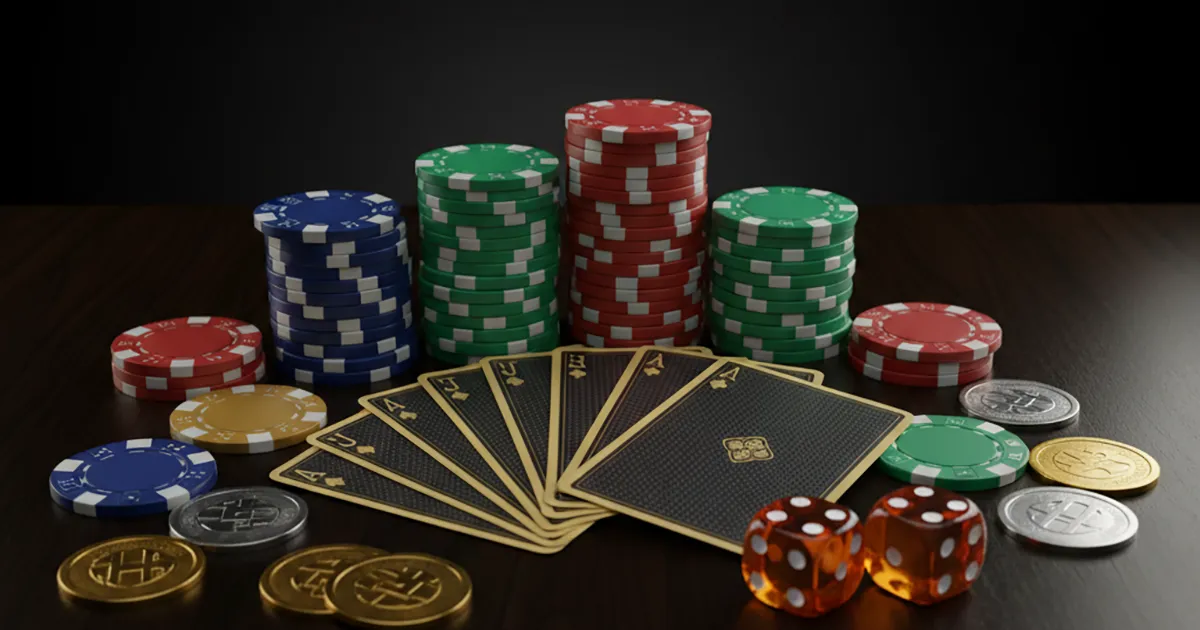
Ante Mechanics and Table Structure
An ante is a uniform, forced contribution that every active player owes the pot before any cards reach the table. Where a blind bet sits only on the button and small blind positions, the ante spreads the obligation across the entire table, seat by seat. This structure guarantees a live pot from the first second of the hand and removes the option of folding for free before seeing a card. In most Canadian online poker rooms, the platform deducts antes automatically once a player is seated at a cash-game or tournament table, so no manual posting step is required.
Ante vs. Blind Structure
Poker variants combine forced bets differently: some rely on antes alone, some on blinds alone, and others blend both. Seven-card stud and five-card draw have traditionally used ante-only structures, while Texas Hold’em builds its pot almost entirely from small and big blinds. Tournament formats increasingly add an ante on top of the blind structure once play reaches the middle and late stages, a design choice that speeds up eliminations by forcing short stacks into faster decisions. Industry data on tournament structures generally puts the ante at 10% to 25% of the big blind once it activates.
Strategic Implications and Bankroll Impact
The size of the ante shapes pot odds and, by extension, which hands are worth playing. A larger ante inflates the starting pot relative to the cost of entering it, which makes marginal holdings mathematically easier to justify and pushes players toward wider pre-flop ranges. As more chips flow in before any decision is made, hand pace quickens and variance rises, so bankroll management needs to account for a higher cost per orbit rather than per individual hand. Players calculating expected value must add ante costs to their baseline stake before assessing whether a given hand justifies action from a specific table position. In Canadian online tournaments, this ante-driven pressure typically becomes noticeable once antes reach roughly 10% of the big blind, a threshold where opening ranges measurably widen.
Ante Formats Across Game Variants
| Game Type | Ante Structure | Typical Amount | Strategic Effect |
|---|---|---|---|
| Seven-Card Stud | Ante only (all players) | 1-5% of table limit | Creates immediate pot pressure |
| Five-Card Draw | Ante only (all players) | 1-5% of table limit | Encourages continued participation |
| Texas Hold'em Cash | Blind-only (no ante) | N/A | Minimal positional pressure |
| Texas Hold'em Tournament | Blinds plus ante (late stages) | 10-25% of big blind | Accelerates short-stack elimination |
| Omaha | Blind-only (standard) | N/A | Comparable to Hold'em structure |