
























Rizzio Casino review
Editor's Choice| Key Feature | 12,000+ games across 75 studios |
| Welcome Bonus | 200% up to $4,000 CAD, 3 deposits |
| Min. Deposit | $20 CAD |
| Number of Games | 12,000+ games |
| Game Providers | Evolution, NetEnt, Hacksaw Gaming, BGaming, Betsoft |
| Payment Methods | Interac, cards, e-wallets, crypto |
| Payment Services | Interac e-Transfer, Visa, Mastercard, Skrill, Bitcoin, Ethereum, USDT |
| Mobile App | Browser-based only, no native app |
| VIP Program | Not published on site or T&Cs (verified 07 Jul 2026) |
| RTP | 96% average across slots |
| License | Anjouan Gaming Board, Comoros |
| Operator | Green Champions Leader SRL, Costa Rica |
| Launch Date | 2025 |
| Legal Age | 18+ |
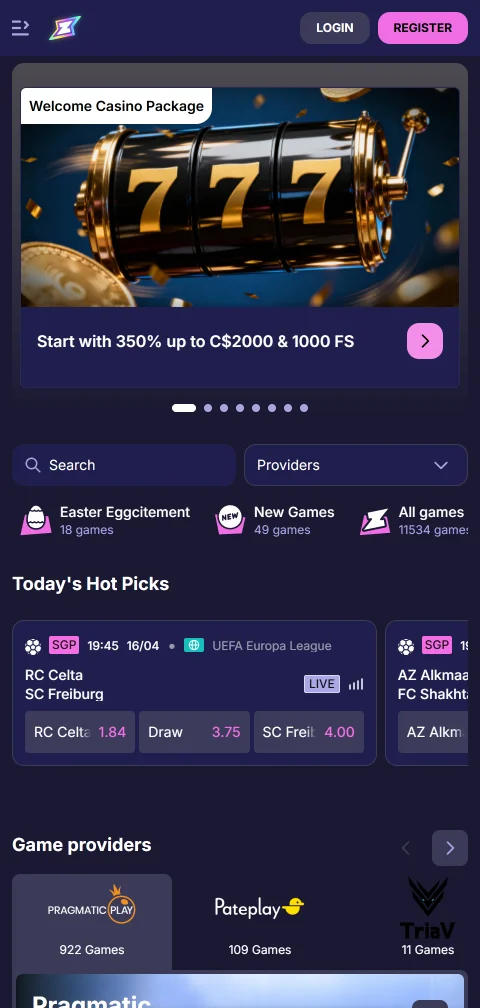
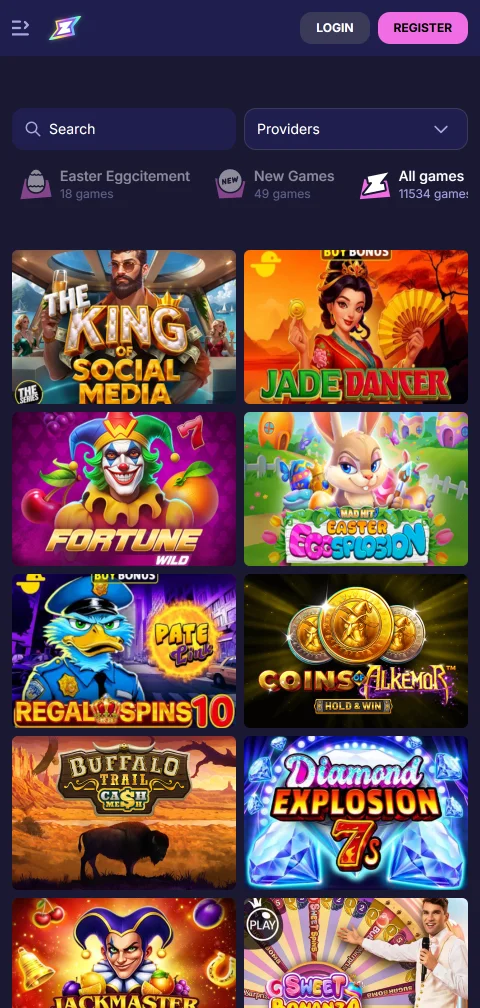

- Library exceeds 12,000 titles across roughly 75 studios.
- Interac e-Transfer supports same-day CAD deposits and withdrawals.
- Crypto cash-outs typically clear in 15 to 30 minutes.
- Three-part welcome package reaches $4,000 CAD across the first three deposits.
- Live chat runs 24/7 alongside an email queue for document-heavy issues.
- Anjouan Gaming Board licensing carries lighter oversight than AGCO-regulated operators.
- Daily withdrawal cap of EUR 500 slows access to larger wins.
- No independent eCOGRA or iTech Labs certificate published for RNG testing.
- No native iOS or Android app; browser access only.
Our Rizzio Casino expert assessment looks at the operator through a Canada lens, which means Interac availability, CAD support, and responsible gambling tools all matter. A 12,000-title library is useful, but only if the account flow and payout process are not needlessly complicated.
Spinzen Casino review
Editor's Choice| Key Feature | 4,000+ games with quick e-wallet payouts |
| Welcome Bonus | 270% up to C$4,250 + 550 free spins |
| Min. Deposit | C$20 |
| Number of Games | 4,000+ |
| Game Providers | Pragmatic Play, Evolution, NetEnt, Play'n GO |
| Payment Methods | Cards, e-wallets, bank transfers, crypto |
| Payment Services | Visa, Mastercard, Interac, Skrill, Bitcoin |
| Mobile App | Mobile browser |
| VIP Program | Yes, 100-level VIP scheme |
| RTP | Not independently audited |
| License | Anjouan Gaming Board |
| Operator | Fionex Holding Ltd |
| Launch Date | 2025 |
| Legal Age | 18+ |


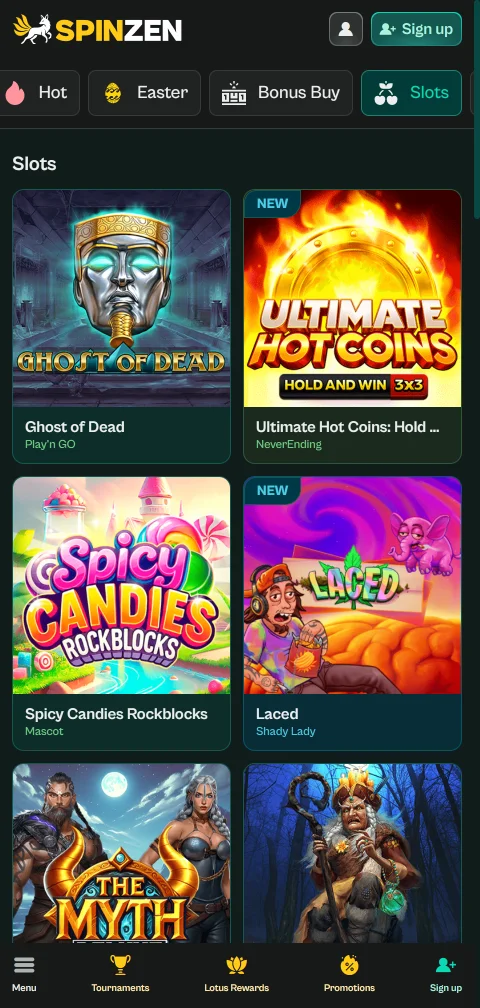
- More than 4,000 games from over 90 software providers
- Interac, cards, e-wallets, and crypto suit Canadian banking habits
- E-wallet and crypto withdrawals can clear within 0-24 hours
- Anjouan Gaming Board licence lacks independent RTP auditing
- 45x wagering on welcome package is above market average
- Support operates only in English despite multi-currency reach
In our detailed platform analysis, the strongest point is catalogue depth at over 4,000 titles, while the main caution is the Anjouan Gaming Board licence, which lacks independent RTP auditing. That combination suits players who prioritise variety over regulatory weight.
Winshark Casino review
Editor's Choice| Key Feature | 10,000+ games with 100-level VIP club |
| Welcome Bonus | 100% up to C$970 + 250 free spins |
| Min. Deposit | C$10 |
| Number of Games | 10,000+ games |
| Game Providers | Pragmatic Play, Play'n GO, Hacksaw Gaming, Games Global, NetEnt, Evolution |
| Payment Methods | Interac, cards, e-wallets, crypto, prepaid |
| Payment Services | Interac, Visa, Mastercard, Skrill, Neteller, MuchBetter, Neosurf, Bitcoin |
| Mobile App | Browser and PWA; no native iOS or Android app |
| VIP Program | 100 levels, five ranks, up to 15% cashback |
| RTP | around 96% average RTP |
| License | Curacao GCB, OGL/2024/589/0556 |
| Operator | GBL Solutions N.V. |
| Launch Date | 2024 |
| Legal Age | 18+ |
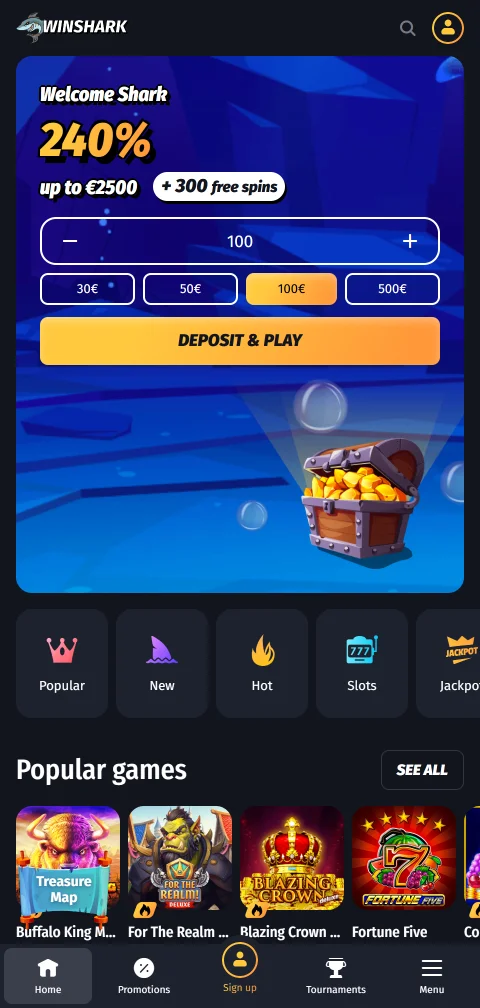

- Verified library of over 10,000 games from 100-plus providers.
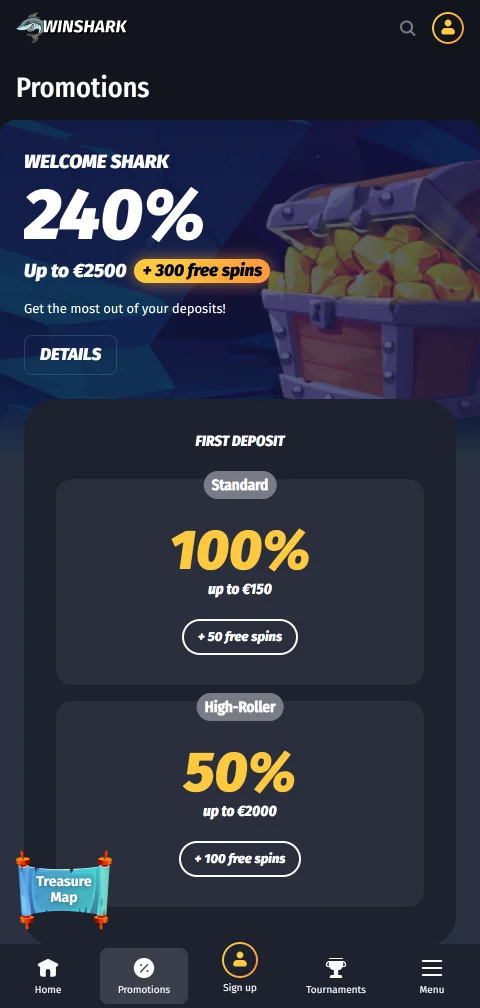
- Welcome offer of 100% up to C$970 plus 250 free spins.
- Interac e-Transfer, cards, e-wallets, and crypto all supported for Canada.
- Browser and PWA access with no forced native download.
- Licensed by the Curacao Gaming Control Board under OGL/2024/589/0556.
- Welcome bonus carries a steep 45x wagering requirement.
- Bonus funds must clear within a five-day window.
- Monthly withdrawal cap starts at C$16,000 until VIP levels lift it.
- Withdrawal limits per transaction top out near C$800 on most methods.
Before you deposit, our Winshark Casino expert assessment tests the essentials: 10,000-plus games, 24/7 live chat under three minutes, and browser-first mobile play. It is written for readers who want a clean read on real strengths and the steep 45x rollover.
Lemon Casino review
Editor's Choice| Key Feature | Curacao-licensed casino with 4,800+ games |
| Welcome Bonus | 100% up to 300 CAD + 100 spins |
| Min. Deposit | 10 CAD |
| Number of Games | 4,800+ games |
| Game Providers | Pragmatic Play, NetEnt, Evolution, Nolimit City, BGaming |
| Payment Methods | Credit cards, e-wallets, crypto, Interac |
| Payment Services | Visa, Mastercard, Skrill, Neteller, Interac e-Transfer, Bitcoin |
| Mobile App | Mobile browser only, no native app |
| VIP Program | Treasure Boxes loyalty programme |
| RTP | Around 96% average RTP |
| License | Curacao licence 5536/JAZ |
| Operator | Orange Entertainment B.V. |
| Launch Date | 2021 |
| Legal Age | 18+ |

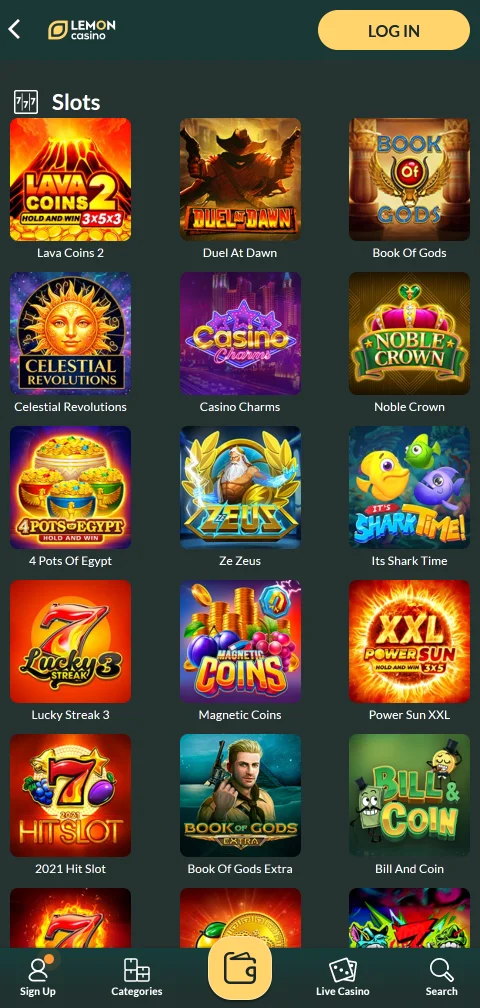

- Curacao licence 5536/JAZ is publicly verifiable, unlike unlicensed rivals.
- Welcome package of 100% up to 300 CAD plus 100 spins gives a solid start.
- Interac e-Transfer support makes CAD deposits genuinely straightforward.
- Library of 4,800+ games covers slots, live tables, and specialty titles.
- Live chat support runs 24/7, which speeds up basic account queries.
- Withdrawals can stretch to 5 days for slower banking methods.
- Wagering requirements on the welcome bonus need careful reading before claiming.
- No confirmed native iOS or Android app, only browser-based mobile play.
- VIP tier structure details are thin compared with top-tier regulated operators.
In this full Lemon Casino analysis, we examine the confirmed 4,800-plus catalogue, Interac-supported payment rails, and Curacao licensing. The strongest question for Canada remains whether that convenience is matched by clear wagering terms and predictable withdrawal handling on cards versus e-wallets.
BetAlice Casino review
Editor's Choice| Key Feature | 290+ live dealer tables |
| Welcome Bonus | 120% up to $750 CAD + 200 FS |
| Min. Deposit | $10 CAD |
| Number of Games | 8,600+ |
| Game Providers | 80+ studios |
| Payment Methods | Cards, e-wallets, crypto, Interac |
| Payment Services | Interac, Mastercard, Skrill, Bitcoin |
| Mobile App | Mobile browser only |
| VIP Program | 5-tier VIP program |
| RTP | 98.09% payout rate |
| License | Gaming Board of Anjouan |
| Operator | NovaForge Ltd |
| Launch Date | 2024 |
| Legal Age | 18+ |



- Live casino spans 290+ tables from Evolution Gaming and Pragmatic Play Live.
- Interac, crypto, and e-wallets cover most Canadian banking needs.
- Low $10 CAD Interac minimum makes deposits accessible.
- Offshore Anjouan licence lacks the recognition of a local Canadian regulator.
- No deposit or spending limit tools, only self-exclusion, in the responsible gaming section.
This BetAlice Casino editorial review looks at the brand through a live casino lens, with hands-on notes on Pragmatic Play Live’s Mega Wheel and CAD table minimums. The Gaming Board of Anjouan licence and NovaForge Ltd ownership are confirmed throughout.
How We Rate Online Casinos in Canada
Our editorial team evaluates online casinos serving Canadian players using transparent, objective criteria. We test each platform independently to assess licensing compliance, player protections, game fairness, and operational transparency. These ratings reflect our commitment to helping Canadian players identify trustworthy, regulated alternatives.
Licensing & Regulatory Compliance
We verify licensing before anything else. Ontario platforms must show AGCO registration and iGaming Ontario approval, while offshore sites rely on the Malta Gaming Authority or Kahnawake Gaming Commission. We check licence scope, enforcement history and adherence to provincial player-protection rules. Sites operating in legal grey areas score lower regardless of their features.
Responsible Gambling Tools
We test deposit limits, loss limits, session reminders and self-exclusion. Ontario’s 2026 rules require behavioural monitoring that flags harmful patterns, so surface-level toggles are not enough. Quality implementations enforce a 24-48 hour delay before limit increases. Platforms that let players raise limits instantly lose meaningful points in this category.
Payment Methods & Withdrawal Speed
We evaluate Interac, credit cards, e-wallets and cryptocurrency for Canadian players. Interac deposits clear instantly and withdrawals settle within 1-2 business days on well-run sites, while card payouts take 3-5 days. We penalize unclear withdrawal terms, KYC delays beyond 48 hours, and platforms limiting Interac support.
Game Selection & Software Quality
We examine variety, provider reputation and RTP transparency. Strong platforms carry 3,000-plus titles from studios like NetEnt, Evolution and Pragmatic Play, with certified RTP above 96%. We confirm live-dealer options and current fairness certifications from recognized labs. Thin libraries or unknown providers drag ratings down noticeably.
Bonus Terms & Transparency
We calculate effective bonus value after wagering, game weighting and time limits. Ontario offers typically carry 20-40x wagering, and a 40x slots-only condition is worth far less than 20x across all games. We penalize misleading advertising and requirements above 40x. Clear disclosure before claiming lifts a platform’s score.
Customer Support & User Experience
We test live chat and email response quality directly. Strong platforms answer chat within minutes during peak hours and reply to emails inside 24 hours. We submit real questions about bonuses, withdrawals and account issues, then check mobile optimization and limit-setting accessibility. Unresponsive support cuts ratings sharply.


Rizzio Casino
Three-part welcome packageEditor's Choice
Seven Casino
Cashback welcome offerEditor's ChoiceUnderstanding Canada's Fragmented Regulatory Framework
Canada regulates gambling nothing like countries with a single national authority. The federal Criminal Code restricts gaming, yet Section 207 lets each province conduct and manage it within its borders. That constitutional split produces a patchwork where legal options, protections and available operators change dramatically with your postal code. Knowing this framework is the starting point for finding a legitimate, regulated platform.
Provincial Autonomy and Market Variation
Each province controls its own licensing and consumer-protection rules. Ontario pioneered private-operator licensing on 4 April 2022, and today about 48 operators run more than 80 sites there. British Columbia and Quebec keep Crown monopolies through BCLC and Loto-Québec. Alberta passed the iGaming Alberta Act in 2025 and opened its private market on 13 July 2026. A casino licensed in Ontario may be unavailable in British Columbia, so residents there use the government platform or offshore alternatives.
Federal Oversight and National Standards
Provinces license operators, but federal rules set the floor. The Criminal Code bans unlicensed gaming, and FINTRAC enforces anti-money-laundering obligations across every jurisdiction. Bill C-218 legalized single-event sports betting nationally in 2021, while provinces still regulate the operators and markets. Recent federal discussion centres on consistent responsible gambling standards and tougher enforcement against offshore sites. Operators must satisfy both provincial licensing and federal compliance at once, which raises the barrier for grey-market entrants.
| Province/Territory | Legal Online Casinos | Regulator/Operator | Market Model |
|---|---|---|---|
| Ontario | Yes – Private operators | iGaming Ontario (AGCO) | Open competitive market, about 48 licensed operators |
| British Columbia | Yes – Crown only | BCLC (PlayNow.com) | Government monopoly since 2004 |
| Alberta | Yes – Private launched 13 July 2026 | AGLC/Alberta iGaming Corp | Competitive market alongside Crown platform |
| Quebec | Yes – Crown only | Loto-Québec | Government monopoly, no private licensing planned |
| Other Provinces | Limited/No regulated options | Varies by province | Most maintain restrictive models or no framework |
Ontario's Regulated Market: Setting the National Standard
Ontario’s regulated online casino market, launched on 4 April 2022, remains the defining development in Canadian iGaming. The province opened licensing to private operators under the AGCO and iGaming Ontario, creating a competitive model unlike the Crown monopolies elsewhere. In fiscal 2024-25 the market generated $82.7 billion in total wagers and $3.2 billion in gross gaming revenue, with casino play contributing $69.6 billion. Those figures made Ontario the national benchmark other provinces now reference.
Licensing Requirements and Operator Standards
AGCO licensing demands full documentation of corporate structure, beneficial ownership, financial stability and technical capability. Operators must run KYC, Customer Due Diligence and transaction-monitoring systems for anti-money-laundering compliance. Renewals review responsible-gaming metrics, complaint records and advertising conduct. Enforcement tightened through 2026, and seven operators exited the market amid stricter reviews. Poor performers face penalties, advertising limits or licence conditions, so Ontario sites operate under far heavier oversight than offshore alternatives.
Player Protection and Responsible Gaming Framework
Ontario mandates deposit limits, loss limits, session reminders and self-exclusion. The 2026 standards added behavioural monitoring that identifies risky patterns and triggers automatic interventions, verified through regular audits. Advertising rules ban celebrity and athlete endorsements, claims linking gambling to financial success, and any content targeting minors. Enforcement has sharpened, with early operators who pushed advertising limits facing penalties. These measures position Ontario as Canada’s model for responsible gambling implementation.
Government Monopolies vs. Open Markets: A Comparative Analysis
Canada’s market reflects two competing philosophies: Crown monopolies and open competition. Ontario’s private-operator system contrasts with BCLC in British Columbia and Loto-Québec in Quebec. Each model shapes game selection, bonus value, withdrawal speed and available features. Alberta’s decision to open its market on 13 July 2026 signals clear momentum toward competitive licensing across the country.
Competitive Market Advantages
Competition rewards players. Ontario’s roughly 48 operators compete on bonuses, game variety, payout speed and support quality, and dissatisfied players simply switch. That pressure produces withdrawals of 1-2 business days, libraries of 3,000-plus titles, and welcome offers commonly at 100% or higher. Competitive markets also raise more tax revenue than monopolies, as Ontario’s $3.2 billion GGR shows. The trade-off is complexity, since players must check each platform’s licence and terms.
Monopoly Model Characteristics
Crown models in British Columbia and Quebec simplify the choice to one government platform. PlayNow.com and Loto-Québec guarantee regulatory compliance through direct oversight, but typically list 500-1,500 games with fewer promotions. Withdrawals often take 3-5 business days, and players cannot switch if dissatisfied. The upside is certainty: a single government operator with maximum consumer protection. Alberta abandoned this model to capture revenue previously flowing to offshore operators.
Competitive Market (Ontario Model) | Government Monopoly (BC/Quebec Model) |
|---|---|
| About 48 licensed operators competing | Single government-operated platform |
| Typically 3,000+ games across platforms | Typically 500-1,500 games |
| Withdrawal processing 1-2 business days | Withdrawal processing 3-5 business days |
| Competitive welcome bonuses (100%+ typical) | Limited promotional offers |
| Complex landscape requiring platform research | Simplified choice with guaranteed oversight |
| Higher tax revenue generation for provinces | Lower revenue but simpler administration |
Payment Methods and Withdrawal Processing in Canadian Casinos
Canadian players use payment methods built around local habits, though options vary by province and platform. Interac dominates deposits and withdrawals thanks to its direct bank links, speed and familiarity. Credit cards, e-wallets, cryptocurrency and bank transfers add flexibility. Processing times, fees and verification steps differ enough that checking them before registering directly shapes the experience.
Interac: Canada’s Preferred Payment Method
Interac leads Canadian casino payments because it connects straight to domestic bank accounts. Ontario platforms process Interac deposits instantly and withdrawals within 1-2 business days, faster than most card or e-wallet options. Removing intermediaries reduces fraud risk, and most players already use Interac for everyday banking. Interac e-Transfer offers similar functionality with slightly different mechanics, reinforcing Interac’s role as the de facto standard for licensed Canadian casinos.
Alternative Payment Methods and Processing Timelines
Credit cards (Visa, Mastercard) deposit instantly but pay out in 3-5 business days. E-wallets like Skrill and Neteller settle in 1-3 days. Cryptocurrency deposits are instant and withdrawals complete within hours to one business day, appealing to speed-focused players. Bank transfers take 2-5 business days, while Apple Pay and Google Pay inherit card timelines. First withdrawals always follow KYC verification, which licensed sites should complete within 48 hours.
How to Evaluate Payment Security and Withdrawal Reliability
- Step 1
Verify Platform Licensing and Payment Compliance
Confirm the casino holds valid licensing from AGCO in Ontario, BCLC in British Columbia, AGLC in Alberta, or a recognized offshore regulator. Licensed platforms demonstrate PCI compliance for card processing and FINTRAC compliance for anti-money-laundering. Check the operator directly on the provincial authority website. Unlicensed sites may promise faster payouts but carry far higher fraud and account-seizure risk. - Step 2
Review Published Withdrawal Timelines and Fees
Read the terms for withdrawal times by method. Reliable platforms state whether payouts take hours, 1-2 business days, or 3-5 days, and disclose any fees. Licensed Canadian casinos usually waive deposit fees but may charge on certain withdrawal methods. Compare Interac against cards and crypto to pick the fastest route for your account before you register. - Step 3
Test Payment Functionality with Small Transactions
Deposit a small amount using your preferred method and confirm the timing matches the published figure. Request a modest withdrawal to check payout reliability, and watch how long KYC verification takes; legitimate sites clear it within 48 hours. A clean small transaction confirms the payment infrastructure works before you commit larger sums.
Responsible Gambling Standards and Player Protection Tools
Canada’s regulated casinos now run increasingly sophisticated responsible gambling tools. Every licensed platform must provide deposit limits, loss limits, session reminders and self-exclusion. Ontario’s 2026 rules, echoed by Alberta’s new framework, mandate behavioural monitoring that spots harmful patterns and triggers interventions. This marks a sharp break from offshore operators, where such tools are often absent. Knowing which protections exist, and how to switch them on, keeps play within safe limits.
Deposit and Loss Limits
Licensed platforms let players cap daily, weekly or monthly deposits and enforce those limits immediately. Loss limits restrict total losses over a set period, and session limits force breaks after continuous play. Quality systems add a mandatory 24-48 hour waiting period before any limit increase, blocking impulsive decisions. Sites that hide these controls or allow instant increases provide inadequate protection and lose credibility in our testing.
Self-Exclusion and Behavioural Monitoring
Self-exclusion lets players lock themselves out for set periods, typically six months to permanent, and licensed casinos must honour requests instantly. The 2026 monitoring systems analyze play and can pause accounts, cut limits or prompt responsible-gambling questionnaires. Support organizations offer confidential help beyond platform tools. Because excluding from one site does not cover others, players seeking full protection should use provincial self-exclusion registries where available.
Responsible Gambling in Canada
Responsible gambling means understanding the risks of casino play and keeping control of time and money. Setting personal caps on deposits, losses and session length keeps gaming as entertainment rather than a problem. Every licensed Canadian casino offers deposit limits, loss limits, session reminders and self-exclusion, and Ontario now adds behavioural monitoring that flags risky play. Watch for warning signs such as spending more than intended, chasing losses within 24 hours of a defeat, or gambling to escape stress.
Help is available and reaching out is a strength, not a weakness. Self-exclusion from a single platform takes effect immediately, and provincial registries can extend that protection across multiple sites. Confidential counselling services and gambling-support organizations offer free guidance, often through 24-hour helplines. Taking regular breaks, remembering that the house edge always favours the casino, and using the built-in limit tools let Canadian players enjoy online gaming safely.
Final Assessment: Navigating Online Casinos in Canada
Regulatory fragmentation across provinces creates complexity but also expanding choice, assessed 16 September 2026 after recent legislation. Ontario players enjoy about 48 competing operators, and Alberta’s 13 July 2026 launch shows the open model spreading. Practically, identify your provincial framework first: Ontario and Alberta residents compare private sites, while British Columbia and Quebec players use PlayNow.com or Loto-Québec. Matching your expectations to your province’s model prevents wasted time on platforms you cannot legally join.
Understanding Online Casinos in Canada: Key Questions
Are online casinos legal in Canada?
Yes, but legality depends on your province. Section 207 of the Criminal Code lets each province manage gaming. Ontario licenses about 48 private operators, while British Columbia and Quebec run single Crown platforms.
How many licensed online casinos operate in Ontario?
Ontario had roughly 48 licensed operators running more than 80 approved gaming sites in 2026, after seven operators exited in 2025 under tighter AGCO reviews. Channelization to regulated sites reached about 91%.
When did Alberta open its private online casino market?
Alberta launched its competitive private-operator market on 13 July 2026 under the iGaming Alberta Act of 2025, becoming the second Canadian province after Ontario to license private operators alongside its Crown platform.
What payment methods work best for Canadian players?
Interac dominates, clearing deposits instantly and withdrawals within 1-2 business days. Credit cards take 3-5 days, e-wallets 1-3 days, and cryptocurrency completes within hours to one business day on regulated platforms.
How large is Ontario's regulated iGaming market?
Ontario recorded $82.7 billion in total wagers and $3.2 billion in gross gaming revenue during fiscal 2024-25, a 31% year-over-year rise. Online casino play contributed about $69.6 billion of that handle.
What responsible gambling tools must licensed casinos provide?
Licensed Canadian casinos must offer deposit limits, loss limits, session reminders and self-exclusion. Ontario’s 2026 rules add behavioural monitoring, and limit increases carry a mandatory 24-48 hour delay to prevent impulsive changes.
What wagering requirements apply to casino bonuses in Canada?
Ontario-licensed casinos typically attach 20-40x wagering to welcome bonuses. A 40x slots-only offer is far harder to clear than a 20x all-games deal, so checking the terms before claiming matters.
More about online casinos




The $82.7 billion wagered in Ontario during 2024-25, up 31% year over year, shows how quickly regulated play scaled. That volume suggests players value licensed casinos despite added complexity, largely because provincial licensing delivers protections offshore sites cannot match.