
















Seven Casino review
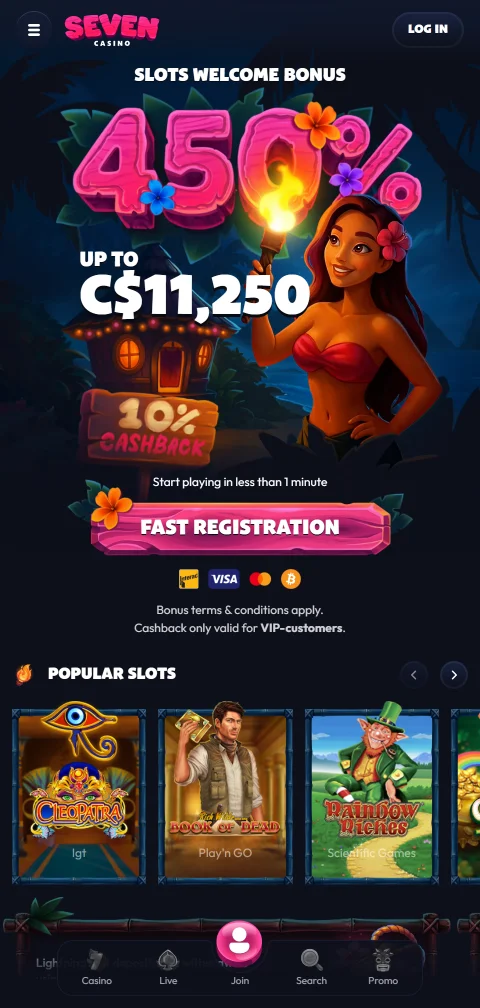
Editor's Choice| Key Feature | No-wagering 10% cashback with broad crypto and Interac banking |
| Welcome Bonus | 10% cashback on losses, no wagering |
| Min. Deposit | about $20 CAD |
| Number of Games | around 2,500 games |
| Game Providers | Pragmatic Play, Evolution, Wazdan, Hacksaw, Playson (18 total) |
| Payment Methods | Cards, e-wallets, bank transfer, crypto, Klarna (25 total) |
| Payment Services | Visa, Mastercard, Interac, Skrill, Neteller, Bitcoin, Klarna |
| Mobile App | Mobile browser only, iOS and Android compatible |
| VIP Program | Daily and weekly promotions for existing players |
| RTP | around 96% average across slots |
| License | Anjouan Gaming, Comoros |
| Operator | Rabocse Sociedad de Responsabilidad Limitada |
| Launch Date | 2023 |
| Legal Age | 18+ |
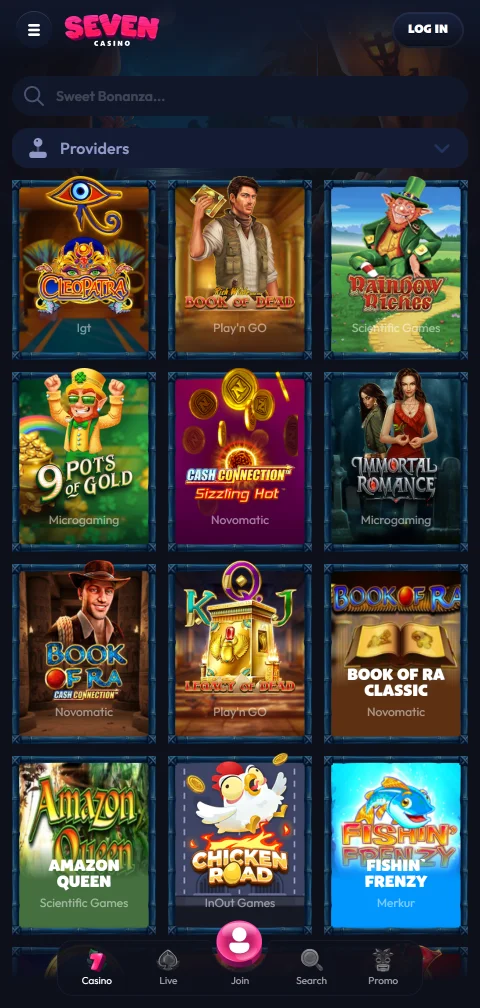

- Around 2,500 games with Evolution live tables and 18 studios.
- 25 banking methods including Interac, Klarna, and major crypto.
- 10% cashback carries no wagering and instant withdrawal of returns.
- Browser build keeps the full lobby on iPhone and Android.
- Support runs 24/7 across 12 languages, rated good by third parties.
- Anjouan (Comoros) licence offers weak player recourse.
- Very low independent Safety Index of 1.5 signals real risk.
- High volume of denied-payout complaints on record since 2023.
- Withdrawals capped at EUR 1,000 per day and EUR 2,000 weekly.
Our full Seven Casino analysis examines the parts that actually affect players: an Anjouan licence, roughly 18 game studios, and cash-outs that run one to five days. full Seven Casino analysis also checks the no-wagering 10% cashback against the operator’s documented denied-payout record for Canada players.
11Croco Casino review
| Key Feature | 8,000+ games, crypto-friendly banking |
| Welcome Bonus | 130% up to $680 CAD |
| Min. Deposit | $30 CAD |
| Number of Games | 8,000+ games |
| Game Providers | Pragmatic Play, Evolution, NoLimit City |
| Payment Methods | Cards, Interac, e-wallets, crypto |
| Payment Services | Visa, Mastercard, Interac, Bitcoin, USDT |
| Mobile App | Browser-based, no native app |
| VIP Program | Yes, six-tier VIP ladder |
| RTP | Around 96% average |
| License | Curaçao GCB OGL/2023/176/0095 |
| Operator | Hollycorn N.V. |
| Launch Date | Launched 2024 |
| Legal Age | 18+ |

- 8,000+ games spanning slots and live tables
- Interac and crypto deposits supported for Canadians
- Verifiable Curaçao GCB licence, number OGL/2023/176/0095
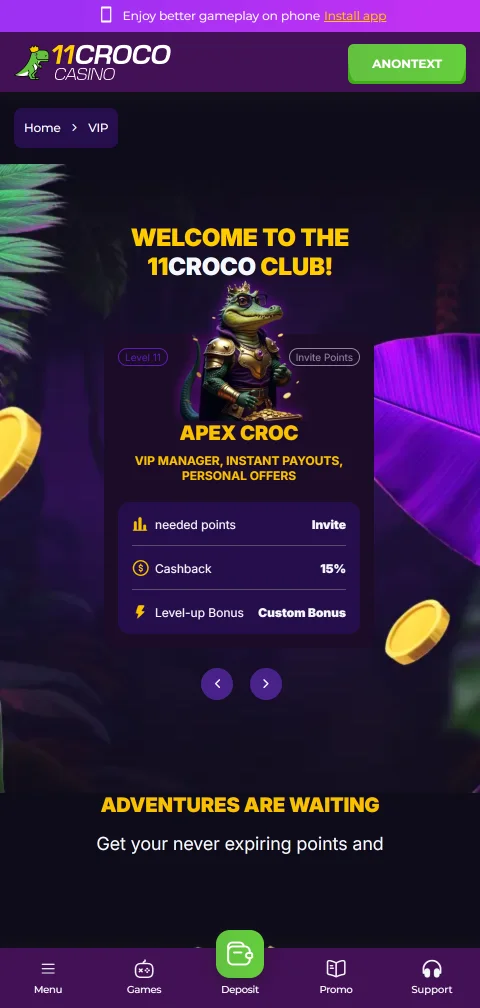
- Six-tier VIP club with cashback and free spins
- 40x wagering applies to deposit-only bonus funds
- Bonus validity window closes after just 3 days
- Weekly withdrawal cap sits at 7,500 EUR equivalent
Before depositing, read our 11Croco Casino player guide with a focus on onboarding, Interac availability, and bonus restrictions. That sequence matters because the first friction point often shows up in the wagering rules, not the software.
Spinzen Casino review
Editor's Choice| Key Feature | 4,000+ games with quick e-wallet payouts |
| Welcome Bonus | 270% up to C$4,250 + 550 free spins |
| Min. Deposit | C$20 |
| Number of Games | 4,000+ |
| Game Providers | Pragmatic Play, Evolution, NetEnt, Play'n GO |
| Payment Methods | Cards, e-wallets, bank transfers, crypto |
| Payment Services | Visa, Mastercard, Interac, Skrill, Bitcoin |
| Mobile App | Mobile browser |
| VIP Program | Yes, 100-level VIP scheme |
| RTP | Not independently audited |
| License | Anjouan Gaming Board |
| Operator | Fionex Holding Ltd |
| Launch Date | 2025 |
| Legal Age | 18+ |


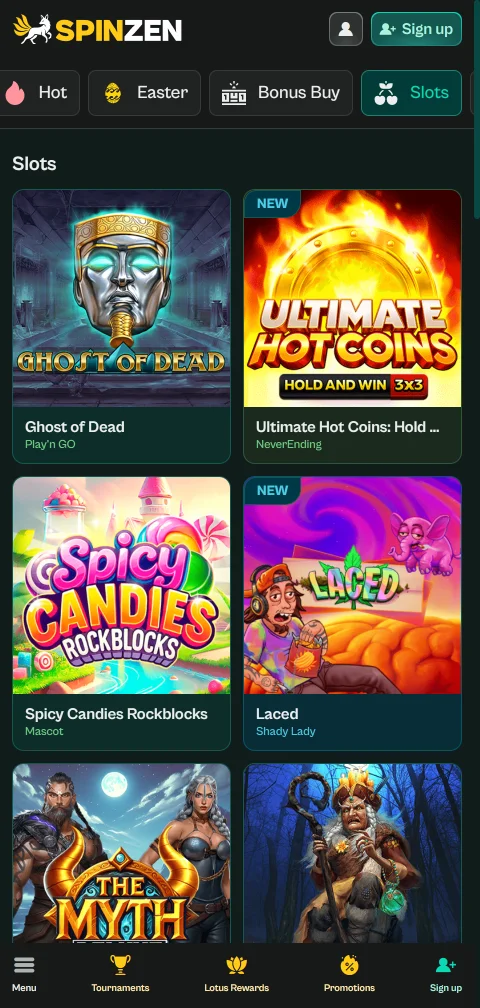
- More than 4,000 games from over 90 software providers
- Interac, cards, e-wallets, and crypto suit Canadian banking habits
- E-wallet and crypto withdrawals can clear within 0-24 hours
- Anjouan Gaming Board licence lacks independent RTP auditing
- 45x wagering on welcome package is above market average
- Support operates only in English despite multi-currency reach
Our player guide is built around what Canadian users ask first: deposit minimums, withdrawal speed, and bonus terms. On those points, the platform delivers a large library and quick e-wallet payouts, offset by a demanding 45x wagering requirement.
GG Vegas Casino review
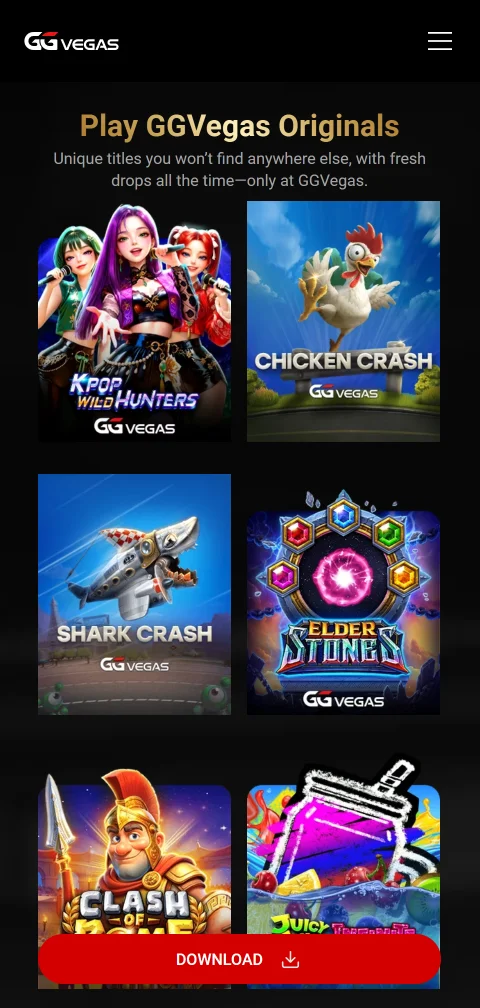
Editor's Choice| Key Feature | Mobile-only app with daily free tournaments and GGVegas Originals |
| Welcome Bonus | 25 no-deposit spins plus up to $1,777 over five deposits |
| Min. Deposit | $5 (crypto $50) |
| Number of Games | about 2,000 games |
| Game Providers | Pragmatic Play, Play'n GO, Relax Gaming, Blueprint Gaming, Playtech, GGVegas Originals |
| Payment Methods | Interac, cards, e-wallets, Apple Pay, crypto |
| Payment Services | Interac, Visa, Mastercard, Luxon Pay, Apple Pay, Bitcoin |
| Mobile App | Native iOS and Android app (mobile-only) |
| VIP Program | Weekly 15% cashback in place of tiered VIP |
| RTP | 96.33% published payout |
| License | Isle of Man Gambling Supervision Commission |
| Operator | GG International Limited |
| Launch Date | March 2025 |
| Legal Age | 18+ |


- Isle of Man licence with BMM Test Labs auditing.
- Fair 30x wagering and 25 no-deposit spins.
- Interac and crypto deposits from just $5.
- Withdrawals aimed within 24 hours after KYC.
- Native iOS and Android app with daily free tournaments.
- Available only through the app, with no desktop site.
- Not available to players in Ontario.
- Bonus game-weighting rules are fiddlier than most rivals.
- Live tables are in-house rather than Evolution or Pragmatic Live.
This full GG Vegas Casino analysis looks past the front screen into value: a $1,777 welcome package across five deposits, a fair 30x wagering rule, and 25 no-deposit spins on Robo Rush. The focus is durability, so licence wording, the 96.33% payout rate, and 24-hour withdrawal handling all get weighed for Canadian readers.
Lemon Casino review
Editor's Choice| Key Feature | Curacao-licensed casino with 4,800+ games |
| Welcome Bonus | 100% up to 300 CAD + 100 spins |
| Min. Deposit | 10 CAD |
| Number of Games | 4,800+ games |
| Game Providers | Pragmatic Play, NetEnt, Evolution, Nolimit City, BGaming |
| Payment Methods | Credit cards, e-wallets, crypto, Interac |
| Payment Services | Visa, Mastercard, Skrill, Neteller, Interac e-Transfer, Bitcoin |
| Mobile App | Mobile browser only, no native app |
| VIP Program | Treasure Boxes loyalty programme |
| RTP | Around 96% average RTP |
| License | Curacao licence 5536/JAZ |
| Operator | Orange Entertainment B.V. |
| Launch Date | 2021 |
| Legal Age | 18+ |
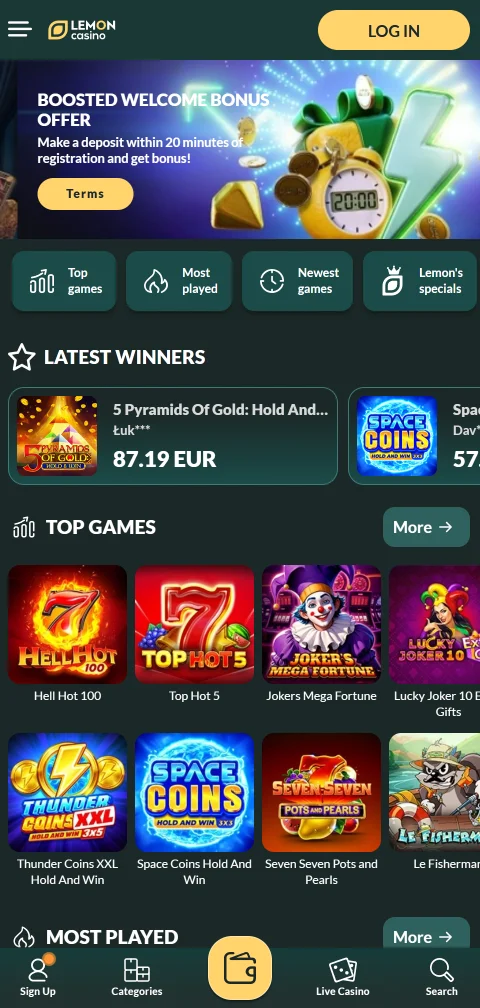
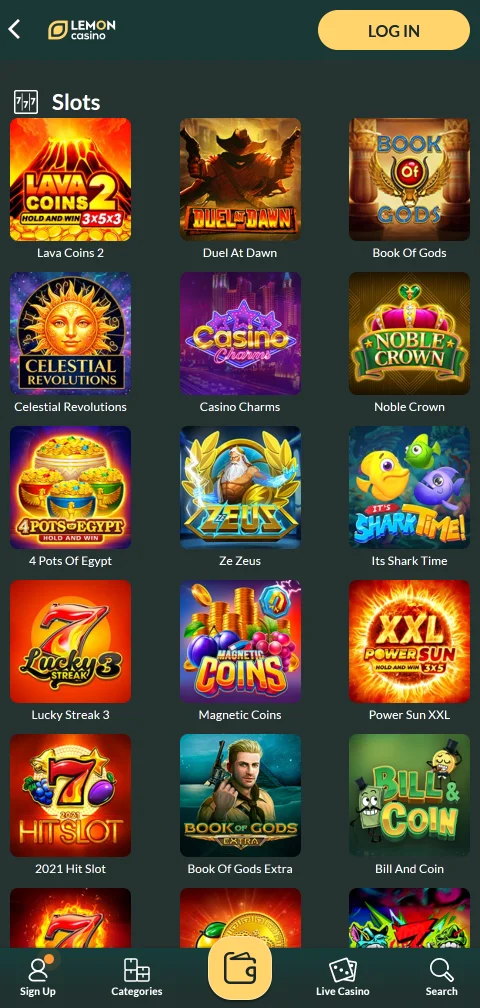

- Curacao licence 5536/JAZ is publicly verifiable, unlike unlicensed rivals.
- Welcome package of 100% up to 300 CAD plus 100 spins gives a solid start.
- Interac e-Transfer support makes CAD deposits genuinely straightforward.
- Library of 4,800+ games covers slots, live tables, and specialty titles.
- Live chat support runs 24/7, which speeds up basic account queries.
- Withdrawals can stretch to 5 days for slower banking methods.
- Wagering requirements on the welcome bonus need careful reading before claiming.
- No confirmed native iOS or Android app, only browser-based mobile play.
- VIP tier structure details are thin compared with top-tier regulated operators.
This Lemon Casino Curacao licence check confirms licence number 5536/JAZ under Orange Entertainment B.V. Canada players get a verifiable regulator reference, a 4,800-plus game count, and Interac support, though the standard 35x wagering on the welcome bonus still needs careful reading.
How We Rate Real Money Online Casinos in Canada
We evaluate real money online casinos on regulatory compliance, player protections, and operational transparency. Our editorial team verifies licensing status, tests payment security, and assesses responsible gambling tools so Canadian players receive fair, evidence-based assessments.
Licensing and Regulatory Compliance
We confirm AGCO registration and an iGaming Ontario operating agreement, or AGLC approval plus an Alberta iGaming Corporation agreement for Alberta operators. Each must satisfy the Registrar’s Standards for Internet Gaming, covering KYC, anti-money-laundering controls, and segregated player funds. Licensing status directly shapes dispute-resolution access and the enforceability of every player protection we test.
Payment Methods and Withdrawal Speed
We measure deposit and withdrawal options including Interac, Visa, Mastercard, and e-wallets. Interac e-Transfer withdrawals clear within 24 hours, while card refunds take 3-5 business days. Fees, minimums, and payout caps all factor in. Licensed Canadian platforms generally settle faster than offshore sites thanks to direct domestic banking relationships.
Bonus Terms and Transparency
We analyse welcome offers, wagering requirements, game restrictions, and maximum withdrawal caps. Requirements of 5x-15x allow realistic conversion, the Canadian average sits near 35x, and anything above 50x makes clearing impractical. We check expiry windows, typically 7-30 days, and confirm terms align with provincial consumer-protection standards.
Game Selection and Software Quality
We assess slot breadth, table depth, live-dealer coverage, and published RTP. Licensed platforms verify game integrity through independent labs such as eCOGRA or GLI. Titles from established suppliers including NetEnt, Pragmatic Play, and Evolution deliver consistent performance and audited random outcomes across desktop and mobile devices.
Responsible Gambling Features
We verify deposit limits, loss limits, session timers, and self-exclusion, all mandatory at account setup under provincial standards. Ontario operators must connect to self-exclusion frameworks, and displayed helpline access is required. Functional, immediately enforced controls signal a platform treating player wellbeing as a compliance duty rather than an optional add-on.
Customer Support and Security
We test support channels, response times, and dispute handling. Live chat resolving wagering questions within minutes indicates strong operational standards, while slow replies suggest capacity gaps. We confirm SSL encryption, secure payment gateways, and data-protection compliance protecting player identity and every financial transaction processed on the platform.


Seven Casino
Cashback welcome offerEditor's Choice
Rizzio Casino
Three-part welcome packageEditor's Choice
Spinko Casino
Welcome BonusEditor's ChoiceUnderstanding Canada's Regulated Online Casino Market
Ontario reshaped Canada’s online casino landscape in April 2022 when private operators gained legal authority to offer real money gaming. Alberta became the second open market on 13 July 2026. Before these shifts, provincial lottery corporations ran the only legal online gambling in most provinces, so competition, stronger protections, and standardized responsible gambling rules are recent gains.
Provincial Licensing Framework
Ontario built the template through the Alcohol and Gaming Commission of Ontario (AGCO), the regulator, and iGaming Ontario (iGO), which manages the commercial marketplace. Operators clear two hurdles: AGCO registration against the Registrar’s Standards, and an iGO operating agreement. On 12 May 2025 iGO became a fully independent agency under the iGaming Ontario Act, ending its AGCO subsidiary status and the conflict of interest Ontario’s Auditor General had flagged. Alberta mirrors this split through the AGLC and the Alberta iGaming Corporation.
Player Age Requirements and Identity Verification
Ontario sets the minimum age at 19, while Alberta permits play from 18, with age verification mandatory before any deposit. Licensed operators run know-your-customer (KYC) checks using government identification or verified bank records. Verification usually completes within minutes, activating eligible accounts quickly while blocking minors and establishing a baseline security standard across the regulated market.
Enforcement Against Unlicensed Operators
AGCO set a hard compliance deadline in October 2022, after which enforcement against unlicensed operators sharpened. Regulators pursue payment processors handling offshore transactions and media promoting unregulated casinos. Alberta estimated roughly 70% of its online play sat in the grey market before launch. Players on unlicensed sites get no dispute resolution, fund-security guarantee, or regulatory recourse, which steadily pushes traffic toward licensed platforms.
| Regulatory Authority | Primary Function | Player Impact | Enforcement Mechanism |
|---|---|---|---|
| AGCO (Ontario) | Operator registration and compliance verification | Ensures security standards and game integrity | Monetary penalties per violation |
| iGaming Ontario | Conducts and manages the private marketplace (independent since May 2025) | Provides regulated operator access and oversight | Operating-agreement termination for non-compliance |
| AGLC / Alberta iGaming Corporation | Regulates and manages Alberta's open market launched July 2026 | Extends licensed play to Alberta residents 18+ | Registration revocation for serious breaches |
| Provincial Crown Bodies (BC, MB, QC) | Regional licensing via Crown operators | Channels online play through government platforms | Province-specific enforcement protocols |
| Kahnawake Gaming Commission | International licensing for North American operators | Accepted by some players; lighter oversight than provincial licences | Licence revocation for serious violations |
| Malta Gaming Authority | European licensing with global reach | Rigorous oversight but no Canadian consumer recourse | Substantial fines and licence suspension |
Licensed Platforms vs. Unlicensed Alternatives
Licensing status decides player security, legal standing, and access to consumer protections. Platforms under Ontario or Alberta frameworks provide transparent terms, audited fairness, and regulatory oversight. Unlicensed sites may dangle larger bonuses, yet they operate outside provincial law with no accountability, leaving players exposed if funds or payouts are disputed.
Consumer Protections Under Licensing
Licensed operators must switch on deposit limits, loss limits, session timers, and self-exclusion at account setup. Dispute resolution runs through regulatory channels, with AGCO, iGO, or the AGLC mediating operator conflicts. Fund-security rules keep player deposits segregated from operating accounts, so balances stay accessible even if an operator hits financial trouble or exits the market entirely.
Legal Status and Tax Implications
Playing at licensed Ontario or Alberta platforms is legal for eligible residents, and recreational winnings are generally not taxed in Canada. Unlicensed sites sit in a legal grey area with zero recourse if disputes arise. Licensed operators remit taxes and fees to provincial governments; Alberta modelled roughly a 20% tax rate on Ontario’s structure.
Licensed Canadian Platforms | Unlicensed Offshore Sites |
|---|---|
| AGCO/AGLC registration and provincial operating agreement required | No regulatory oversight or licensing requirements |
| Mandatory deposit limits, loss limits, session controls | No responsible gambling tools enforced |
| Dispute resolution through provincial regulatory channels | No formal complaint resolution mechanism |
| Segregated player funds and fund-security requirements | No guarantee of fund protection |
| Game fairness verified by eCOGRA or GLI auditors | RTP and fairness claims unverified |
| Age verification (19+ ON / 18+ AB) and KYC mandatory | Minimal or no identity verification |
Payment Methods and Withdrawal Processing
Interac and cards handle most deposits and withdrawals at licensed Canadian casinos. Processing time varies sharply by method: Interac e-Transfer withdrawals typically clear within 24 hours, while Visa and Mastercard refunds take 3-5 business days. Matching a payment method to your banking habits reduces both delay and cost across every transaction.
Interac Payment Solutions
Interac e-Transfer is the fastest route for Canadian players, with deposits landing in minutes and withdrawals usually clearing inside 24 hours. It links directly to a bank account, so card details never leave the banking channel. Licensed platforms commonly waive Interac fees, though some set minimum deposits near CAD 10 or cap single withdrawals.
Credit and Debit Cards
Visa and Mastercard stay widely accepted, though some issuers decline gambling transactions. Deposits post instantly, while withdrawals take 3-5 business days as networks process refunds. Card use can suit players tracking rewards, but keeping clear records helps, since separating recreational play from any taxable activity avoids confusion at filing time.
E-Wallets and Alternative Methods
Skrill, Neteller, and PayPal add account-based flexibility with transaction histories and two-factor authentication. Deposits are instant and withdrawals often settle same-day, roughly matching Interac speed. Some licensed platforms also accept cryptocurrency such as Bitcoin, though price volatility can shift the final deposit value between confirmation and crediting.
Understanding Bonus Terms and Wagering Requirements
Casino bonuses in Canada carry conditions that balance operator risk against player value. Wagering requirements are the core mechanic deciding whether a bonus ever converts to withdrawable cash. Reading them first separates genuinely useful promotions from offers whose conversion odds are unrealistic for an average recreational player.
Wagering Requirement Fundamentals
Wagering requirements set how many times bonus funds must be staked before withdrawal. A 25x requirement on a CAD 50 bonus means CAD 1,250 in total wagers. The Canadian market average sits near 35x, with 25-30x considered low and 50x or higher restrictive. Zero-wagering offers exist but usually cap maximum withdrawals at modest amounts.
Game Contribution Percentages
Games contribute unequally toward wagering. Slots generally count 100%, table games 10-50%, and live-dealer titles often 0-25%. Focusing on 100%-contribution games clears requirements fastest, and every operator lists these rates in the bonus terms. Ignoring the table can mean staking funds that never advance progress toward withdrawal eligibility.
Deposit Match Bonuses
Deposit match bonuses add a percentage to your deposit, such as a 100% match doubling the funds. A CAD 50 deposit with a 100% match and 25x wagering demands CAD 2,500 in total stakes, since the requirement applies to deposit plus bonus combined. Tiered offers match larger deposits at lower percentages to manage exposure.
How to Get Started at Licensed Canadian Casinos
Joining a licensed real money casino in Canada takes account creation, age verification, and a first deposit. The full process usually completes within 10-15 minutes, with most platforms allowing play immediately after registration and deposit confirmation.
- Step 1
Select a Licensed Platform
Choose an operator registered with AGCO plus an iGaming Ontario agreement, or AGLC plus an Alberta iGaming Corporation agreement. Confirm licensing on the official regulator's site, and check that your preferred payment methods and game categories are supported before signing up. This first check takes only a few minutes. - Step 2
Complete Account Registration
Enter your name, date of birth, email, and phone number, then create a strong password. Set responsible gambling preferences, including deposit and loss limits and session timers, during this stage rather than later. Review the terms and conditions carefully, then submit the registration form to move to verification. - Step 3
Verify Age and Identity
Submit government identification or link a verified bank account for KYC. Most checks finish within minutes, though document review can take up to 24 hours. Age verification is mandatory before any deposit: 19 or older in Ontario, and 18 or older in Alberta, with no exceptions permitted. - Step 4
Fund Your Account
Pick a payment method such as Interac e-Transfer, Visa, Mastercard, or an e-wallet, enter the amount, and confirm. Interac and e-wallet deposits arrive instantly, and card deposits within minutes. Note any minimum deposit, which typically sits near CAD 10 on licensed Canadian platforms, before completing the transfer. - Step 5
Review Bonus Terms and Play
Read the wagering requirement, game contribution rates, and expiry window, often 7-30 days, before claiming any promotion. Open the game library through your browser or the mobile app. Keep the deposit and loss limits set earlier active to maintain responsible gambling throughout every session you play.
Responsible Gambling and Player Support Resources
Licensed Canadian casinos must supply responsible gambling tools and clear information about gambling risk. Deposit limits, loss limits, session timers, and self-exclusion let players control spending and reach support quickly. These are regulatory requirements enforced at account setup, not optional extras, which is a defining line between licensed and unregulated platforms.
Mandatory Control Features
Ontario and Alberta rules require every licensed operator to offer deposit limits on daily, weekly, or monthly spending. Loss limits cap losses over set periods, and session timers trigger automatic logout after a chosen duration. Self-exclusion lets players opt out for spans from days to years, with any remaining balance accessible once the exclusion period ends.
Accessing Problem Gambling Support
Licensed platforms must display problem gambling resources and support contacts. Players facing difficulty can reach counselling, peer groups, and financial help through provincial health authorities, including ConnexOntario’s 24/7 line. Many operators show helpline numbers prominently and provide self-assessment tools, helping players review their habits objectively before harm escalates into a larger financial problem.
Responsible Gambling in Canada
Responsible gambling means playing within your means, setting spending limits before you start, and noticing early warning signs. Licensed Canadian casinos mandate deposit limits, loss limits, and session timers so players keep control, and Ontario operators must connect to recognized self-exclusion frameworks. Regular breaks and honest self-assessment help keep gambling an entertainment cost rather than a financial or relationship strain.
When play stops feeling optional, support is available through provincial health authorities, counselling services, and peer groups; ConnexOntario runs a free, confidential line 24 hours a day. Self-exclusion programs let players lock themselves out for extended periods, and helplines connect people with trained counsellors at no cost. Acting early prevents escalation and opens access to treatment addressing the underlying causes.
Final Assessment: Navigating Real Money Online Casinos in Canada
Licensing status, not bonus size, should drive the final choice of platform. Updated 8 September 2026, AGCO and the AGLC continue restricting unlicensed operators’ access to Canadian payment rails and advertising channels. Practically, favour a platform showing both regulatory registration and a provincial operating agreement together; a single credential without the other signals incomplete, and therefore unreliable, market participation that leaves your deposits and disputes without any formal protection.
Real Money Online Casinos in Canada: Common Questions
Are real money online casinos legal in Canada?
Yes, through provincial frameworks. Ontario has licensed private operators since April 2022, and Alberta opened its market on 13 July 2026. Other provinces run online play through Crown corporations. Unlicensed offshore casinos remain outside the law and offer zero consumer protection to players.
What licences should I verify before playing?
For Ontario, confirm AGCO registration plus an iGaming Ontario agreement; for Alberta, AGLC approval plus an Alberta iGaming Corporation agreement. Both credentials are required, not one. Malta or Kahnawake licences are accepted by some sites but provide no Canadian regulatory recourse.
How do wagering requirements work on casino bonuses?
They set how many times bonus funds must be staked before withdrawal. A 25x requirement on a CAD 50 bonus needs CAD 1,250 in wagers. The Canadian average is roughly 35x, with 5x-15x player-friendly. Slots usually contribute 100%, while live-dealer games contribute far less.
What payment methods are fastest for Canadian players?
Interac e-Transfer is fastest, clearing withdrawals within 24 hours, and licensed platforms usually charge no fee. Visa and Mastercard deposit instantly but refund in 3-5 business days. E-wallets like Skrill and Neteller often settle same-day, matching Interac speed closely.
What player protections do licensed casinos provide?
Licensed operators must enable deposit limits, loss limits, session timers, and self-exclusion at setup. Player funds stay segregated from operating accounts, and disputes route through AGCO, iGO, or the AGLC. Age verification (19+ Ontario, 18+ Alberta) and KYC checks are mandatory before any deposit.
What happens if I gamble at an unlicensed casino?
You get no dispute resolution, fund-security guarantee, or regulatory recourse, and winnings cannot be legally enforced. Alberta estimated about 70% of its online play sat in this grey market before July 2026. AGCO targets such operators, though individual players rarely face charges.
Can I use cryptocurrency at Canadian licensed casinos?
Some licensed platforms accept crypto, with Bitcoin and Ethereum most common, though frameworks keep evolving. Transactions can settle within minutes, but price volatility shifts the final deposit value. Confirm crypto support during account setup, since most Ontario and Alberta operators still favour Interac.
When did Alberta's online casino market launch?
Alberta’s regulated market opened on 13 July 2026 under the iGaming Alberta Act, making it Canada’s second open province after Ontario. The AGLC regulates it while the Alberta iGaming Corporation manages operations, and the minimum age for play there is 18.
More about online casinos




Comparing licensing across platforms takes minutes but reveals huge protection gaps. An AGCO-registered operator gives you dispute resolution and segregated funds; an offshore Curaçao site offers neither, which fundamentally changes your legal standing as a Canadian player.