





















Rizzio Casino review
Editor's Choice| Key Feature | 12,000+ games across 75 studios |
| Welcome Bonus | 200% up to $4,000 CAD, 3 deposits |
| Min. Deposit | $20 CAD |
| Number of Games | 12,000+ games |
| Game Providers | Evolution, NetEnt, Hacksaw Gaming, BGaming, Betsoft |
| Payment Methods | Interac, cards, e-wallets, crypto |
| Payment Services | Interac e-Transfer, Visa, Mastercard, Skrill, Bitcoin, Ethereum, USDT |
| Mobile App | Browser-based only, no native app |
| VIP Program | Not published on site or T&Cs (verified 07 Jul 2026) |
| RTP | 96% average across slots |
| License | Anjouan Gaming Board, Comoros |
| Operator | Green Champions Leader SRL, Costa Rica |
| Launch Date | 2025 |
| Legal Age | 18+ |
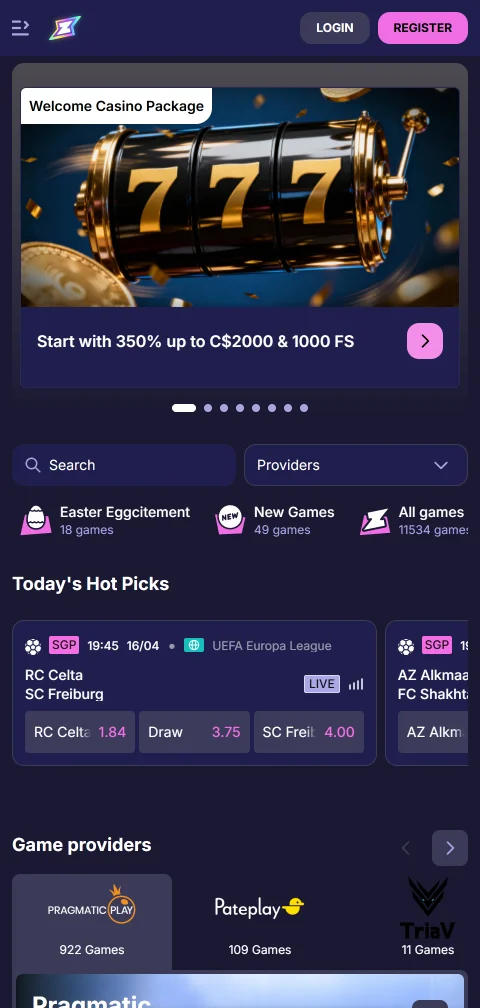
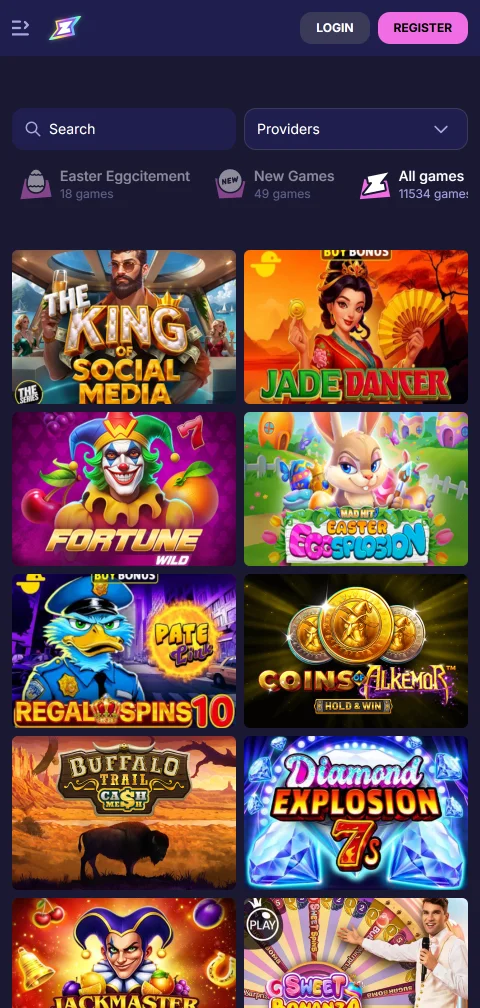

- Library exceeds 12,000 titles across roughly 75 studios.
- Interac e-Transfer supports same-day CAD deposits and withdrawals.
- Crypto cash-outs typically clear in 15 to 30 minutes.
- Three-part welcome package reaches $4,000 CAD across the first three deposits.
- Live chat runs 24/7 alongside an email queue for document-heavy issues.
- Anjouan Gaming Board licensing carries lighter oversight than AGCO-regulated operators.
- Daily withdrawal cap of EUR 500 slows access to larger wins.
- No independent eCOGRA or iTech Labs certificate published for RNG testing.
- No native iOS or Android app; browser access only.
The Rizzio Casino overview points to a 75-provider game mix, Interac-first banking, and a three-part bonus structure worth up to $4,000 CAD at 35x wagering. Our analysis leans on the practical questions: licence clarity, processing times, and whether the player journey stays simple after registration.
Spinko Casino review
Editor's Choice| Key Feature | 1,000+ games across 90+ studios |
| Welcome Bonus | 100% up to $700 CAD + 100 spins |
| Min. Deposit | $20 CAD |
| Number of Games | 1,000+ games |
| Game Providers | Pragmatic Play, Evolution, Hacksaw, NetEnt, Play'n GO |
| Payment Methods | Cards, e-wallets, crypto, bank transfer |
| Payment Services | Visa, Mastercard, Skrill, Neteller, Interac, Bitcoin |
| Mobile App | Browser-based, iOS and Android |
| VIP Program | 4-tier loyalty programme, cashback 5-15% |
| RTP | around 96.5% average RTP |
| License | Anjouan Gaming, licence ALSI-202411025-FI1 |
| Operator | May Sun Services S.A. |
| Launch Date | 2026 |
| Legal Age | 18+ |
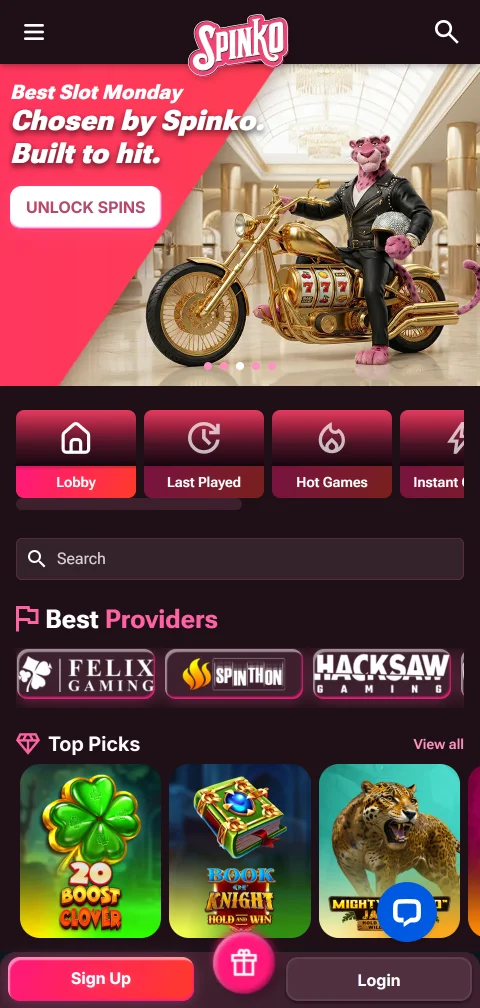

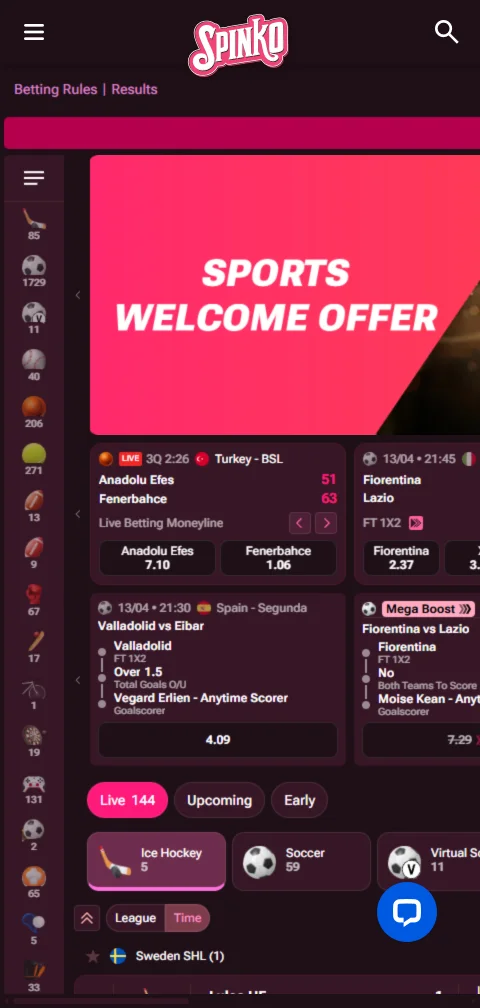
- 1,000+ games sourced from over 90 studios
- Welcome package pairs cash match with 100 free spins
- E-wallet and crypto withdrawals clear within 24 hours
- Automated KYC typically finishes in under an hour
- Weekly crypto cashback runs with no wagering attached
- Anjouan licence carries less oversight than tier-1 regulators
- Deposit, loss, and session limit tools are not offered
- Card and bank withdrawals stretch to 3-5 business days
- No confirmed native mobile app, browser play only
The Spinko Casino overview is useful because it separates confirmed data from marketing copy. Licence number, bonus wagering, and withdrawal limits are checked against the operator’s own published terms rather than estimated, and the game mix across 90-plus studios is measured for depth, not just headline size.
Lemon Casino review
Editor's Choice| Key Feature | Curacao-licensed casino with 4,800+ games |
| Welcome Bonus | 100% up to 300 CAD + 100 spins |
| Min. Deposit | 10 CAD |
| Number of Games | 4,800+ games |
| Game Providers | Pragmatic Play, NetEnt, Evolution, Nolimit City, BGaming |
| Payment Methods | Credit cards, e-wallets, crypto, Interac |
| Payment Services | Visa, Mastercard, Skrill, Neteller, Interac e-Transfer, Bitcoin |
| Mobile App | Mobile browser only, no native app |
| VIP Program | Treasure Boxes loyalty programme |
| RTP | Around 96% average RTP |
| License | Curacao licence 5536/JAZ |
| Operator | Orange Entertainment B.V. |
| Launch Date | 2021 |
| Legal Age | 18+ |
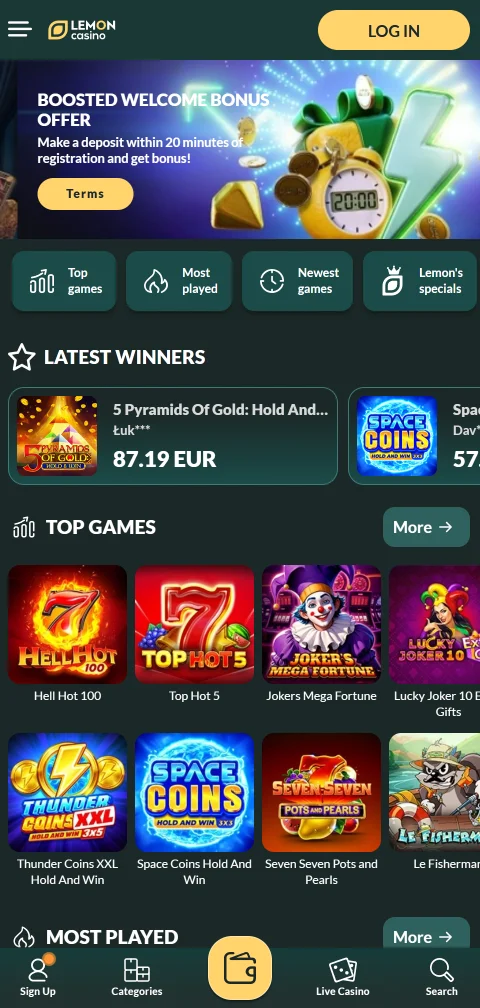
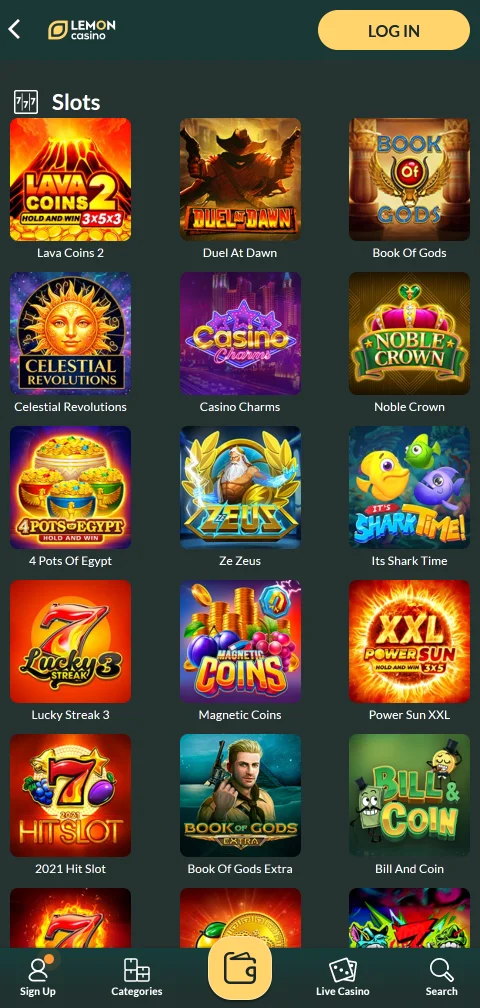

- Curacao licence 5536/JAZ is publicly verifiable, unlike unlicensed rivals.
- Welcome package of 100% up to 300 CAD plus 100 spins gives a solid start.
- Interac e-Transfer support makes CAD deposits genuinely straightforward.
- Library of 4,800+ games covers slots, live tables, and specialty titles.
- Live chat support runs 24/7, which speeds up basic account queries.
- Withdrawals can stretch to 5 days for slower banking methods.
- Wagering requirements on the welcome bonus need careful reading before claiming.
- No confirmed native iOS or Android app, only browser-based mobile play.
- VIP tier structure details are thin compared with top-tier regulated operators.
The Lemon Casino overview focuses on documented details: licence number 5536/JAZ, Interac e-Transfer support, and payout timing. Canada players should pay close attention to the 35x wagering rule and 5-day upper limit on slower withdrawal methods before treating the bonus as free value.
BetAlice Casino review
Editor's Choice| Key Feature | 290+ live dealer tables |
| Welcome Bonus | 120% up to $750 CAD + 200 FS |
| Min. Deposit | $10 CAD |
| Number of Games | 8,600+ |
| Game Providers | 80+ studios |
| Payment Methods | Cards, e-wallets, crypto, Interac |
| Payment Services | Interac, Mastercard, Skrill, Bitcoin |
| Mobile App | Mobile browser only |
| VIP Program | 5-tier VIP program |
| RTP | 98.09% payout rate |
| License | Gaming Board of Anjouan |
| Operator | NovaForge Ltd |
| Launch Date | 2024 |
| Legal Age | 18+ |


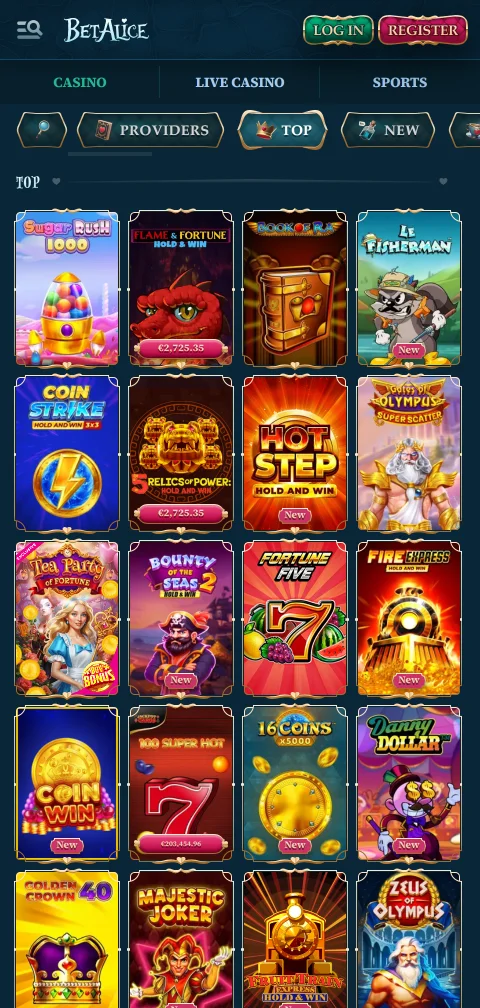
- Live casino spans 290+ tables from Evolution Gaming and Pragmatic Play Live.
- Interac, crypto, and e-wallets cover most Canadian banking needs.
- Low $10 CAD Interac minimum makes deposits accessible.
- Offshore Anjouan licence lacks the recognition of a local Canadian regulator.
- No deposit or spending limit tools, only self-exclusion, in the responsible gaming section.
Our full BetAlice Casino analysis covers the details that matter most to Canadian players: confirmed banking rails, live table minimums, and Evolution Gaming’s Lightning Roulette. The 8,600-plus game library makes this one of the larger NovaForge-network casinos we have tested.
GG Vegas Casino review
Editor's Choice| Key Feature | Mobile-only app with daily free tournaments and GGVegas Originals |
| Welcome Bonus | 25 no-deposit spins plus up to $1,777 over five deposits |
| Min. Deposit | $5 (crypto $50) |
| Number of Games | about 2,000 games |
| Game Providers | Pragmatic Play, Play'n GO, Relax Gaming, Blueprint Gaming, Playtech, GGVegas Originals |
| Payment Methods | Interac, cards, e-wallets, Apple Pay, crypto |
| Payment Services | Interac, Visa, Mastercard, Luxon Pay, Apple Pay, Bitcoin |
| Mobile App | Native iOS and Android app (mobile-only) |
| VIP Program | Weekly 15% cashback in place of tiered VIP |
| RTP | 96.33% published payout |
| License | Isle of Man Gambling Supervision Commission |
| Operator | GG International Limited |
| Launch Date | March 2025 |
| Legal Age | 18+ |



- Isle of Man licence with BMM Test Labs auditing.
- Fair 30x wagering and 25 no-deposit spins.
- Interac and crypto deposits from just $5.
- Withdrawals aimed within 24 hours after KYC.
- Native iOS and Android app with daily free tournaments.
- Available only through the app, with no desktop site.
- Not available to players in Ontario.
- Bonus game-weighting rules are fiddlier than most rivals.
- Live tables are in-house rather than Evolution or Pragmatic Live.
Our GG Vegas Casino overview covers what matters most: 24/7 live chat support, a cashier built on Interac and crypto, and a lobby of roughly 2,000 games. The app is licensed by the Isle of Man Gambling Supervision Commission and audited by BMM Test Labs, so the security story holds up before real money is committed.
How We Evaluate Online Roulette in Canada
Our team applies consistent, evidence-based criteria to online roulette platforms across Canada’s ten provincial systems. We weigh licensing, game mechanics, payout speed, player safeguards and mobile performance, and we verified each benchmark against operator cashier pages and regulator registers.
Licensing & Regulatory Compliance
Valid licensing decides everything else. We confirm registration with Ontario’s AGCO and iGaming Ontario, Alberta’s AGLC, BCLC or Loto-Québec, plus international bodies like Malta’s MGA. Ontario’s public register lists 47 operators running 81 sites as of June 2026, so verification takes minutes. Compliant platforms carry deposit limits, self-exclusion and documented complaint handling, and they submit to routine independent audits confirming payout integrity.
Game Variety & Software Quality
We catalogue every wheel on offer: European single-zero, American double-zero, French La Partage and live dealer. RTP transparency matters most—European roulette should read 97.30%. We check provider pedigree from Evolution, NetEnt and Pragmatic Play Live, plus stream stability and load times. Certified titles from established studios signal quality, while missing RTP disclosures or unbranded games flag weaker platforms worth avoiding.
Bonuses & Wagering Terms
We judge offers on clearing math, not headline size. A 100% match to $200 at 30x wagering demands $6,000 in bets before withdrawal, so terms outweigh the number. Ontario operators face tighter advertising rules than offshore sites. We scrutinise wagering multiples, game weighting, maximum cash-out caps and expiry windows, separating genuine value from promotions engineered to look generous while quietly restricting payouts.
Banking & Withdrawal Speed
Payout timing shapes trust. Licensed Canadian platforms support Interac e-Transfer, Visa, Mastercard and e-wallets, all in CAD. Our tested figures show premium sites clearing Interac withdrawals near 18 hours, e-wallets within 24, and bank transfers across 1–3 business days. First withdrawals often trigger KYC checks adding up to 3 days. We reward transparent fee schedules and consistent processing over optimistic marketing claims.
Mobile Experience & Accessibility
Most Canadians now spin on phones, so mobile quality is decisive. We test responsive layouts and native iOS and Android apps for chip-placement accuracy and wheel clarity. Live tables stream cleanly at roughly 5 Mbps, consuming 50–100 MB hourly. We measure load times, crash rates and disconnection handling during active bets, since a stable mobile build now matters as much as a polished desktop site.
Support & Player Protection
We contact live chat, email and phone channels with real queries, expecting replies inside 2 hours. Answer accuracy weighs more than raw speed. Licensed operators must enforce deposit limits, loss caps, session reminders and self-exclusion under provincial rules. We review terms clarity and dispute handling, since responsive support plus enforced safeguards is the clearest signal that an operator treats player welfare seriously.


Rizzio Casino
Three-part welcome packageEditor's Choice
Spinko Casino
Welcome BonusEditor's Choice
Seven Casino
Cashback welcome offerEditor's ChoiceUnderstanding Canada's Fragmented Roulette Regulatory Landscape
Canada regulates online roulette through provincial autonomy rather than a single national licence. Since 1985 Ottawa has delegated gaming oversight to the provinces, producing ten separate systems. Legal wheels, licensing rules and player safeguards therefore shift sharply with geography. Confirming your province’s framework is the essential first step before funding any account.
Provincial Licensing Models
Ontario opened Canada’s first competitive iGaming market on 4 April 2022 under the AGCO and iGaming Ontario. That register now lists 47 operators running 81 gaming sites as of June 2026, all serving players physically in Ontario and aged 19 or older. British Columbia keeps a monopoly through BCLC’s PlayNow, and Quebec does the same via Loto-Québec’s Espacejeux for residents aged 18+. Alberta launched its own competitive private market on 13 July 2026, becoming the second open Canadian jurisdiction alongside the government-run Play Alberta site. Manitoba, Saskatchewan and the remaining provinces have not authorised private online casinos, leaving those players reliant on offshore platforms.
Compliance Requirements for Licensed Operators
Licensed roulette platforms meet strict operating standards. AGCO operators must provide deposit limits, loss limits, session reminders and self-exclusion, with daily deposit caps commonly set between $25 and $5,000. Game testing requires independent certification from eCOGRA, iTech Labs or GLI, confirming RNG integrity. Operators segregate player funds, submit to regular financial audits and cannot advertise to minors or use misleading bonus language. Complaint handling must be documented and timely. Standards differ by province—Loto-Québec applies tighter controls than Ontario’s open market, while internationally licensed offshore sites operate under separate regimes such as Malta’s MGA.
Provincial Licensed Platforms | Licensed Offshore Operators |
|---|---|
| Regulatory Authority | Provincial: AGCO, AGLC, BCLC, Loto-Québec; Offshore: MGA, Curaçao |
| Player Location Requirement | Provincial: geolocated inside province (ON, AB, BC, QC); Offshore: accessible from Canada |
| Deposit/Withdrawal Methods | Provincial: Interac, Visa/Mastercard, e-wallets in CAD; Offshore: broader international options |
| Bonus Restrictions | Provincial: stricter advertising limits; Offshore: more flexible promotion terms |
| Game Variety | Provincial: curated libraries; Offshore: wider roulette variants and live tables |
| Responsible Gambling Tools | Provincial: mandatory limits and self-exclusion; Offshore: varies by operator |
Roulette Game Mechanics and Variants Available in Canada
Canadian roulette spans several variants, each with its own house edge. European roulette uses one zero across numbers 0–36, fixing the edge at 2.70%. American roulette adds a 00 pocket, lifting it to 5.26%. French roulette runs the European wheel but applies La Partage, halving even-money losses on zero and cutting the effective edge to roughly 1.35%. Licensed Canadian platforms lead with European tables because that 2.56-point advantage over American wheels compounds sharply over time.
Live Dealer vs. RNG Roulette
Live dealer roulette streams a real croupier spinning a physical wheel from monitored studios in Malta, Canada and other licensed hubs, with bets placed through a digital overlay. The physical wheel removes any RNG-manipulation concern outright. RNG roulette instead relies on certified algorithms tested by iTech Labs or GLI. Both must clear independent standards—live tables face regulatory monitoring, RNG games require lab certification. Evolution and Pragmatic Play Live dominate the live segment, and live tables typically set higher minimum stakes than RNG versions, which run faster and start lower.
Specialized Roulette Variants
Beyond the classics, licensed platforms carry engineered variants. Double Ball Roulette runs two balls for altered payouts, while 3D Roulette adds multiple camera angles without a dealer. Speed Roulette compresses spin cycles, and Multi-Wheel Roulette lets players bet several wheels at once. Lightning Roulette applies random multipliers to straight-up numbers, and each variant still publishes its RTP under certification rules. NetEnt, Play’n GO and Evolution supply many of these titles. Canadians should confirm the exact rule set and RTP—often a point or two below the 97.30% standard—before wagering.
Payment Methods and Withdrawal Processes for Canadian Roulette Players
Payment options directly shape the Canadian roulette experience. Ontario operators accept Interac e-Transfer, which settles deposits within minutes and now averages roughly 18 hours for withdrawals at premium sites. Visa, Mastercard and debit remain standard, while Skrill and Neteller clear payouts inside 24 hours. Bank transfers still take 1–3 business days. Every licensed Canadian platform quotes balances in CAD, removing foreign-exchange fees. Provincial sites keep separate rails: Espacejeux runs on Loto-Québec infrastructure, PlayNow on BCLC systems, each with its own approved method list.
Deposit Limits and Responsible Gambling Controls
AGCO-regulated platforms treat deposit limits as a core requirement, not an add-on. Players set daily, weekly or monthly caps, commonly between $25 and $5,000 per day. Loss limits cap total losses over a chosen window, and session reminders flag elapsed play time. Self-exclusion suspends account access temporarily or permanently. Once active, a limit cannot be reduced until a cooling-off period passes, though increases apply after a delay. Setting a cap aligned to an entertainment budget before the first spin remains the single most effective harm-reduction step, and limit flexibility varies between provincial platforms.
Withdrawal Dispute Resolution
Licensed Canadian platforms must run transparent payout and dispute processes. When a withdrawal stalls past the stated window, players file a complaint through support, and AGCO operators must respond within defined timeframes and log each resolution step. First withdrawals frequently trigger KYC identity checks that add anywhere from 2 hours to 3 business days. Unresolved cases escalate to the relevant provincial commission—iGaming Ontario, AGLC, BCLC or Loto-Québec. Players should keep timestamps and confirmation numbers, since most legitimate delays trace to banking verification or fraud screening rather than operator refusal.
Trust, Licensing, and Player Protection Standards
Trust in an online roulette platform rests on verifiable licensing. Ontario operators must display AGCO and iGaming Ontario credentials, Alberta sites their AGLC registration, PlayNow its BCLC authority, and Espacejeux its Loto-Québec status. Offshore platforms serving Canadians should hold MGA or Curaçao licences. Ontario’s public register lists 47 operators across 81 sites, so players can confirm status in minutes rather than trusting on-site claims. Unlicensed platforms carry elevated fraud risk and offer no complaint recourse.
Game Integrity and RNG Certification
RNG certification confirms that roulette outcomes are genuinely random. Independent labs—eCOGRA, iTech Labs and GLI—test algorithms for statistical randomness with no exploitable pattern, and licensed Canadian platforms must use their certified systems. Reports publish RTP: European roulette’s theoretical figure is 97.30%, matching the 2.70% house edge across millions of spins, though single sessions swing widely. Live dealer tables face different checks—physical wheels are maintained to certified tolerances and croupier conduct is monitored. Players should confirm visible certification badges and RTP disclosures before staking real money.
Data Security and Responsible Gambling Resources
Licensed platforms encrypt traffic with TLS/SSL, shown by the padlock in the browser bar, and must comply with Canada’s PIPEDA privacy law. Account data cannot be shared with third parties without consent. Responsible gambling links—problem-gambling helplines, self-assessment tools and counselling contacts—must sit prominently on-site. ConnexOntario, Quebec’s help line and other provincial services provide free, confidential support, and self-exclusion requests must be actioned promptly across an operator’s brands. Players in distress should contact these services immediately rather than waiting for harm to deepen.
Mobile Roulette Accessibility and Platform Quality
Mobile has become the main way Canadians reach roulette, with licensed platforms shipping responsive sites and native apps. Full libraries load on phones and tablets with no feature lockout. Responsive design rescales cleanly from 4-inch phones to 12-inch tablets while preserving button accuracy. Native iOS and Android builds tune performance through direct device integration, and touch controls place chips precisely on smaller screens. Live dealer tables stream HD video and audio wherever the connection holds. Stability is critical, since a crash during an active bet invites disputes, so devices should run iOS 12+ or Android 8+.
Technical Requirements and Connectivity
Mobile roulette needs a steady connection—WiFi, 4G or 5G all work, though live tables demand more bandwidth than RNG games. Live sessions consume roughly 50–100 MB per hour, so capped data plans warrant monitoring. A quick speed test confirming at least 5 Mbps download prevents mid-spin dropouts. Interruptions during an active bet may void or hold the wager depending on the terms, so players should read the disconnection clause first. Some platforms buffer bet placement briefly and submit once the signal returns, reducing the risk of a lost stake.
App Availability and Download Security
Licensed Canadian platforms distribute apps through the Apple App Store and Google Play, keeping downloads authentic and malware-free. Sideloading from third-party sites risks tampered copies, so players should stay inside official stores. Genuine apps list a publisher name matching the operator and carry verified user reviews. On install, apps request only relevant permissions—camera for live video, microphone for audio, location for age verification—and players should grant nothing beyond that. Regular updates patch security gaps, so accepting prompts matters. Many operators also offer instant browser play, avoiding installation while running marginally slower than a native build.
How to Choose a Safe Roulette Platform in Canada
Our team recommends a systematic selection process that places regulatory compliance and player safeguards ahead of every other factor.
- 1
Verify Licensing Status
Confirm licensing on your provincial regulator's site before signing up. Ontario players check the iGaming Ontario register, which lists 47 operators across 81 sites; Alberta players verify AGLC registration after the 13 July 2026 launch; Quebec and BC players confirm Loto-Québec or BCLC. This check takes about five minutes and screens out unlicensed sites offering no dispute recourse. - 2
Review Responsible Gambling Tools
Open the responsible gambling settings before funding an account. Confirm deposit limits, loss limits, session reminders and self-exclusion all work, and set a daily cap within the typical $25 to $5,000 range. Test each control rather than assuming it functions. Platforms hiding or omitting these mandatory tools fall short of Canadian licensing standards and warrant walking away immediately. - 3
Check RTP and Game Certification
Locate posted RTP figures for each roulette variant. European tables should read 97.30%; any large shortfall signals a problem worth questioning. Confirm live dealer games show certification badges from eCOGRA, iTech Labs or GLI, and that rules, odds and payouts are stated plainly. Clear disclosure of game mechanics reflects an operator confident in the fairness of its wheels. - 4
Test Customer Support
Send a real question to support before depositing. Live chat should answer within about two hours with accurate, specific guidance rather than a scripted reply. Slow or vague responses usually foreshadow deeper operational issues. Since disputes can surface after a big win, responsive and knowledgeable support is a reliable early indicator of how an operator will treat you later. - 5
Start Small and Monitor
Begin with a modest deposit and conservative stakes to gauge the platform first-hand. Track deposit speed, wheel performance and withdrawal timing—premium Interac payouts should clear near 18 hours. Scale up only once the first cycle confirms reliability. This staged approach limits financial exposure and prevents rushed decisions driven by promotional pressure rather than tested experience.
Our Commitment to Responsible Gambling in Canada
Responsible gambling is foundational to platform quality, not an afterthought. Licensed Canadian operators must supply deposit limits, loss limits, session reminders and self-exclusion, with daily deposit caps commonly ranging from $25 to $5,000. These controls exist because gambling harm affects real people, and our assessment shows they work best set proactively—before difficulty appears, not after. A daily limit matched to an entertainment budget remains the single most effective harm-reduction step a player can take on any regulated wheel.
If gambling stops feeling like entertainment, confidential help is available at once. ConnexOntario, Quebec’s provincial help line, BCLC support services and equivalent programs across other provinces offer free counselling and referrals. Self-exclusion can restrict access across an operator’s brands simultaneously, and licensed platforms must action such requests promptly. Reaching out early is a practical, sensible response rather than a sign of weakness, and it protects both financial stability and emotional wellbeing before pressures escalate.
Expert Assessment of Online Roulette in Canada
Canadian players, evaluated 11 September 2026, face a system balancing innovation against protection. Ontario’s 47 registered operators encourage competition, while Quebec and BC monopolies enforce consistency, and offshore MGA-licensed sites fill gaps in unregulated provinces. The central lesson is that licensing—not game count or bonus—should drive selection. Practically, Canadians should confirm a platform’s regulator, test its withdrawal speed with a small first payout, and only then commit a larger bankroll.
Frequently Asked Questions About Online Roulette in Canada
Is it legal to play online roulette in Canada?
Yes, playing online roulette is legal on licensed platforms. Since 1985 the Criminal Code has let provinces regulate gambling, so Canadians can use Ontario’s 47 registered operators, Quebec’s Espacejeux, BC’s PlayNow, Alberta’s market that opened 13 July 2026, or licensed offshore sites. Unlicensed platforms offer no legal protection.
Which roulette variant offers the best odds for Canadian players?
European roulette gives better odds with a 2.70% house edge, versus American roulette’s 5.26%. French roulette with La Partage lowers the effective edge to about 1.35%. Licensed Canadian platforms feature European tables prominently, and choosing them improves long-term expectation by roughly 2.56 percentage points.
How quickly can I withdraw winnings from a licensed Canadian platform?
Timing depends on method. E-wallets like Skrill clear within 24 hours, and Interac e-Transfer averages around 18 hours at premium sites. Bank transfers take 1–3 business days and card withdrawals 5–7 days. First withdrawals often add a KYC check of up to 3 business days.
What responsible gambling tools should I use before playing roulette?
Set a deposit limit—typically anywhere from $25 to $5,000 daily—matched to your budget before wagering. Add loss limits, enable session reminders, and use self-exclusion if urges become hard to control. These four tools are mandatory on every licensed Canadian platform, so activate them proactively.
Are roulette games at licensed Canadian platforms rigged?
No. Licensed platforms run RNG systems certified by eCOGRA, iTech Labs or GLI, and live tables use monitored physical wheels. European roulette’s audited RTP is 97.30%. Rigging would breach licensing and risk criminal liability, so audited operators have strong incentives to keep every wheel fair.
Which provinces have the most roulette platform options available?
Ontario leads with 47 licensed operators running 81 gaming sites as of June 2026. Quebec and British Columbia restrict legal play to single government platforms, Espacejeux and PlayNow. Alberta opened a competitive market on 13 July 2026, while remaining provinces rely on offshore licensed sites.
What minimum age applies to online roulette in Canada?
The minimum age is 19 in Ontario, Alberta and British Columbia, but 18 in Quebec. Every licensed platform uses geolocation and identity verification to confirm both age and province before wheels load. Playing under the provincial minimum voids winnings and breaches operator terms.
What should I do if I experience a problem with a roulette platform?
Contact support first with timestamps and bet details; licensed sites should respond within about 2 hours. If unresolved, escalate to your provincial regulator—iGaming Ontario, Alberta’s AGLC, Quebec’s Loto-Québec or BC’s BCLC. Keep all records, since dispute resolution relies on documented communication.
More about online casinos




Compare withdrawal timing up front. Interac payouts average around 18 hours at premium sites but stretch past 47 at budget ones. If cash-out speed matters to you, verify it on the cashier page instead of learning the hard way after a win.