





















Lemon Casino review
Editor's Choice| Key Feature | Curacao-licensed casino with 4,800+ games |
| Welcome Bonus | 100% up to 300 CAD + 100 spins |
| Min. Deposit | 10 CAD |
| Number of Games | 4,800+ games |
| Game Providers | Pragmatic Play, NetEnt, Evolution, Nolimit City, BGaming |
| Payment Methods | Credit cards, e-wallets, crypto, Interac |
| Payment Services | Visa, Mastercard, Skrill, Neteller, Interac e-Transfer, Bitcoin |
| Mobile App | Mobile browser only, no native app |
| VIP Program | Treasure Boxes loyalty programme |
| RTP | Around 96% average RTP |
| License | Curacao licence 5536/JAZ |
| Operator | Orange Entertainment B.V. |
| Launch Date | 2021 |
| Legal Age | 18+ |


- Curacao licence 5536/JAZ is publicly verifiable, unlike unlicensed rivals.
- Welcome package of 100% up to 300 CAD plus 100 spins gives a solid start.
- Interac e-Transfer support makes CAD deposits genuinely straightforward.
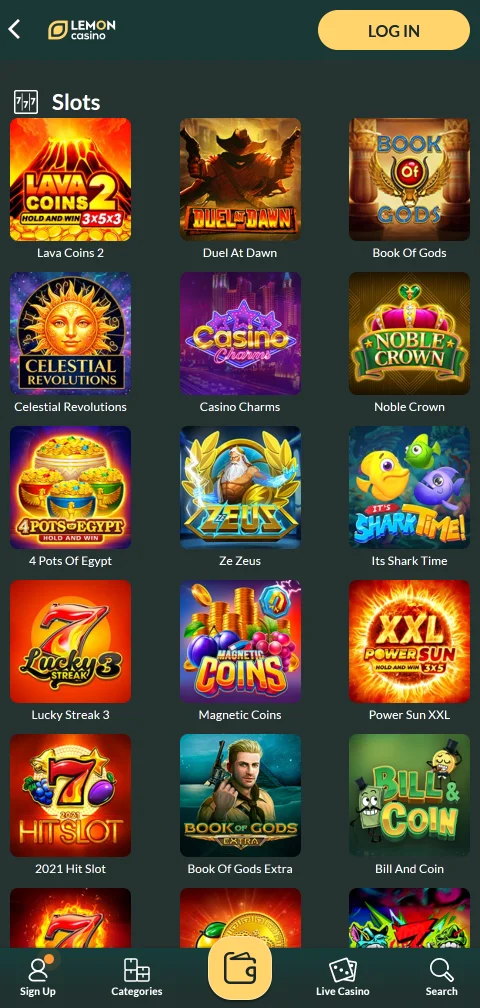
- Library of 4,800+ games covers slots, live tables, and specialty titles.
- Live chat support runs 24/7, which speeds up basic account queries.
- Withdrawals can stretch to 5 days for slower banking methods.
- Wagering requirements on the welcome bonus need careful reading before claiming.
- No confirmed native iOS or Android app, only browser-based mobile play.
- VIP tier structure details are thin compared with top-tier regulated operators.
This Lemon Casino Curacao licence check confirms licence number 5536/JAZ under Orange Entertainment B.V. Canada players get a verifiable regulator reference, a 4,800-plus game count, and Interac support, though the standard 35x wagering on the welcome bonus still needs careful reading.
GG Vegas Casino review
Editor's Choice| Key Feature | Mobile-only app with daily free tournaments and GGVegas Originals |
| Welcome Bonus | 25 no-deposit spins plus up to $1,777 over five deposits |
| Min. Deposit | $5 (crypto $50) |
| Number of Games | about 2,000 games |
| Game Providers | Pragmatic Play, Play'n GO, Relax Gaming, Blueprint Gaming, Playtech, GGVegas Originals |
| Payment Methods | Interac, cards, e-wallets, Apple Pay, crypto |
| Payment Services | Interac, Visa, Mastercard, Luxon Pay, Apple Pay, Bitcoin |
| Mobile App | Native iOS and Android app (mobile-only) |
| VIP Program | Weekly 15% cashback in place of tiered VIP |
| RTP | 96.33% published payout |
| License | Isle of Man Gambling Supervision Commission |
| Operator | GG International Limited |
| Launch Date | March 2025 |
| Legal Age | 18+ |


- Isle of Man licence with BMM Test Labs auditing.
- Fair 30x wagering and 25 no-deposit spins.
- Interac and crypto deposits from just $5.
- Withdrawals aimed within 24 hours after KYC.
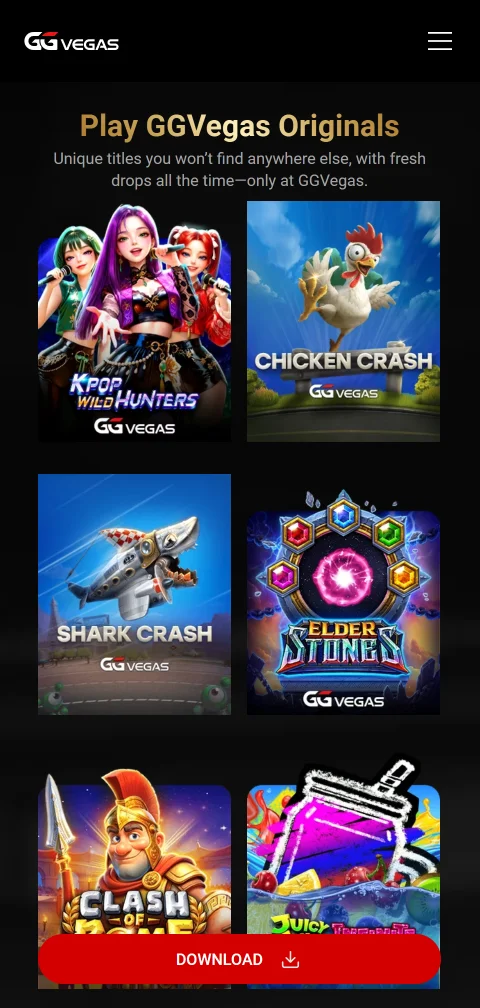
- Native iOS and Android app with daily free tournaments.
- Available only through the app, with no desktop site.
- Not available to players in Ontario.
- Bonus game-weighting rules are fiddlier than most rivals.
- Live tables are in-house rather than Evolution or Pragmatic Live.
A closer look at GG Vegas Casino review shows a mobile-only operator run by GG International Limited, the GGPoker team, on an Isle of Man licence. Canadian players outside Ontario can deposit in CAD from $5 through Interac, cards, or crypto. The path from sign-up to cash-out is what we test, and withdrawals here are typically cleared within 24 hours.
BetAlice Casino review
Editor's Choice| Key Feature | 290+ live dealer tables |
| Welcome Bonus | 120% up to $750 CAD + 200 FS |
| Min. Deposit | $10 CAD |
| Number of Games | 8,600+ |
| Game Providers | 80+ studios |
| Payment Methods | Cards, e-wallets, crypto, Interac |
| Payment Services | Interac, Mastercard, Skrill, Bitcoin |
| Mobile App | Mobile browser only |
| VIP Program | 5-tier VIP program |
| RTP | 98.09% payout rate |
| License | Gaming Board of Anjouan |
| Operator | NovaForge Ltd |
| Launch Date | 2024 |
| Legal Age | 18+ |



- Live casino spans 290+ tables from Evolution Gaming and Pragmatic Play Live.
- Interac, crypto, and e-wallets cover most Canadian banking needs.
- Low $10 CAD Interac minimum makes deposits accessible.
- Offshore Anjouan licence lacks the recognition of a local Canadian regulator.
- No deposit or spending limit tools, only self-exclusion, in the responsible gaming section.
The BetAlice Casino in-depth look highlights the confirmed regulatory, support, and withdrawal details Canada players should know before depositing. Live blackjack and roulette minimums, along with 24/7 live chat, feature prominently in the findings.
Spinzen Casino review
Editor's Choice| Key Feature | 4,000+ games with quick e-wallet payouts |
| Welcome Bonus | 270% up to C$4,250 + 550 free spins |
| Min. Deposit | C$20 |
| Number of Games | 4,000+ |
| Game Providers | Pragmatic Play, Evolution, NetEnt, Play'n GO |
| Payment Methods | Cards, e-wallets, bank transfers, crypto |
| Payment Services | Visa, Mastercard, Interac, Skrill, Bitcoin |
| Mobile App | Mobile browser |
| VIP Program | Yes, 100-level VIP scheme |
| RTP | Not independently audited |
| License | Anjouan Gaming Board |
| Operator | Fionex Holding Ltd |
| Launch Date | 2025 |
| Legal Age | 18+ |


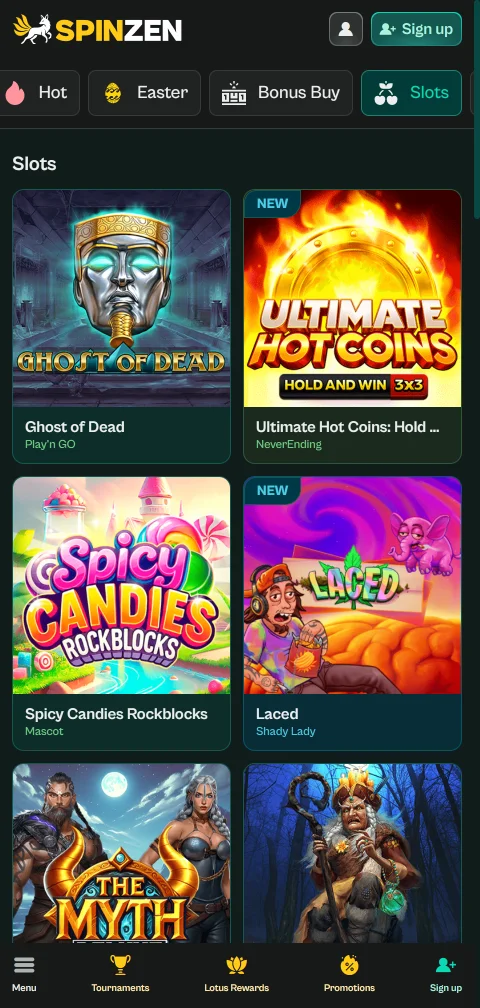
- More than 4,000 games from over 90 software providers
- Interac, cards, e-wallets, and crypto suit Canadian banking habits
- E-wallet and crypto withdrawals can clear within 0-24 hours
- Anjouan Gaming Board licence lacks independent RTP auditing
- 45x wagering on welcome package is above market average
- Support operates only in English despite multi-currency reach
Our player guide is built around what Canadian users ask first: deposit minimums, withdrawal speed, and bonus terms. On those points, the platform delivers a large library and quick e-wallet payouts, offset by a demanding 45x wagering requirement.
11Croco Casino review
| Key Feature | 8,000+ games, crypto-friendly banking |
| Welcome Bonus | 130% up to $680 CAD |
| Min. Deposit | $30 CAD |
| Number of Games | 8,000+ games |
| Game Providers | Pragmatic Play, Evolution, NoLimit City |
| Payment Methods | Cards, Interac, e-wallets, crypto |
| Payment Services | Visa, Mastercard, Interac, Bitcoin, USDT |
| Mobile App | Browser-based, no native app |
| VIP Program | Yes, six-tier VIP ladder |
| RTP | Around 96% average |
| License | Curaçao GCB OGL/2023/176/0095 |
| Operator | Hollycorn N.V. |
| Launch Date | Launched 2024 |
| Legal Age | 18+ |
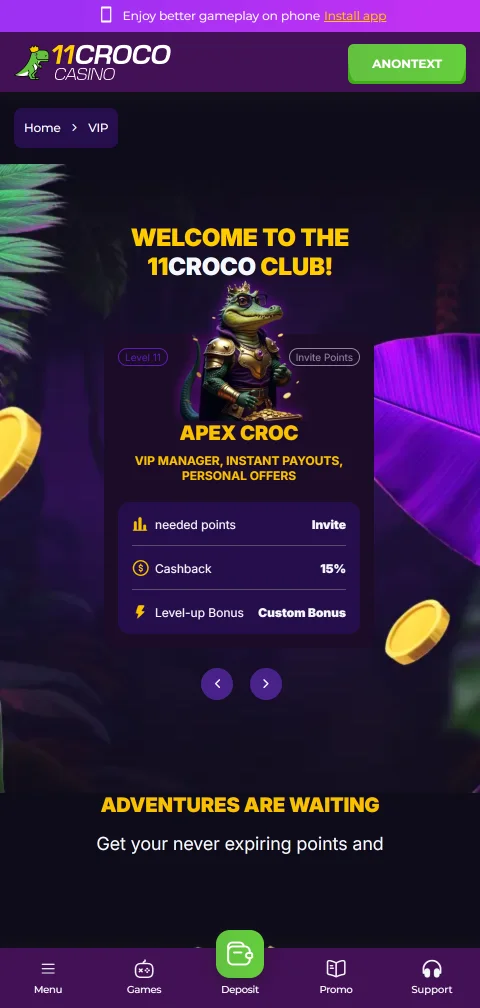


- 8,000+ games spanning slots and live tables
- Interac and crypto deposits supported for Canadians
- Verifiable Curaçao GCB licence, number OGL/2023/176/0095
- Six-tier VIP club with cashback and free spins
- 40x wagering applies to deposit-only bonus funds
- Bonus validity window closes after just 3 days
- Weekly withdrawal cap sits at 7,500 EUR equivalent
Before depositing, read our 11Croco Casino player guide with a focus on onboarding, Interac availability, and bonus restrictions. That sequence matters because the first friction point often shows up in the wagering rules, not the software.
Our Evaluation Method for Trusted Canadian Casinos
Every operator in this guide is checked against AGCO’s Registrar’s Standards for Internet Gaming and iGaming Ontario’s operating agreements. Ratings reflect verifiable data: licence status, published payout timelines, and RNG certification records, not marketing copy.
Trust & Licensing
AGCO licensing plus BetGuard participation form the baseline, since all 82 regulated Ontario sites must integrate with the centralized self-exclusion registry launched May 14, 2026. Operators outside Ontario are checked against Kahnawake Gaming Commission or Malta Gaming Authority terms instead. We confirm active registry status, FINTRAC-aligned anti-money-laundering controls, and 19+ verification before any other criterion counts. Platforms failing geolocation or KYC checks are excluded regardless of other strengths.
Bonuses & Promotions
Bonus terms are checked against Canadian consumer-protection rules on wagering requirements, max-bet caps, and game restrictions. AGCO’s advertising code bars targeting self-excluded or vulnerable players, so promotional emails must stop within 24 hours of any exclusion request. We compare stated wagering multiples against deposit minimums rather than headline bonus size. Clear terms score higher than large but vague offers.
Banking & Payout Speed
Interac e-Transfer withdrawals typically clear same-day, while card-based refunds can take one to three business days under current AGCO disclosure rules. We test whether operators publish these windows plainly and confirm no undisclosed fees apply to CAD transactions. FINTRAC reporting compliance is checked alongside verification delay times. Same-day processing with transparent limits earns the highest marks here.
Games & Software
Titles must carry RNG certification from an accredited lab such as GLI before AGCO approves them for the Ontario market. Auto-play remains banned on slots under the Registrar’s Standards, and we flag any platform still offering it. Library depth across slots, table games, and live dealer formats is measured against mobile performance. Certification gaps outweigh library size in the final score.
UX & Mobile
Mobile sites and apps are tested for geofencing accuracy, since blocked access outside Ontario borders is a licence condition, not a bug. Session reminders and limit-setting tools must appear within two taps of the main menu to count as accessible. Load speed and cross-device consistency are measured directly rather than assumed. Clunky navigation around responsible-gaming tools lowers the score even with strong game libraries.
Customer Support
Support teams are tested on how accurately they answer BetGuard and provincial compliance questions, not just general service speed. AGCO expects operators to resolve self-exclusion queries without transferring players between departments. We log live chat response times against published benchmarks and flag staff who cannot explain exclusion periods (6 months to 5 years). Regulatory literacy carries more weight than scripted friendliness in this category.


Seven Casino
Cashback welcome offerEditor's Choice
Rizzio Casino
Three-part welcome packageEditor's ChoiceCanada's Regulatory Framework for Trusted Casinos
Canada’s online casino sector runs on a patchwork of federal and provincial rules, with Ontario the only province permitting a regulated private market since it launched on April 4, 2022. The Criminal Code hands provinces authority over gaming, and Ontario exercises that through AGCO oversight paired with iGaming Ontario as the operator conduit. Roughly 48 operators now run 82 branded sites under this framework, each bound by geolocation enforcement, 19+ age verification, and the Registrar’s Standards for Internet Gaming. As of May 14, 2026, every one of those 82 sites must also integrate with BetGuard, the province’s first centralized self-exclusion registry. This structure prioritizes physical location over residency, so VPN use to bypass borders breaches licence terms rather than just site rules. We treat integration with this framework as the baseline test for trustworthiness, separate from anything Ontario’s offshore-licensed competitors offer.
Ontario’s iGaming Model
Ontario replaced its crown-monopoly model with AGCO-licensed private operators, each paying up to 50,000 CAD in technical certification costs plus a 100,000 CAD non-refundable registration fee. iGaming Ontario administers the player-facing side, including BetGuard’s exclusion periods of six months, one year, or five years. Operators must halt marketing and refund pending wagers within 24 hours of a player’s exclusion request. This cost structure has pushed several other provinces, including Alberta, to study similar frameworks rather than build from scratch.
Provincial Variations
Alberta opened its own regulated online gambling market in mid-July 2026, becoming the second province with a private-operator framework distinct from Ontario’s. Quebec and British Columbia still rely on crown-run platforms, while residents elsewhere typically access Kahnawake- or Malta-licensed sites tolerated under federal law. FINTRAC anti-money-laundering standards apply nationally regardless of provincial licence type. We flag which licence governs a given platform because geolocation rules mean the same site can be compliant in one province and inaccessible in another.
Key Signals of Trustworthy Platforms
Verifiable compliance separates trustworthy operators from sites relying on marketing claims alone. AGCO’s Registrar’s Standards ban auto-play on slots, require one-click limit-setting, and mandate visible responsible-gaming links on every page. Since May 14, 2026, integration with BetGuard has become a non-negotiable trust marker across all 82 regulated Ontario sites. Independent RNG audits from labs such as GLI further confirm game fairness beyond what an operator states on its own site. Support for CAD and Interac signals a platform built for Canadian players rather than adapted from a global template. We treat these markers as minimum thresholds, not bonus features, when scoring any operator in this guide.
Licensing and Audits
AGCO vets corporate ownership, cybersecurity posture, and financial stability before granting a licence, with cost-recovery fees funding ongoing audits. Trusted operators publish licence numbers openly and undergo repeat iGO reviews confirming RNG integrity. Background screening on company principals blocks sanctioned individuals from holding stakes in licensed platforms.
Player Protection Features
Deposit limits, session timeouts, and BetGuard registration now apply uniformly across all licensed Ontario operators. AGCO bars any incentive or marketing message to a self-excluded player, with a 24-hour compliance window enforced after each exclusion request. Leading platforms also run behavioural monitoring to flag early problem-gambling signs before a player self-excludes.
Regulated Ontario Platforms | Offshore Licensed Sites |
|---|---|
| AGCO/iGO Oversight (82 sites) | KGC/MGA Authority |
| Geolocation Mandatory | Optional Verification |
| BetGuard Centralized Exclusion | Site-Specific Tools Only |
| FINTRAC AML Compliance | International AML Standards |
| Interac & Local CAD Payments | Global Payment Options |
| Provincial Legal Backing | Cross-Jurisdictional Variance |
Payment Security and Payout Speed
Secure banking on a trusted casino means CAD-native processing, low-fee local methods, and payout windows disclosed in plain language under AGCO rules. Interac e-Transfer withdrawals typically clear same-day, while card refunds run one to three business days depending on the issuing bank. Ontario operators must refund cancelled wagers promptly when a player self-excludes through BetGuard, a requirement that took effect May 14, 2026. PCMLTFA anti-laundering rules apply to every transaction regardless of payment method chosen. Platforms burying verification delays in fine print, rather than stating them upfront, fall short of the transparency AGCO expects.
Local Deposit Options
Interac, e-Transfer, and major cards remain the standard deposit trio for Canadian players, with Interac crediting accounts instantly in most cases. Trusted sites link deposit caps directly to limit-setting tools rather than treating them as separate settings.
Withdrawal Processes
KYC checks still apply before any payout, but AGCO expects operators to complete verification within 24-48 hours for standard accounts. Fee-free withdrawal options and clear audit trails distinguish platforms built for dispute resolution from those that are not.
Game Fairness and Software Quality
RNG certification from an accredited lab such as GLI is mandatory before AGCO approves any title for the Ontario market, and this remains the clearest technical trust signal available to players. Libraries spanning slots, table games, and live dealer formats must pass this same certification, with manipulative features like hidden auto-play explicitly banned. Ontario’s closed-liquidity model still governs most peer play, though pooled liquidity discussions continue at the provincial court level. Mobile responsiveness and low-latency live streaming round out the technical checks we apply before certifying a platform’s game quality.
RNG and Certification
Each title undergoes lab testing before release, and results are typically listed in an operator’s help or fairness section for public verification. Rotating auditors across review cycles helps prevent long-term bias in reported outcomes.
Diverse Offerings
Live dealer tables with licensed, on-camera staff now sit alongside standard RNG slots on most regulated Ontario platforms. Session-limit enforcement applies consistently across desktop and mobile versions of the same game.
Steps to Select a Trusted Casino
Step-by-Step Evaluation Process
Follow this five-step process to identify a trusted platform that fits your province and payment preferences.
- 1
Verify Licensing
Check AGCO's public registry for Ontario platforms, or Kahnawake's registry for others, confirming active status and a current operating agreement. Roughly 48 operators hold valid Ontario licences as of 2026. Unlisted sites should be avoided regardless of how professional they appear. - 2
Confirm BetGuard Integration
Since May 14, 2026, every licensed Ontario operator must connect to BetGuard, the centralized self-exclusion registry covering all 82 regulated sites. Test that limit-setting and exclusion options are visible within two clicks of the main menu. Missing or hidden tools signal weaker compliance. - 3
Test Banking Security
Compare Interac processing (often same-day) against card-based withdrawal times of one to three business days. Trial a small deposit and withdrawal to confirm KYC turnaround stays within the 24-48 hour window AGCO expects. Undisclosed fees are a clear red flag. - 4
Examine Game Fairness
Look for GLI or equivalent RNG certification listed on the platform, plus confirmation that auto-play is disabled on slots per AGCO rules. Diverse libraries across slots, tables, and live dealer formats should perform consistently on mobile. Missing certification details are a dealbreaker. - 5
Contact Support
Ask a specific question about BetGuard exclusion periods (6 months, 1 year, or 5 years) and time the response. Staff unable to explain provincial rules accurately point to weaker regulatory training. Fast, informed answers are a strong trust indicator.
Future Developments and Player Impact
BetGuard’s May 2026 launch already reshaped how trusted operators handle player protection, and further standardization looks likely as Alberta’s new market matures after its mid-July 2026 debut. AGCO’s cost-recovery invoicing model and stricter advertising codes continue to raise compliance costs for operators, which typically filters out weaker platforms over time. Canadians gain more uniform protections as a result, though staying current on which exclusion tools and payment rules apply in a given province still matters. We track these shifts because a platform’s compliance posture today predicts its reliability over the next licence renewal cycle.
BetGuard Rollout Impact
Single-registration exclusion across all 82 regulated sites removed the gap that let players re-register elsewhere after excluding from one operator. The 24-hour marketing halt requirement now applies uniformly, closing a loophole that previously varied by operator policy.
Cross-Provincial Expansion
Alberta’s mid-July 2026 market launch gives Canadians a second AGCO-style framework, with early signals suggesting some self-exclusion cooperation with Ontario down the line. Quebec and British Columbia remain crown-run for now, so offshore-licensed sites still fill that gap.
What Players Should Expect
Expect stricter KYC turnaround enforcement and more visible BetGuard integration prompts on Ontario platforms going forward. Choosing operators already compliant with these newer standards reduces the risk of account disruption as rules tighten further.
Player Protection Standards in Canada
Player protection in Ontario now centres on BetGuard, the centralized self-exclusion registry that launched May 14, 2026 and covers all 82 licensed operators through a single request. AGCO’s Registrar’s Standards require deposit limits, session reminders, and self-exclusion access within a few clicks on every regulated platform. Exclusion periods run six months, one year, or five years, and operators must halt marketing and refund pending wagers within 24 hours of a request. This closes the gap that site-specific tools left open, since a player excluding from one operator previously could still register elsewhere in the province.
Setting deposit and time limits before the first deposit, rather than after a losing session, keeps play within an intended budget. Provincial responsible-gambling helplines and in-platform resources remain available at no cost and without judgment. Reviewing exclusion tool visibility during platform selection, not after a problem develops, reflects the standard AGCO now expects operators to meet.
Expert Verdict on Trusted Online Casinos
RNG certification from labs such as GLI remains the single most reliable technical trust signal available to players comparing platforms. Confirmed 12 September 2026 against AGCO’s technical standards, certified titles ban hidden auto-play features by rule, not by operator choice. Check for published certification details before assuming a game library is fair.
Expert FAQ: Trusted Online Casinos in Canada
Which trusted casino type best suits Ontario players?
AGCO-licensed platforms among the 82 regulated Ontario sites suit locals best, offering iGO-managed games with geolocation and BetGuard exclusion access. This centralized registry launched May 14, 2026 across every licensed operator.
How do I assess trusted casino licensing quality?
Verify AGCO registration through the official registry, checking active status among roughly 48 licensed operators. Confirm FINTRAC-aligned AML compliance and geofencing before depositing, since these are non-negotiable licence conditions.
What do experts recommend for payout reliability?
Choose platforms offering Interac e-Transfer, which typically clears withdrawals same-day versus one to three business days for card refunds. Test a small withdrawal first to confirm the stated processing window holds.
How does BetGuard affect trusted casino selection?
BetGuard, live since May 14, 2026, lets players self-exclude from all 82 regulated Ontario sites through one request, for periods of 6 months to 5 years. Confirm a platform’s integration before signing up.
What approach works best for evaluating game fairness?
Look for RNG certification from an accredited lab such as GLI, mandatory before AGCO approves any title. Auto-play remains banned on slots under current Registrar’s Standards, a detail worth checking directly.
What mistakes should I avoid with trusted casinos?
Avoid sites lacking geolocation or provincial licensing, since Ontario’s 82 regulated platforms operate under stricter rules than most offshore competitors. Skipping the BetGuard integration check is a common oversight.
What do experienced players know about Ontario regulations?
Physical location, not residency, determines access, with 19+ age verification enforced strictly since the market’s April 2022 launch. BetGuard’s single-registration exclusion now covers all licensed operators province-wide.
More about online casinos





The BetGuard mention caught my attention. Since May 14, 2026, one exclusion request now blocks access across all 82 regulated Ontario sites, not just one operator.