


















Winshark Casino review
Editor's Choice| Key Feature | 10,000+ games with 100-level VIP club |
| Welcome Bonus | 100% up to C$970 + 250 free spins |
| Min. Deposit | C$10 |
| Number of Games | 10,000+ games |
| Game Providers | Pragmatic Play, Play'n GO, Hacksaw Gaming, Games Global, NetEnt, Evolution |
| Payment Methods | Interac, cards, e-wallets, crypto, prepaid |
| Payment Services | Interac, Visa, Mastercard, Skrill, Neteller, MuchBetter, Neosurf, Bitcoin |
| Mobile App | Browser and PWA; no native iOS or Android app |
| VIP Program | 100 levels, five ranks, up to 15% cashback |
| RTP | around 96% average RTP |
| License | Curacao GCB, OGL/2024/589/0556 |
| Operator | GBL Solutions N.V. |
| Launch Date | 2024 |
| Legal Age | 18+ |
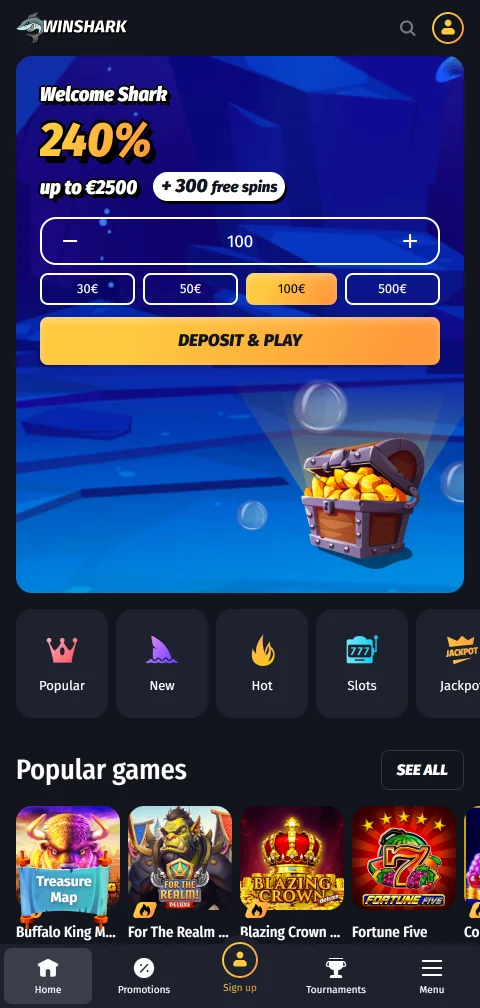
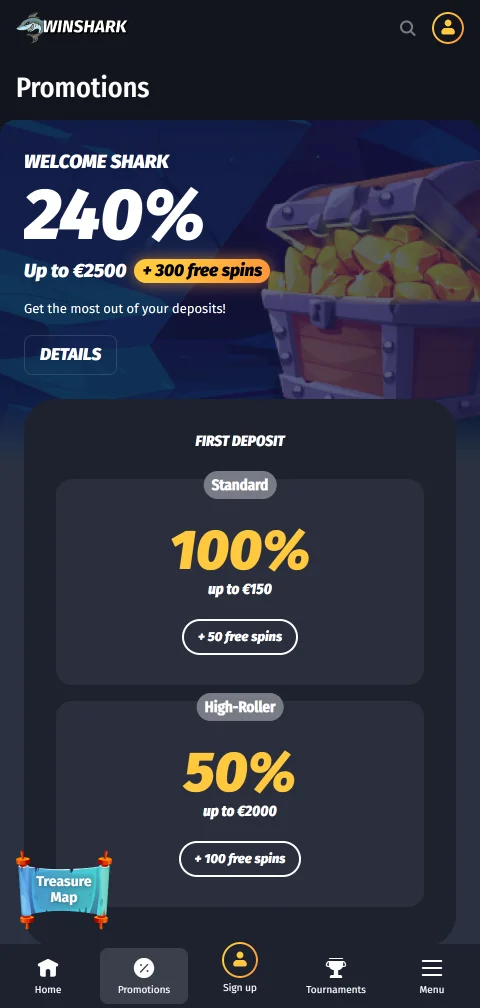

- Verified library of over 10,000 games from 100-plus providers.
- Welcome offer of 100% up to C$970 plus 250 free spins.
- Interac e-Transfer, cards, e-wallets, and crypto all supported for Canada.
- Browser and PWA access with no forced native download.
- Licensed by the Curacao Gaming Control Board under OGL/2024/589/0556.
- Welcome bonus carries a steep 45x wagering requirement.
- Bonus funds must clear within a five-day window.
- Monthly withdrawal cap starts at C$16,000 until VIP levels lift it.
- Withdrawal limits per transaction top out near C$800 on most methods.
Before you deposit, our Winshark Casino expert assessment tests the essentials: 10,000-plus games, 24/7 live chat under three minutes, and browser-first mobile play. It is written for readers who want a clean read on real strengths and the steep 45x rollover.
888Starz Casino review
| Key Feature | 4,000+ game crypto casino and sportsbook hub |
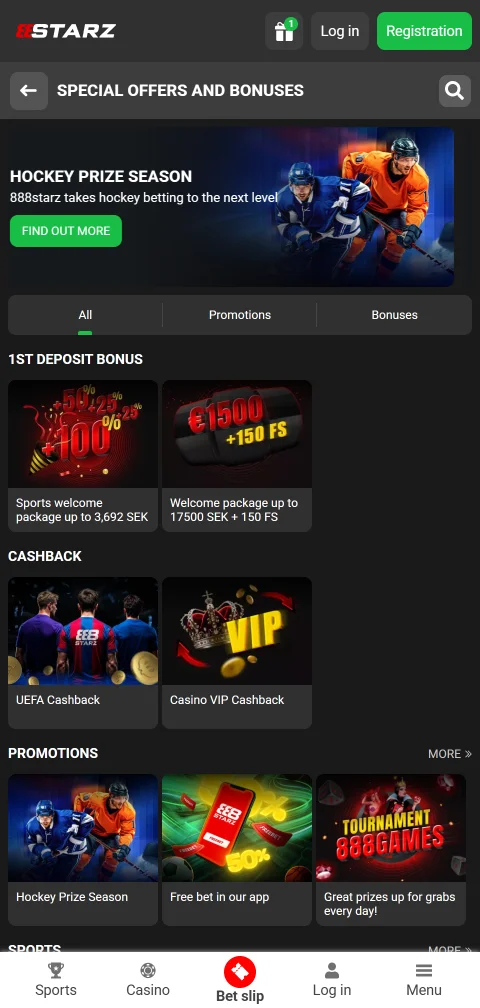
| Welcome Bonus | Up to C$2,200 + 150 free spins (4 deposits) |
| Min. Deposit | About C$3 to C$7 |
| Number of Games | 4,000+ games |
| Game Providers | Pragmatic Play, NetEnt, Evolution, Microgaming, Play'n GO, Quickspin, Yggdrasil, Betsoft, BGaming, Spribe |
| Payment Methods | Cards, e-wallets, 50+ cryptocurrencies |
| Payment Services | Visa, Mastercard, Skrill, Neteller, Bitcoin, EcoPayz |
| Mobile App | Android APK, mobile browser, iOS in select regions |
| VIP Program | Yes, tiered cashback up to 11% weekly |
| RTP | Varies by title, e.g. 96.1% on Starburst |
| License | Curacao (Bittech B.V., OGL/2024/665/0201) |
| Operator | Bittech B.V., company no. 153870, Curacao |
| Launch Date | 2020 |
| Legal Age | 18+ |
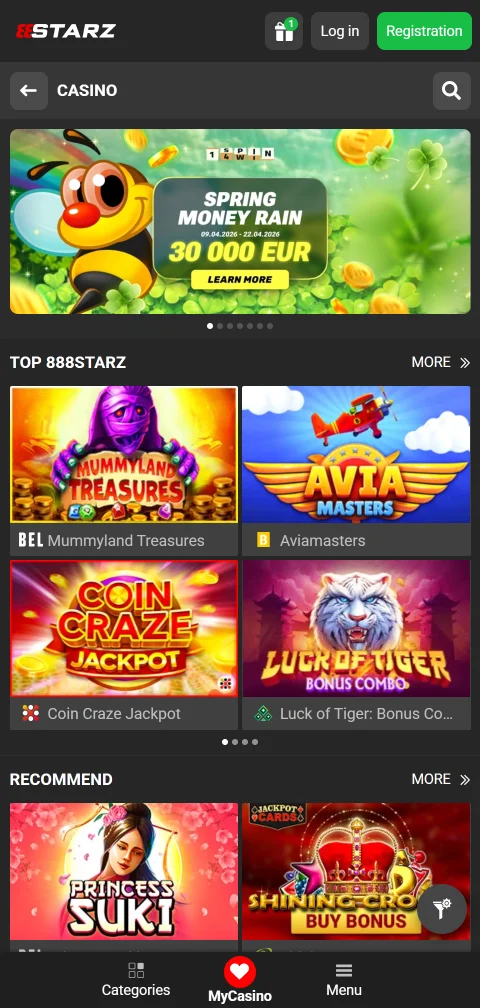
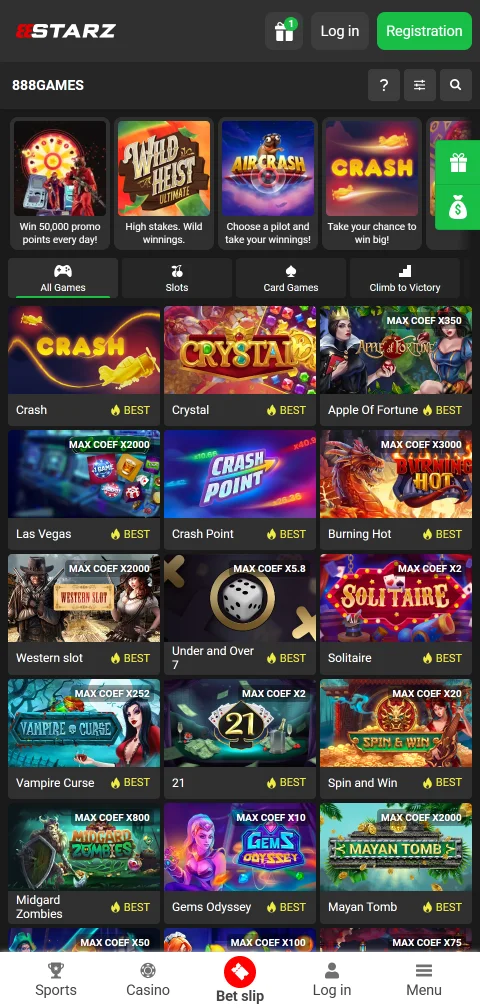
- Library of 4,000-plus slots, tables, and live dealer titles.
- 50-plus supported cryptocurrencies with zero house-imposed fees.
- Withdrawals approved within 24 hours once verified.
- Curacao licence OGL/2024/665/0201 is published and independently verifiable.
- Live chat support responds in under two minutes, 24/7.
- 40x wagering requirement on the welcome bonus must clear within 7 days.
- No AGCO or iGaming Ontario registration for provincially regulated play.
- No published RNG audit certificates outside Spribe's provably fair titles.
- Trustpilot rating sits at 2.4 out of 5 from a small review sample.
The 888Starz Casino expert assessment is strongest when read as a comparison piece. Curacao-licensed operators can offer broad crypto banking, but the deciding factor is usually how clearly they publish wagering rules and payment timelines. That matters for Canada players who want to avoid a 40x rollover trap at the withdrawal stage.
Coins Game Casino review
| Key Feature | Crypto-friendly browser-based casino |
| Welcome Bonus | 325% up to $2,250 CAD + 125 free spins |
| Min. Deposit | $10 CAD |
| Number of Games | 4,700+ |
| Game Providers | Pragmatic Play, Evolution, Hacksaw |
| Payment Methods | Interac, cards, e-wallets, crypto |
| Payment Services | Interac, Visa, Skrill, Bitcoin |
| Mobile App | Mobile browser |
| VIP Program | Yes, four-tier program |
| RTP | about 96% |
| License | Anjouan ALSI-202410033-FI2 |
| Operator | Royal Way Limited |
| Launch Date | 2022 |
| Legal Age | 18+ |


- Interac and crypto deposits with near-instant crypto payouts
- Browser-based mobile play avoids app downloads on most devices
- Over 4,700 games from more than 100 studios
- Offshore Anjouan licence offers limited dispute recourse
- Rewards paid in JET token carry a 2% conversion fee
- Welcome bonus spreads across several deposits, not one
Our Coins Game Casino expert assessment examines the operator through a consumer lens: near-instant crypto withdrawals, over 4,700 games, and a browser-first mobile build. The aim is to separate useful features from marketing language.
Stake Casino review
| Key Feature | Crypto-led casino with original games |
| Welcome Bonus | No fixed bonus; promo code required |
| Min. Deposit | No fixed minimum (crypto network dependent) |
| Number of Games | 3,000+ |
| Game Providers | Pragmatic Play, Evolution, Hacksaw, Yggdrasil |
| Payment Methods | Crypto, Interac (Canada) |
| Payment Services | Bitcoin, Ethereum, USDT, Litecoin, Interac |
| Mobile App | Mobile browser |
| VIP Program | Yes, rakeback up to 3.5% |
| RTP | around 96% |
| License | Curaçao licence OGL/2024/1451/0918 |
| Operator | Medium Rare N.V. |
| Launch Date | 2017 |
| Legal Age | 18+ |


- Crypto withdrawals often clear within minutes, not days
- Broad library spanning slots, live tables, and Stake Originals
- VIP rakeback returns a share of house edge automatically
- No fixed public welcome bonus; codes vary and can lapse
- Curaçao licence only; Stake has not held an Ontario registration since exiting the province in October 2022
The Stake Casino expert assessment gives a practical summary of its game library, mobile access, and the trade-offs around crypto-led banking.
Roobet Casino review
Cashback welcome offer
20% cashback up to $200 CAD over 7 daysCode COVERSBONUS; rakeback-style model, no fixed match
| Key Feature | Crypto cashier with Interac and live tables |
| Welcome Bonus | 20% cashback up to $200 CAD |
| Min. Deposit | $5 CAD |
| Number of Games | 7,000+ games |
| Game Providers | Evolution Gaming, Pragmatic Play, Hacksaw Gaming, Nolimit City, Play'n GO |
| Payment Methods | Interac e-Transfer, cards, cryptocurrency |
| Payment Services | Bitcoin, Ethereum, Litecoin, Dogecoin, USDT, XRP, Solana |
| Mobile App | Browser-based only; no native app |
| VIP Program | Tiered rakeback and cashback system |
| RTP | About 96% average RTP |
| License | Curaçao OGL/2024/687/0427 |
| Operator | Raw Entertainment B.V., Curaçao (reg. 157205) |
| Launch Date | 2019 |
| Legal Age | 18+ |


- 7,000+ games span slots, live tables and crash titles.
- Crypto withdrawals often clear within hours of approval.
- Interac e-Transfer gives Canadian players a fiat option.
- Curaçao OGL licence details are publicly verifiable.
- Live chat support runs around the clock for account issues.
- Curaçao licensing offers less recourse than provincial regulation.
- No fixed deposit-match bonus; rewards run on cashback and rakeback.
- No native mobile app limits offline or push-alert convenience.
- On-demand KYC checks can delay first-time withdrawals.
In this Roobet Casino expert assessment, we look at the platform’s practical strengths: Evolution-powered live tables, Pragmatic Play and Nolimit City slots, plus crypto and Interac payment options. The trade-off is clear too — a Curaçao OGL licence carries less formal recourse than a provincial regulator.
How we rank casinos that take crypto
The ranking is built from what each operator publishes: cashier pages, bonus terms, withdrawal rules and the licence on record, plus answers we obtained from support by asking. Affiliate commission does not move a placing, and neither does the size of a headline bonus.
Crypto bonuses and their wagering terms
A bonus raises a placing when wagering applies to the bonus alone at 35x or less, crypto deposits qualify on the same terms as fiat, and the maximum bet is printed in CAD. It drops when the requirement covers deposit plus bonus: a C$200 deposit matched to C$200 at 40x on both means C$16,000 of turnover. Caps on bonus winnings, or rules that void the bonus once a withdrawal is requested, lower a placing further.
Networks, confirmations and on-chain fees
A cashier earns points by offering USDT on at least one low-fee network such as TRC-20 alongside ERC-20, by publishing how many confirmations it waits for, and by charging nothing beyond the network fee. Lightning support for Bitcoin counts in its favour, and so does a weekly cap printed before deposit. A minimum withdrawal above the equivalent of C$50, an internal fee stacked on the network cost, or a manual review applied to every single cashout pulls a casino down, however fast its deposits credit.
Game lobby and crypto-friendly software
Named studios, RTP figures visible on the game card and a working verification page for provably fair titles raise a placing. A lobby padded with unbranded games that list no provider and no return figure lowers it, because nothing about those games can be checked independently.
Mobile cashier and wallet handling
Most crypto deposits start on a phone, so the mobile cashier gets its own score. A deposit screen showing the network label next to the address, a QR code and a one-tap copy button raises a placing. A network picker hidden behind a default value, or a memo field that only appears on desktop, lowers it, since both lead directly to misdirected transfers.
Licence record and account security
A placing rises when the operating company is named in the terms, its licence number appears on the regulator’s own register under the same domain, and two-factor authentication is offered at login and on withdrawal. Restricted provinces must be listed plainly. A licence shown only as a footer logo, a number we could not match on the register, or terms naming a different company from the cashier page all count against the casino.
Customer support on payment questions
Live chat around the clock raises a placing when the agent can read a transaction ID and say whether a withdrawal is still in the operator’s queue or already on-chain. Email-only support, or scripted replies that never name the network or the confirmation count, lowers it.

888Starz Casino
Four-stage welcome package
mBit Casino
Multi-deposit crypto packageHow a crypto deposit reaches your casino balance
A crypto deposit is a transfer from a wallet you control to an address the casino generates for your account. Nothing passes through a bank or card processor, which is why it clears outside banking hours.
The balance does not update the moment you press send. The casino waits for a number of network confirmations it chooses itself, and only then credits the account. On Bitcoin, where a block arrives roughly every ten minutes, that can take a while; on Tron or Litecoin the same step is far quicker.
Two details decide whether the money arrives at all. The coin and the network must match on both ends, so USDT sent over Ethereum to an address generated for Tron is not the transfer the cashier expects, and recovery is not guaranteed. Some assets, XRP among them, also need a memo or destination tag, and a blank one can strand the deposit until support matches it by hand.
What I check first on any cashier is whether the network name sits right beside the address.
Sending a first crypto deposit safely
These four steps cover the part of a deposit that cannot be undone once the transaction is broadcast. They apply to any coin, though the network check matters most for stablecoins that exist on several chains.
- Step 1
Confirm your province is accepted
Read the restricted-regions clause in the terms before registering. If your province is listed, stop there: an account opened anyway can be closed at the first withdrawal check. - Step 2
Pick the coin and exact network
Choose the asset in the cashier, then the network. Make sure your sending wallet or exchange supports that same network, and note any memo or tag field. - Step 3
Send a small test amount first
Transfer an amount just above the stated minimum. Anything below the minimum may never credit automatically, so the test only works if it clears that threshold. - Step 4
Save and keep the transaction ID
Copy the TXID from your wallet and keep it until the balance shows. Support can trace a deposit from it; without one, the conversation starts from nothing.
What each province allows for crypto gambling
Canada has no single licence for online casinos. The Criminal Code leaves gambling to the provinces, so whether a crypto casino is open to you depends on where you are when you log in.
Ontario is the clearest case. The AGCO’s Registrar’s Standards for Internet Gaming require deposits to be authorized by a financial services provider, and the note under standard 5.69 states that cryptocurrency is not legal tender and shall not be accepted. Balances must also be shown in Canadian dollars. An Ontario-registered operator therefore cannot run a Bitcoin cashier there, and every casino on this list that takes crypto does so under a licence issued elsewhere.
Outside Ontario, the regulated channel is usually the provincial lottery corporation, working in CAD with Interac, cards and bank transfers. Crypto casinos serving other provinces hold licences from Curaçao, Anjouan, the Tobique Gaming Commission or the Kahnawake Gaming Commission, and none of those replaces a provincial authorization.
Many offshore operators list Ontario as a restricted region in their own terms.
That restriction does not disappear because the deposit arrives in Bitcoin rather than dollars. Getting around it with a VPN breaches the terms accepted at sign-up, and a casino that discovers it at the withdrawal stage is entitled to close the account and hold the balance under its own rules.
Bitcoin or a stablecoin: the CAD question
The coin you deposit decides how much of your balance is exposed to the market while you play. A Bitcoin balance worth C$500 at deposit can be worth more or less by the time the withdrawal clears, and that movement has nothing to do with the games.
Stablecoins such as USDT and USDC track the US dollar, which removes the crypto price swing but leaves a currency one: the value still has to travel from USD back to CAD. Many cashiers also display a fiat equivalent while holding coins underneath, so check which currency actually settles each bet.
The comparison below sets the two most common choices against each other on the points that affect a withdrawal.
Bitcoin on-chain | USDT on TRC-20 |
|---|---|
| Price moves with the BTC market while funds sit in the account | Tracks the US dollar; CAD exposure remains |
| Accepted at almost every crypto cashier | Widely accepted, but network support varies by casino |
| Network fee rises with mempool congestion | Network fee is usually low on Tron |
| One network on-chain, plus Lightning where offered | Same token on several chains; wrong-chain risk |
| Blocks roughly every 10 minutes, several confirmations common | Blocks every few seconds, quick crediting |
| Capital gain or loss possible on disposal | Disposal can still create a small gain or loss |
Why a crypto withdrawal waits before it moves
A crypto cashout has two clocks, and casinos advertise the faster one. The first is the operator’s approval, where the request is checked against your balance, any active bonus and the account’s verification status. The second starts only when the casino broadcasts the transaction.
The published windows we compared run from “instant once approved” to 72 hours, and “once approved” does most of the work in the short ones. A transaction ID in the cashier means the coins are on-chain and the rest is confirmations; “pending” with no TXID means the money has not left the casino.
KYC still applies to crypto
Registration with an email address is common at crypto casinos, and that is often where the anonymity ends. Most offshore terms reserve the right to request photo ID, proof of address and sometimes proof of funds before a withdrawal, especially a large or first one. The thresholds are rarely published as a number, so a deposit that credited in minutes says nothing about how the first cashout will be treated.
Verifying the account before depositing removes the most common cause of a stalled withdrawal.
Network timing and fee patterns by coin
The table shows how the networks most Canadian cashiers offer behave on timing and cost. Block intervals are network properties; each casino sets its own confirmation count on top, and the network fee is never the operator’s to waive.
| Coin and network | Block interval | Fee pattern | Price exposure | Main pitfall |
|---|---|---|---|---|
| Bitcoin on-chain | About 10 minutes | Rises with congestion | High | Slow on busy days |
| Bitcoin Lightning | Seconds | Very low | High | Cashier must issue an invoice |
| Ether on Ethereum | About 12 seconds | Gas spikes at peaks | High | Small transfers become costly |
| USDT on ERC-20 | About 12 seconds | Gas paid in ETH | USD peg | Wrong-chain deposits |
| USDT on TRC-20 | About 3 seconds | Low | USD peg | Wrong-chain deposits |
| Litecoin | About 2.5 minutes | Low | High | Separate address format |
Tax records for crypto gambling in Canada
For most recreational players, gambling winnings are not taxed in Canada, and the CRA’s Income Tax Folio S3-F9-C1 looks at the question case by case where play starts to resemble a business. Crypto adds a separate layer that has nothing to do with the game result.
The CRA treats cryptocurrency as a commodity, so selling, swapping or spending it is a disposition that can produce a capital gain or loss. Buying BTC, depositing it, withdrawing the same coins and converting them to CAD at a higher price can create a reportable gain even if the session itself broke even.
A simple ledger saves reconstructing this at filing time: date, coin amount, CAD value, network fee and TXID for every deposit and withdrawal, plus the CAD proceeds of each sale.
None of this is tax advice; it is the paper trail that makes advice possible.
Account security and cashier red flags
A casino account holding crypto deserves the same care as an exchange account. Two-factor authentication on login and on withdrawal is the minimum, and some cashiers also lock withdrawals to a saved address, which stops a hijacked session from redirecting funds. HTTPS protects the connection and says nothing about the operator.
No legitimate support agent will ever ask for your wallet’s recovery phrase.
The warning signs in a crypto cashier are usually written down, just not on the front page. Look for a percentage withdrawal fee on top of the network cost, a minimum cashout far above the minimum deposit, a weekly cap buried in the general terms, or large wins paid in monthly instalments. Each is the operator’s right to set, and each changes what a win is worth. Terms naming a different company from the footer deserve a direct question to support before any deposit.
Keeping crypto play within a CAD budget
Crypto makes deposits fast and quiet: no card statement, no bank delay, and a wallet that can send again in seconds. That is why a limit set in advance matters more here than at a card-funded casino. Fix the budget in Canadian dollars rather than coins, because 0.01 BTC is a different amount of money from one week to the next, and count network fees inside it.
Use the deposit limits, reminders and self-exclusion tools in the account, and confirm they apply to crypto deposits. If you find yourself chasing losses, stop and use the support services listed below.
Before you send the first coin
One habit protects more money than any ranking: keep the TXID of every transfer until the balance shows. Support can trace a deposit or a withdrawal from that string, and without it a dispute starts from nothing. The placings above reflect the terms as they stood on 14 October 2026; if a casino later hides its network fee or adds a percentage charge, it drops at the next review.
Questions about crypto casinos in Canada
Can I use a crypto casino if I live in Ontario?
Ontario-registered operators cannot accept crypto, because the AGCO standards state that cryptocurrency shall not be accepted for deposits. Many offshore crypto casinos list Ontario as a restricted region in their terms. Read that clause first, and if Ontario appears there, do not register or use a VPN to reach the site.
Which network is cheapest for USDT deposits?
On most cashiers, USDT on TRC-20 costs less to send than USDT on ERC-20, because Ethereum gas rises sharply at busy times. The cheaper option only helps if the casino supports it for withdrawals as well as deposits, so check both sides of the cashier before you send the first transfer.
Why has my crypto withdrawal been pending for hours?
Look for a transaction ID. If there is none, the request is still in the operator’s queue, often for a verification check or a bonus review. If there is one, the coins are on-chain and waiting for confirmations. Support can tell you which stage applies; ask them to name it.
Do crypto casinos skip identity checks?
Many let you register with an email address, but their terms almost always reserve the right to ask for ID, proof of address and source of funds before paying out. Treat “no KYC” as a description of sign-up only, and verify before the first deposit.
What happens if I send coins on the wrong network?
The transfer is final on the blockchain, and the casino may or may not be able to recover it. Some operators can retrieve funds sent to a compatible address for a fee; others cannot reach them at all. Contact support with the TXID straight away and do not resend until they reply.
Are crypto winnings taxable in Canada?
Recreational gambling winnings are generally not taxed, but the CRA treats crypto as a commodity, so converting coins back to CAD can create a capital gain or loss of its own. Keep the CAD value of every deposit and withdrawal, and speak to a tax professional if your play is frequent.
More about online casinos
- Bitcoin casinos with instant payouts
- Casinos accepting Ethereum
- USDT stablecoin casinos
- Litecoin casino sites
- Casinos that take Dogecoin
- XRP-friendly casinos
- Quick-payout casino sites
- Casinos paying out within minutes
- Reputable online casinos
- Top-rated crypto casinos
- Crypto casino bonus offers
- Multiplier crash games




We read each card’s minimum withdrawal against its minimum deposit first. Where the cashout floor sits far above the deposit floor, a small balance can end up stuck.