


































Dazard Casino review
Editor's Choice| Key Feature | 4,000+ games from 15+ studios |
| Welcome Bonus | 150% up to C$7,875 + 325 FS |
| Min. Deposit | $20 CAD |
| Number of Games | 4,000+ games |
| Game Providers | Pragmatic Play, Evolution, Microgaming, Betsoft |
| Payment Methods | Cards, e-wallets, Interac, crypto |
| Payment Services | Visa, Mastercard, Skrill, Neteller, Interac |
| Mobile App | HTML5 browser; no native app |
| VIP Program | DAZ points loyalty programme |
| RTP | Around 96% average |
| License | Curaçao eGaming, Dama N.V. |
| Operator | Dama N.V., Curaçao |
| Launch Date | 2021 |
| Legal Age | 18+ |
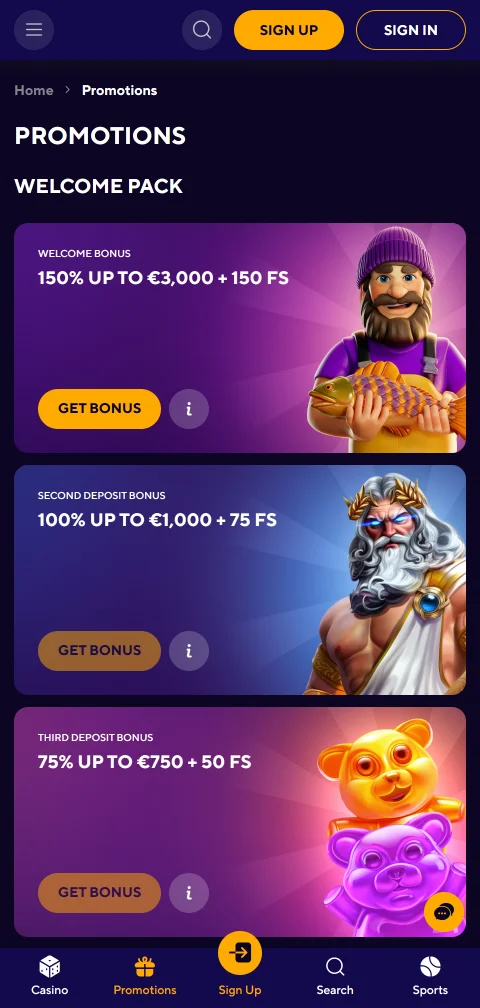
- Confirmed Curaçao licence held by Dama N.V.
- Interac and crypto both supported for Canadians
- Near-instant e-wallet and crypto payout processing
- Evolution-powered live tables alongside 4,000+ titles
- Wagering sits at a steep 40x on the welcome bonus
- Bank transfer and card withdrawals can take several days
- No dedicated native mobile app is offered
Use this Dazard Casino player guide to compare Interac, crypto, and card payments against the likely withdrawal pace.
Billy Billion Casino review
Editor's Choice| Key Feature | Nearly 3,800 games with crypto and Interac |
| Welcome Bonus | 100% up to C$7,500 + 100 free spins |
| Min. Deposit | C$30 |
| Number of Games | nearly 3,800 games |
| Game Providers | Pragmatic Play, Evolution, BGaming, Nolimit City, Play'n GO |
| Payment Methods | Cards, Interac e-Transfer, e-wallets, crypto |
| Payment Services | Visa, Mastercard, Interac e-Transfer, MiFinity, Bitcoin |
| Mobile App | Browser PWA; no native app |
| VIP Program | Ten-tier loyalty, auto-enrolled |
| RTP | around 96% average RTP |
| License | Tobique Gaming Commission No. 0000064 |
| Operator | Metlait SRL (Costa Rica) |
| Launch Date | 2022 |
| Legal Age | 18+ |
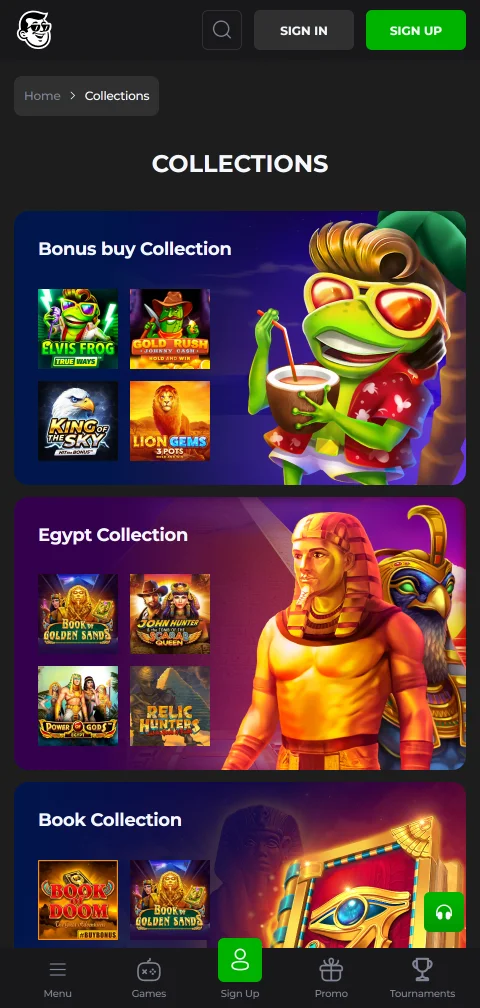


- Nearly 3,800 games from 40+ studios.
- Interac e-Transfer, cards, and crypto supported.
- E-wallet and crypto payouts clear near 24 hours.
- Ten-tier loyalty programme enrols all players automatically.
- Wednesday cashback carries low 5x wagering.
- Welcome bonus wagering is steep 40x on bonus plus deposit.
- Popular slots such as Book of Dead excluded from clearing.
- Responsible gambling limits require contacting support, not self-service.
- Bank transfers take two to five business days after review.
Our Billy Billion Casino player guide puts the experience in practical terms, covering the cashier, game categories, and support access. It is designed to show where the platform is straightforward and where it still needs proof.
Seven Casino review
Editor's Choice| Key Feature | No-wagering 10% cashback with broad crypto and Interac banking |
| Welcome Bonus | 10% cashback on losses, no wagering |
| Min. Deposit | about $20 CAD |
| Number of Games | around 2,500 games |
| Game Providers | Pragmatic Play, Evolution, Wazdan, Hacksaw, Playson (18 total) |
| Payment Methods | Cards, e-wallets, bank transfer, crypto, Klarna (25 total) |
| Payment Services | Visa, Mastercard, Interac, Skrill, Neteller, Bitcoin, Klarna |
| Mobile App | Mobile browser only, iOS and Android compatible |
| VIP Program | Daily and weekly promotions for existing players |
| RTP | around 96% average across slots |
| License | Anjouan Gaming, Comoros |
| Operator | Rabocse Sociedad de Responsabilidad Limitada |
| Launch Date | 2023 |
| Legal Age | 18+ |
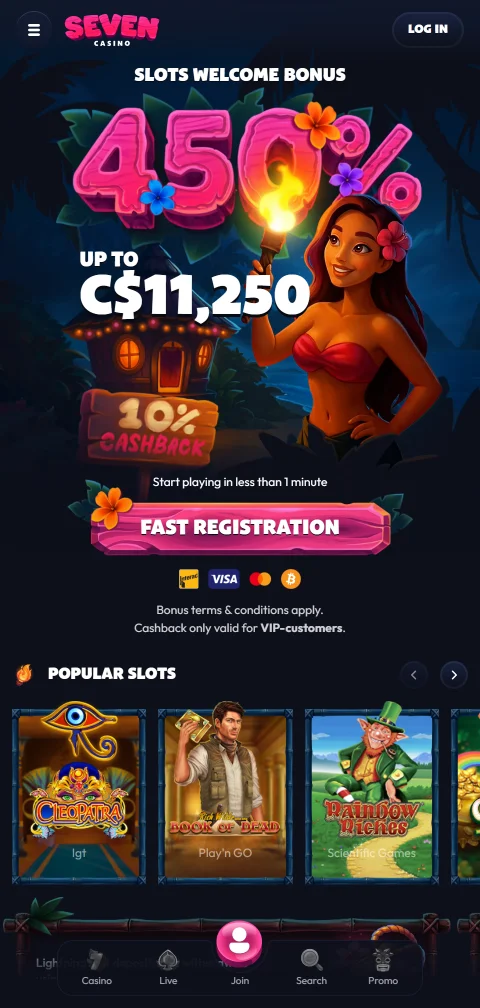
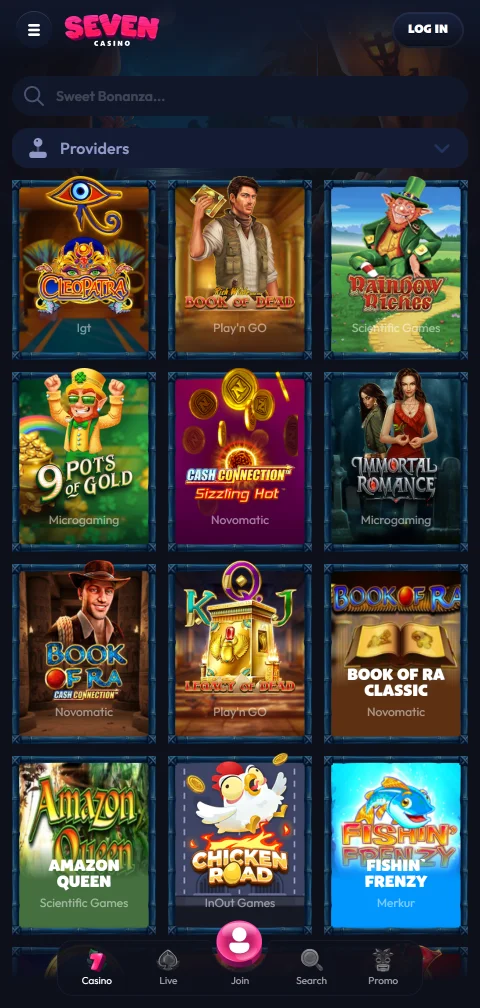
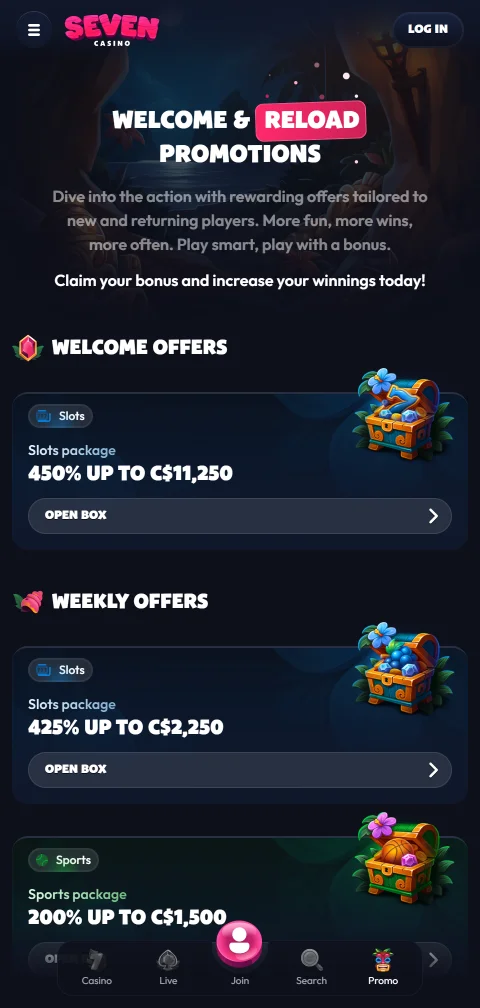
- Around 2,500 games with Evolution live tables and 18 studios.
- 25 banking methods including Interac, Klarna, and major crypto.
- 10% cashback carries no wagering and instant withdrawal of returns.
- Browser build keeps the full lobby on iPhone and Android.
- Support runs 24/7 across 12 languages, rated good by third parties.
- Anjouan (Comoros) licence offers weak player recourse.
- Very low independent Safety Index of 1.5 signals real risk.
- High volume of denied-payout complaints on record since 2023.
- Withdrawals capped at EUR 1,000 per day and EUR 2,000 weekly.
A detailed Seven Casino review is only useful if it separates substance from filler. detailed Seven Casino review considers Pragmatic Play and Evolution content, live dealer availability, and whether the good-rated support desk offsets the EUR 1,000 daily withdrawal limit for Canada players.
Golisimo Casino review
Editor's Choice| Key Feature | 12,000+ games across 124+ providers |
| Welcome Bonus | 100% up to $1,000 CAD + 200 free spins |
| Min. Deposit | about $15 CAD |
| Number of Games | 12,000+ games |
| Game Providers | Pragmatic Play, Playtech, Microgaming, Hacksaw Gaming, BGaming |
| Payment Methods | Cards, Interac, e-wallets, crypto |
| Payment Services | Visa, Mastercard, Interac, Skrill, Neteller, Bitcoin |
| Mobile App | Mobile browser only, no native app |
| VIP Program | Five-tier VIP loyalty ladder |
| RTP | around 96% average RTP on slots |
| License | Unlicensed; no regulator confirmed |
| Operator | Not disclosed publicly |
| Launch Date | 2026 |
| Legal Age | 18+ |
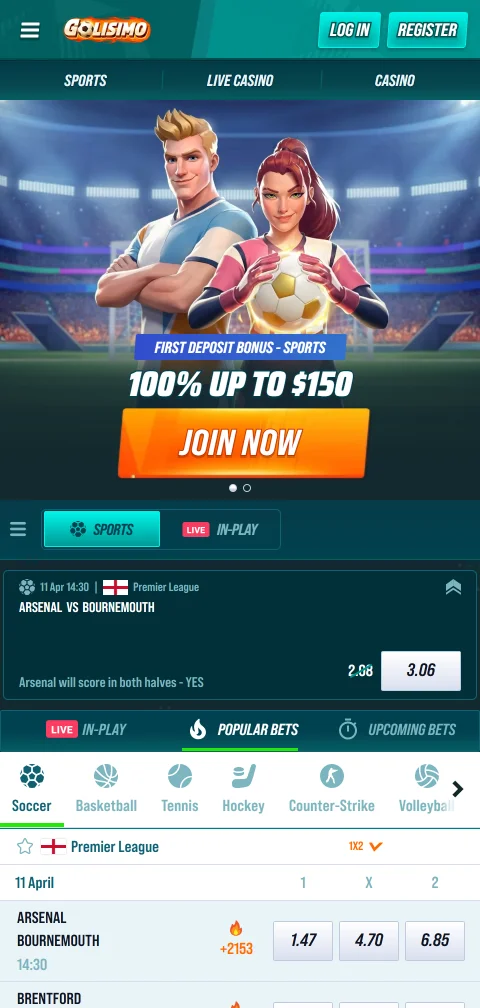

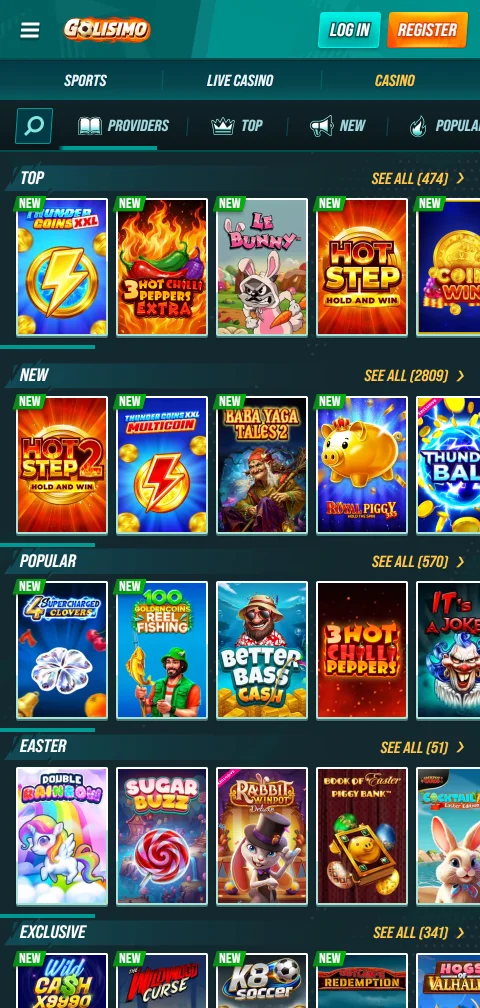
- Deep catalogue of 12,000+ games from 124+ studios.
- Interac e-Transfer, cards, e-wallets and eleven cryptocurrencies supported.
- E-wallet withdrawals process instantly once KYC clears.
- Instant-play site runs smoothly on iPhone and Android browsers.
- Five-tier VIP ladder adds cashback and higher limits.
- Operator holds no confirmed gambling licence anywhere.
- Monthly withdrawal capped at C$10,500, daily at C$750.
- Ontario players are blocked from registering entirely.
- Casino Guru rates the terms and conditions somewhat unfair.
Our Golisimo Casino expert assessment looks at the site the way a player does: lobby first, cashier second, withdrawals last. The 124+ provider catalogue is a real strength, and e-wallet payouts are instant. The unlicensed status and delayed-withdrawal complaints are the core trust signals, and Ontario residents cannot register at all.
Lemon Casino review
Editor's Choice| Key Feature | Curacao-licensed casino with 4,800+ games |
| Welcome Bonus | 100% up to 300 CAD + 100 spins |
| Min. Deposit | 10 CAD |
| Number of Games | 4,800+ games |
| Game Providers | Pragmatic Play, NetEnt, Evolution, Nolimit City, BGaming |
| Payment Methods | Credit cards, e-wallets, crypto, Interac |
| Payment Services | Visa, Mastercard, Skrill, Neteller, Interac e-Transfer, Bitcoin |
| Mobile App | Mobile browser only, no native app |
| VIP Program | Treasure Boxes loyalty programme |
| RTP | Around 96% average RTP |
| License | Curacao licence 5536/JAZ |
| Operator | Orange Entertainment B.V. |
| Launch Date | 2021 |
| Legal Age | 18+ |
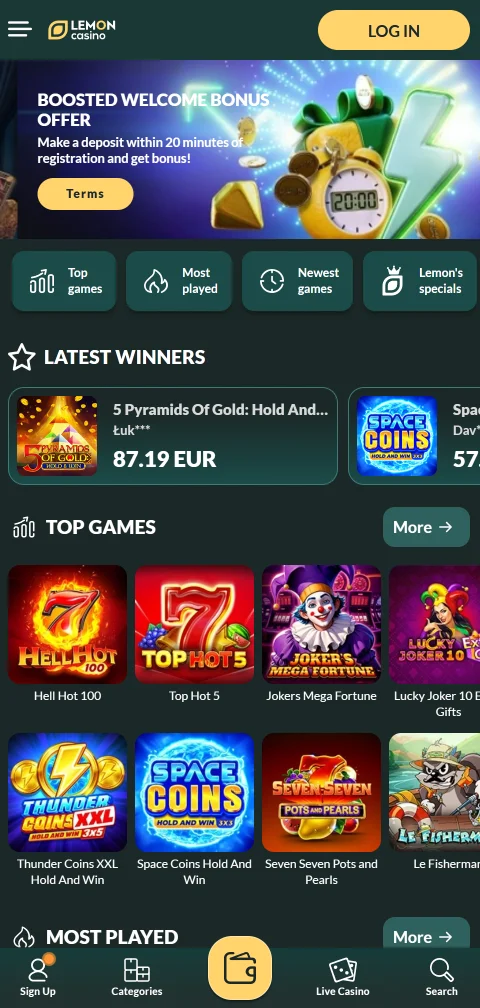
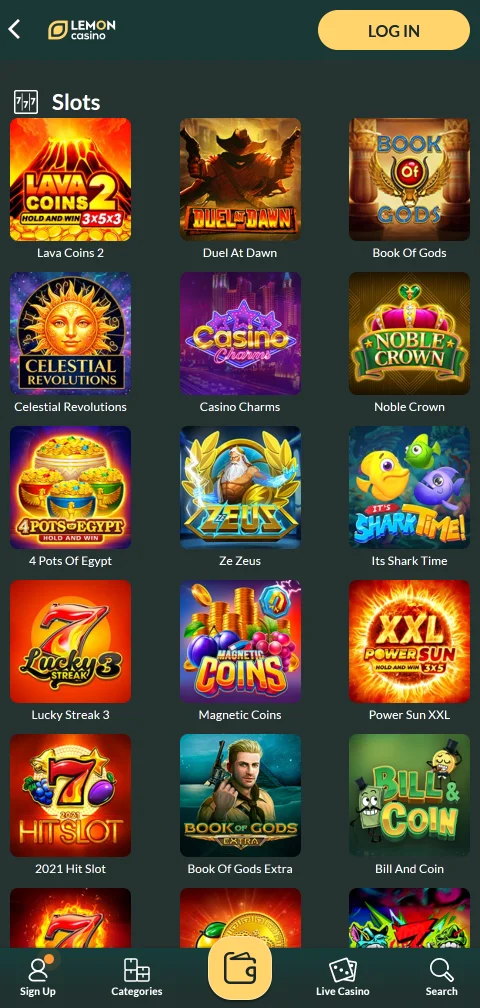

- Curacao licence 5536/JAZ is publicly verifiable, unlike unlicensed rivals.
- Welcome package of 100% up to 300 CAD plus 100 spins gives a solid start.
- Interac e-Transfer support makes CAD deposits genuinely straightforward.
- Library of 4,800+ games covers slots, live tables, and specialty titles.
- Live chat support runs 24/7, which speeds up basic account queries.
- Withdrawals can stretch to 5 days for slower banking methods.
- Wagering requirements on the welcome bonus need careful reading before claiming.
- No confirmed native iOS or Android app, only browser-based mobile play.
- VIP tier structure details are thin compared with top-tier regulated operators.
This Lemon Casino Curacao licence check confirms licence number 5536/JAZ under Orange Entertainment B.V. Canada players get a verifiable regulator reference, a 4,800-plus game count, and Interac support, though the standard 35x wagering on the welcome bonus still needs careful reading.
How We Rate Casino Loyalty Programs in Canada
We evaluate casino loyalty programs against transparent, measurable criteria that reflect real player value. Our editorial team analyzes tier structures, earning mechanics, redemption paths, and comparative benefits to determine program quality and accessibility for Canadian players.
Tier Structure & Accessibility
We count the tiers and test how reachable each one is. Strong programs publish exact credit thresholds—say 0-499 for entry, 15,000+ for the top rung—and show live progress in the account. We penalize hidden requalification rules and inflated thresholds that keep the top tier permanently out of reach for an average player wagering a few hundred dollars monthly.
Earning Rates & Point Mechanics
We map earn rates across every game category. Slots usually pay 1 status point per $1 wagered; table games drop to 1 per $5; live dealer often pays zero. Programs that disclose these percentages upfront score higher than those burying them. We also verify that stated rates hold without silent caps once a player crosses a wagering ceiling.
Redemption Value & Flexibility
We calculate what points actually buy. Fair programs post a fixed rate—commonly 100 points to $1—and offer several exits: bonus credits, free spins, cashback, or merchandise. We compare the effective value of each path, because free spins frequently return less than direct bonus credit. Low redemption minimums and no forced conversion earn extra marks here.
VIP Benefits & Exclusivity
We separate substance from decoration. A real VIP tier cuts withdrawal times from 3-5 days to 24-48 hours, lifts betting limits, and assigns a named account manager. Badges and generic emails do not count. We confirm each premium perk materially changes the experience versus the entry tier before crediting it in our score.
Cross-Platform Portability
We check whether status and points travel. Network systems such as Casino Rewards let one account hold a single tier across six levels and every member site, cutting the turnover needed to reach VIP by roughly three times. We assess whether recognition is automatic or demands manual linking, and whether reward-point balances survive the move between members.
Transparency & Trust Factors
We verify that every rule sits in plain view: earn rates, tier credits, expiry windows of 12-24 months, and redemption limits. Programs forcing players to dig through dense terms score lower than those with a clean dashboard. Since May 2026, Ontario operators must also check the BetGuard self-exclusion registry, a signal of regulated, accountable operation.


Seven Casino
Cashback welcome offerEditor's Choice
Rizzio Casino
Three-part welcome packageEditor's ChoiceUnderstanding Casino Loyalty Tiers in Canada
Casino loyalty programs run on tiered progression: players climb levels by banking status points during real-money play. Each rung unlocks more value, from baseline promotions at entry to same-day withdrawals at the top. The design pays twice—immediate reward points to spend, plus tier perks that compound the longer a player stays engaged.
How Status Points Are Earned
Status points accrue on real-money wagering across slots, table games, live dealer, and specialty titles. The rate splits by category: slots commonly award 1 point per $1 wagered, table games drop to roughly 1 per $5, and live dealer sessions sometimes pay zero. Promotional windows and new-game launches can lift these rates temporarily. Balances update continuously, and most dashboards show current credits alongside the exact distance to the next level—so a player 200 points from Gold knows it at a glance rather than guessing.
Tier Period Cycles and Reset Mechanics
Most Canadian platforms run semi-annual periods with fixed dates—for instance 1 October to 31 March, then 1 April to 30 September—wiping status credits to zero at each cycle’s end. The catch that matters: the achieved tier persists even when credits reset. On the Casino Rewards network, a new level holds for the rest of the current month plus the following calendar month before requalification applies. Reading those dates in the account lets players plan turnover around the cycle and avoid slipping a tier through simple inactivity.
| Tier Level | Status Points Required | Core Benefits | Typical Earning Rate |
|---|---|---|---|
| Bronze/Club | 0–499 points | Baseline rewards, regular promotions, points store access | 1 point per $1 wagered (slots) |
| Silver/Preferred | 500–2,499 points | Improved earn rates, exclusive offers, priority support | 1.25–1.5 points per $1 wagered |
| Gold/Premium | 2,500–14,999 points | Higher multipliers, birthday bonuses, exclusive games | 1.5–2 points per $1 wagered |
| Platinum/Summit | 15,000+ points | Personal manager, VIP events, 24–48 hour withdrawals | 2–3 points per $1 wagered |
| Diamond/Privé | Invitation-only | White-glove service, exclusive tournaments, luxury perks | 3+ points per $1 wagered |
Reward Points vs Status Points: The Real Difference
Canadian loyalty programs almost always run two separate point pools, and confusing them costs value. Status points buy tier progression; reward points buy spendable credit. Earning strategy diverges between the two, so the first move is confirming which balance a given promotion actually feeds.
Status Points and Tier Progression
Status points exist for one job: advancing your level. They never convert to cash. Bank 5,000 during a six-month period and you reach Gold, unlocking its perks whether or not you touch a single reward point. Rates skew toward slots at 1 point per $1, with tables trailing. At cycle end the credits zero out while the tier itself carries forward, which rewards steady monthly play over one large sporadic session.
Reward Points and Direct Redemption Value
Reward points are the tangible half, converting at a fixed rate—typically 100 points to $1 in credit—and earned at rates like 1 point per $10 wagered on slots. Redeem them for slot credit, free spins, bonus money, or merchandise. Watch the expiry: most forfeit after 12-24 months of inactivity, though Casino Rewards keeps its VIP Points valid indefinitely. That single clause changes whether hoarding for a larger redemption is safe or reckless.
Strategic Earning Across Both Systems
The sharp play is sequencing. Front-load a cycle with high-status slots to secure the tier, then shift to preferred tables or live dealer once the level is locked. Reward-point earning follows its own rhythm—double-point promotions on specific titles can double the credit rate for a week. A player who tracks both pools hits tier targets and still accumulates enough reward points for a redemption worth claiming, rather than 50 points at a time.
Network-Wide Loyalty: Multi-Casino Account Portability
Several networks in Canada pool loyalty across many branded sites under one account, so play anywhere counts everywhere. For players who spread their bankroll, this accelerates tier progression and moves rewards between sites without repeat registration.
How Network Portability Works
You register once—say with Casino Rewards, which spans six status levels—and the account links to every member site. Earn 1,000 status points at one casino and the balance shows instantly at all the others. Hit Gold once and Gold perks switch on network-wide. No separate accounts, no restarting progression. Log into any member and your tier, VIP Point balance, and personalized offers load together, verified against the same central profile.
Strategic Advantages of Network Membership
The turnover math is the draw. Split $1,000 monthly across three members and status points build at all three at once, hitting milestones roughly three times faster than single-site play. That lowers the cumulative wagering needed for VIP perks. Network tournaments also pool larger prizes and run more often than a lone casino can fund, and players sample different game libraries and providers without surrendering a shred of loyalty progress.
Tier Transfer and Consolidation
Moving between networks triggers tier-matching. Your level usually converts to the equivalent tier—Gold to Gold—though reward points rarely travel with you, meaning a fresh redemption balance from zero. Some networks sweeten onboarding with a tier-match welcome offer sized to your incoming level. Before switching, confirm exactly what carries and what resets; assuming your point stash transfers is the mistake that erases months of accumulation.
Standard Loyalty (Automatic Enrollment) | VIP Status (Performance-Based) |
|---|---|
| Entry requirement: automatic upon registration | Entry requirement: invitation-only or high cumulative wagering |
| Earning rate: baseline 1 point per $1 wagered (slots) | Earning rate: elevated 2–3+ points per $1 wagered |
| Support: email and live chat during business hours | Support: dedicated personal account manager, 24/7 priority line |
| Withdrawal speed: standard 3–5 business days | Withdrawal speed: expedited 24–48 hours or same-day |
| Bonus offers: general promotions available to all tiers | Bonus offers: exclusive personalized offers and higher limits |
| Event access: standard promotions and draws | Event access: invitation-only tournaments and luxury experiences |
Maximizing Loyalty Value: Earning and Redemption Strategy
Understanding the mechanics turns a loyalty program from background noise into measurable return. The levers are three: track contribution by game type, time redemptions to the cycle, and ride promotional multipliers to compress the turnover needed for each tier.
Game Selection and Point Contribution Rates
Categories pay wildly differently, so the mix decides the pace. Slots lead at 1 status point per $1 wagered—ideal for a fast start to a cycle. Tables and live dealer often pay 1 per $5 or nothing toward status, though they may still earn reward points. The efficient sequence is slots first to bank the tier, then a shift to preferred games once the level is secured, so entertainment and progression stop competing for the same dollars.
Promotional Multiplier Timing
Double- and triple-point windows appear around game launches and appreciation campaigns, and they reward planning. A player earning 100 status points a day banks 200 during a 2× week, halving the days to a monthly target. Concentrating a higher-volume session inside that window—rather than spreading it evenly—can cut the total wagering required to hit an annual tier objective without raising overall spend.
Reward Point Redemption Optimization
Not every exit pays the same. Free spins frequently return less real value than direct bonus credit, while VIP merchandise can over-deliver for top tiers. Compare the effective rate before claiming—many dashboards display it. Pooling points for one larger redemption usually beats weekly nibbles: 50 points claimed repeatedly buys generic rewards, while 500 saved can unlock a premium free-spin package or a higher-value credit tier.
How to Maximize Your Casino Loyalty Program Benefits
- Step 1
Review Your Platform's Tier Structure
Open your account and find the loyalty section. Record the credit thresholds per tier—commonly 0-499 for entry up to 15,000+ for the top—the earn rate by game category, and the exact cycle dates. Identify your current level and the points needed for the next. This baseline drives every later decision. - Step 2
Track Contribution Rates Across Games
Confirm which games pay best toward status. Contribution sits on the promotions page or account settings. Note that slots typically earn 1 point per $1 while tables drop to 1 per $5 and live dealer may pay zero. Prioritize the high-earning titles early in a cycle when reaching the tier target matters most. - Step 3
Plan Sessions Around Promotional Multipliers
Check the promotional calendar for double- or triple-point events. Schedule higher-volume play inside those windows to speed progression. If you normally wager $200 a month, concentrating $400 during a 2× week reaches the tier target roughly twice as fast while keeping your total spend steady across the period. - Step 4
Monitor Reward Point Balance and Expiration
Log your reward-point balance and its expiry, usually 12-24 months of inactivity. Set a calendar reminder before the deadline so nothing forfeits. Compare redemption options—free spins versus bonus credit versus merchandise—and claim the path returning the most value for the games you actually play.
Land-Based Casino Loyalty Programs Across Canada
Provincial casinos run loyalty schemes that sit apart from online platforms, sharing the tier logic but trading in experiences instead of free spins. Points earned on slot and table play convert to dining, entertainment, and hotel value—an ecosystem that complements, rather than mirrors, online bonus mechanics.
Provincial Casino Loyalty Models
Casino Rama in Ontario, Casino de Montréal and Casino du Lac-Leamy in Quebec, and River Cree Resort & Casino in Alberta all run multi-tier programs. Players earn tier points on slot and table play, often near 1 point per dollar on slots, redeemable for dining credit, show tickets, hotel discounts, and merchandise. Higher tiers add priority table seating, complimentary beverages, birthday bonuses, and VIP event invitations, with seasonal multiplier promotions layered on top.
Redemption Value and Experience-Focused Rewards
The land-based model pays in lifestyle rather than credit. Points buy concert seats, fine-dining reservations, suite upgrades, and spa services, and double- or triple-point hours nudge repeat visits. This suits players who value the resort experience alongside the gaming floor. Premium members typically gain personalized concierge service and invitations to tournaments with sizeable prize pools that online rooms rarely match in atmosphere.
Multi-Property Recognition and Portability
Some provincial networks recognize tier status across affiliated properties, so premium standing at one location can carry to another and travel with the player. The reach is uneven: portability differs sharply by province and operator, and Ontario, Quebec, British Columbia, and Alberta each run distinct frameworks. Confirm the transfer policy in writing before assuming your status follows you across venues.
Responsible Gambling in Canada
Loyalty perks should sharpen the fun, never fund a chase. Set a deposit limit, fix a monthly budget before the cycle starts, and take scheduled breaks. Ontario operators offer breaks of one day up to three months, plus formal self-exclusion terms of six months, one year, and five years. Watch the warning signs—chasing losses, playing to escape stress, or spending past a plan—and use the deposit caps, session timers, and reality checks built into every licensed account.
Help across Canada is free and confidential. Since 14 May 2026, Ontario players can block every regulated site at once through iGaming Ontario’s BetGuard registry, with operators refunding outstanding wagers within 24 hours of enrolment. Quebec uses Loto-Québec, British Columbia uses BCLC’s GameSense, and Alberta uses AGLC—each covering provincial casinos and platforms. Provincial helplines and counselling run around the clock at no cost. Reaching out early is a sign of control, not weakness.
Final Thoughts on Casino Loyalty Programs in Canada
Networks change the arithmetic. Updated 14 August 2026, unified systems like Casino Rewards carry one tier across six levels and every member site, hitting milestones roughly three times faster than single-site play. If you already spread a $1,000 monthly bankroll across a few casinos, joining a network costs nothing and compresses the turnover to VIP dramatically—make it your default.
Casino Loyalty Programs in Canada: Common Questions
Are casino loyalty programs regulated in Canada?
Yes. Provincial bodies license platforms—AGCO and iGaming Ontario, Loto-Québec, BCLC, and AGLC—while offshore sites use Kahnawake, MGA, or Curaçao permits. Since 14 May 2026, Ontario operators screen players against the BetGuard registry before crediting rewards.
How do status points differ from reward points?
Status points drive tier progression and never convert to cash, resetting each cycle. Reward points hold spendable value, converting at roughly 100 points to $1 in credit. Slots typically earn both faster than table games at 1 point per dollar wagered.
How much cashback do loyalty programs return?
Loyalty cashback typically refunds 5-15% of net losses over a defined period, credited automatically or on claim. Many programs attach no rollover, so a player down $500 in a week receives $50 in genuine spendable value at a 10% rate.
How long does it take to reach a VIP tier?
It depends on turnover and game mix. Slots earn 1 status point per $1 while tables pay 1 per $5, so table players need five times the wagering. Network programs like Casino Rewards cut the timeline roughly threefold across six member-wide levels.
Do loyalty points expire in Canada?
Most reward points forfeit after 12-24 months of inactivity, and status credits reset at each semi-annual cycle’s end. Some networks, including Casino Rewards, keep VIP Points valid indefinitely, so always confirm your program’s specific expiry policy before pooling a large balance.
How do network-wide loyalty programs work?
One account carries status across every member site, so play anywhere counts everywhere. Earning 1,000 points at one casino shows instantly at all others, and reaching a tier unlocks its perks network-wide—accelerating progression roughly three times versus single-site play.
What responsible gambling tools support loyalty players?
Every licensed platform includes deposit limits, session timers, and self-exclusion. Ontario’s BetGuard registry, live since May 2026, blocks all regulated sites at once and refunds outstanding wagers within 24 hours. Quebec uses Loto-Québec and British Columbia uses BCLC GameSense.
More about online casinos




A quick tip from our team: tier progression accelerates hard during multiplier weeks. Concentrating even modest sessions inside a 2× or 3× point window can halve the days to your next tier, since 100 daily status points become 200 without any extra spend.