En Prison Rule: Definition and How It Works in Roulette

The En Prison rule is a roulette variation that gives even-money bets a second chance when the ball lands on zero, instead of an automatic loss. Rather than forfeiting the wager outright, the stake stays on the table for one more spin. For Canadian players exploring European and French roulette variants at licensed online casinos, understanding this rule matters because it directly lowers the house edge on outside bets. This entry explains how the rule functions, the mathematics behind the reduced edge, and how it compares with the closely related La Partage rule.
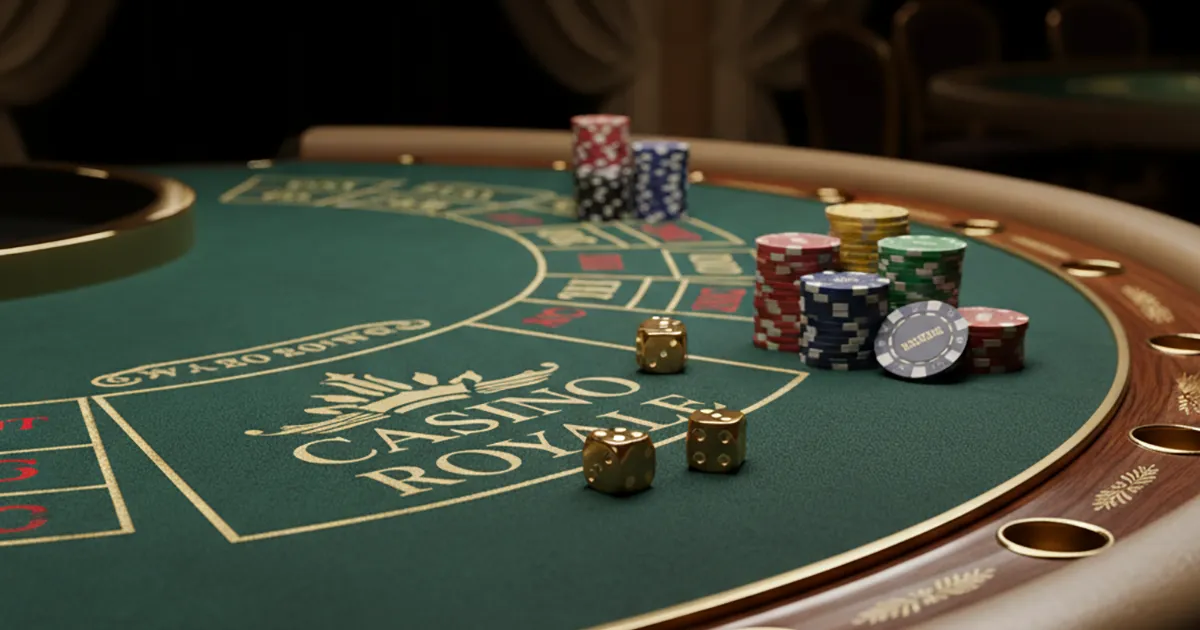
Understanding the En Prison Rule
The En Prison rule applies only to even-money outside bets: red/black, odd/even, and high/low. When a player places one of these wagers and the ball settles on zero, the bet is not lost immediately. Instead, the croupier marks the chips as “imprisoned,” leaving them exactly where they sit for the next spin. A win on that following spin returns the full original stake with no extra payout; a second loss forfeits the entire amount. The rule originated in French casinos and remains a defining feature of French roulette tables, setting them apart from standard European and American layouts that resolve zero spins as an outright loss for even-money bets.
How a Prisoned Bet Resolves
Picture a player staking CAD 20 on red. The ball lands on zero, so the croupier places a marker on the chips rather than collecting them. On the next spin, if red appears, the player recovers the full CAD 20; if black or zero appears again, the stake is forfeited. Some tables apply a double prison rule when zero repeats, locking the bet for a further spin instead of an immediate loss, which slightly extends the recovery window while keeping the underlying odds unchanged.
How En Prison Affects House Edge
On a single-zero wheel, the standard house edge on even-money bets is 2.70%. The En Prison rule cuts this to approximately 1.35%, roughly halving the operator’s mathematical advantage on red/black, odd/even, and high/low wagers. This reduction happens because the rule effectively returns a portion of expected losses back to the player over repeated zero outcomes, even though a single imprisoned bet either wins back in full or is lost entirely. Canadian players comparing roulette variants at licensed online casinos should note this edge only applies to outside even-money bets and not to inside bets on single numbers, columns, or dozens.
Live dealer platforms and RNG-based French roulette tables that advertise the En Prison option typically disclose it directly in the game rules or paytable. Players should always confirm the rule is active before relying on it, since some European roulette tables omit it entirely and instead apply a straightforward loss on zero for all bet types.
En Prison vs La Partage Rule
En Prison | La Partage |
|---|---|
| Stake stays locked for another full spin | Half the stake is refunded immediately |
| Offers a chance to recover the entire stake | Guarantees only half the stake back |
| Reduces house edge to about 1.35% on evens | Also reduces house edge to about 1.35% on evens |
| Found mainly on French roulette tables | Found mainly on French roulette tables |
| Repeated zero can trigger a double prison | Loss is finalised at 50% with no further risk |
| Requires tracking an imprisoned bet across spins | Simpler to understand, resolved in one step |