Grind in Casino Play: Meaning and Risks

Grind means long, methodical casino play built around small stakes, careful bankroll control, and repeated decisions rather than large single bets. The idea sounds patient, but the math stays blunt: most casino games still carry a house edge, so longer sessions usually expose players to more expected loss unless an actual advantage exists. For Canadian players, the term matters because licensed online casinos provide limit-setting, time reminders, and self-exclusion tools that help separate disciplined session planning from chasing losses. This glossary explains the mechanics, game selection, bankroll pressure, and safer gambling risks behind grinding.
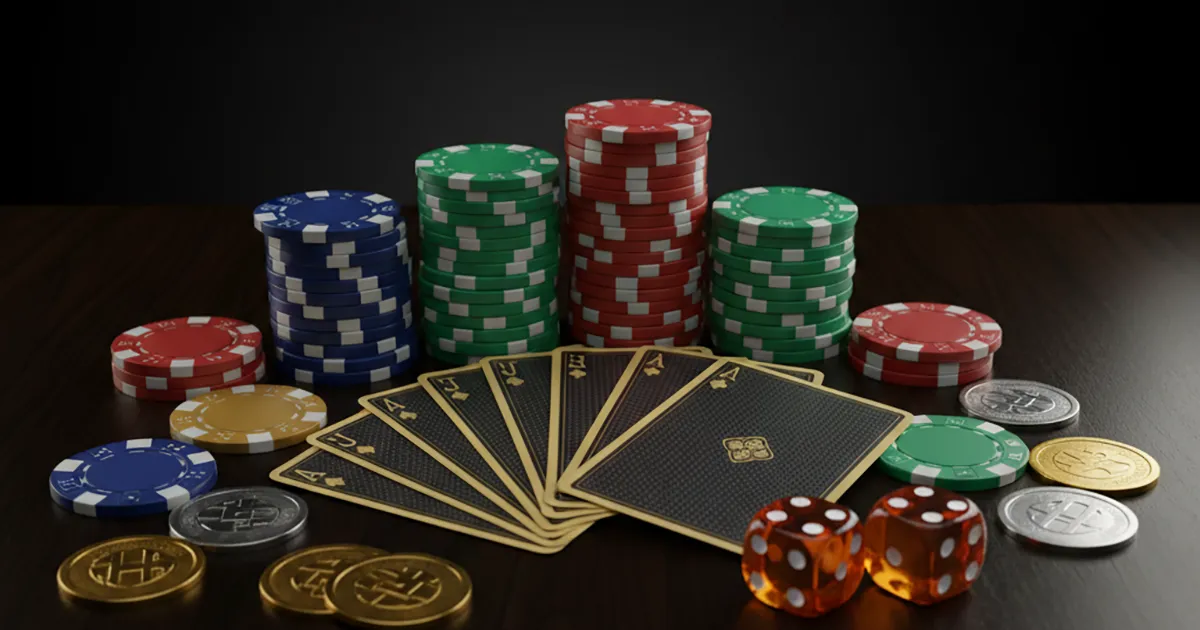
How Grinding Uses Casino Maths and Volume
Grinding is a low-stake, high-volume style of casino play. A player might risk 1% to 2% of bankroll per wager, repeat the same decisions for hundreds of hands, and rely on record keeping instead of instinct. The expected result follows a simple formula: total wagered multiplied by the house edge. With $1,000 in blackjack action at a 0.5% house edge, the theoretical cost is about $5 before variance.
That number does not make the session predictable. Short runs can swing far above or below the expected value, especially in blackjack, video poker, baccarat, and slots. Basic strategy can keep many blackjack rulesets below a 1% house edge, but rule changes such as 6:5 blackjack payouts or restricted doubling can raise the cost. The grind works only as a control method; it does not turn a negative-expectation game into profit.
Practical Use in Canadian Casino Sessions
Practical grinding starts with game selection, stake sizing, and a written stop point. Players usually look for low-volatility options, transparent paytables, and rules that keep the house edge narrow. Full-pay Jacks or Better video poker can return about 99.54% with perfect strategy, while some blackjack games sit near 99.5% RTP under favourable rules. Slots can be played slowly, but their volatility and opaque hit frequency make them harder to manage.
Session tracking matters more than the label. If a player wagers $10 per hand for 100 blackjack hands, total action reaches $1,000; at a 0.5% house edge, the long-run expected loss is about $5. Ontario-regulated sites add tools such as deposit limits, loss limits, time-outs, and self-exclusion options, which matter because long sessions magnify fatigue. A grind without limits is just extended exposure.
Risk, Bankroll Pressure, and Player Limits
The main risk in grinding is confusing stamina with an edge. A bankroll of 100 betting units can survive ordinary movement better than 20 units, but no fixed bankroll removes house advantage, rake, or poor rule selection. Poker grinders face a different problem: rake and opponent skill decide whether high-volume play has positive expectation. Casino game grinders usually battle negative expected value from the start.
Bankroll rules should be mechanical: choose a unit size, cap session length, set a loss limit, and stop when either limit is reached. Canadian players should also use safer gambling resources from provincial regulators and licensed operators, particularly when long sessions start to feel like recovery missions. The grind is a pacing strategy, not a guarantee. When the math turns negative, more volume usually compounds the damage.
Grind Approach | Recreational Play |
|---|---|
| Uses fixed 1% to 2% units | Changes stakes by mood or balance |
| Prioritizes low house edge rules | Chooses games mainly for entertainment |
| Logs stakes, time, and results | Tracks results casually or not at all |
| Stops at preset time or loss limits | Often stops when interest fades |
| Manages variance through smaller units | Accepts wider swings for entertainment |