Bluff in Poker: Meaning and Strategy
A bluff in poker is a bet or raise made with a weak or marginal hand to make opponents fold stronger cards. The move relies on a credible betting story, not special rules: the wager must still follow the table format, position order and stake limits. For Canada players, bluffing matters in peer-to-peer online poker, tournament play and live card rooms because it links psychology with pot odds, fold equity and bankroll control. This glossary explains pure bluffs, semi-bluffs, timing, table image and safer decision-making in licensed online poker rooms and provincially regulated gaming environments.
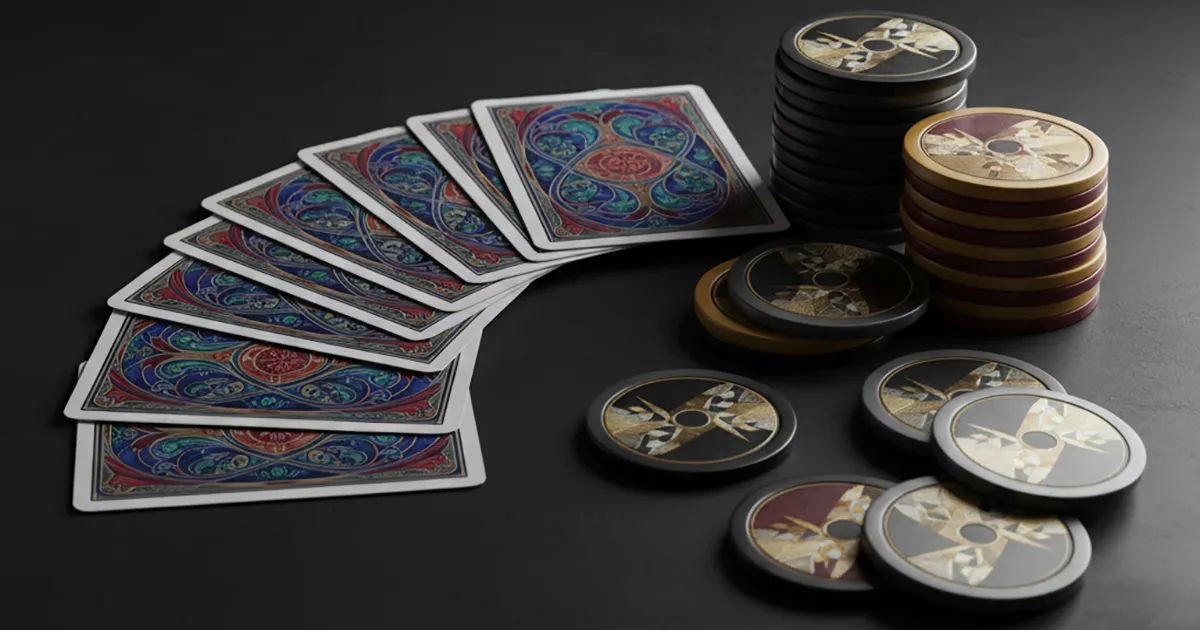
How Bluffing Works at Online Poker Tables
A poker bluff turns chips into a believable story. The bettor represents a strong range, such as a made flush, straight or overpair, while holding cards unlikely to win at showdown. Success depends on fold equity: the chance that every remaining opponent releases a stronger hand. A pure bluff has little or no backup if called. A semi-bluff uses a drawing hand, such as four cards to a flush, so the bettor can still improve on a later street.
Bluff Timing and Table Position
Position shapes the risk. Late position, especially near the dealer button in Texas Hold’em or Omaha, gives more information because several opponents have already checked, called or folded. Early position creates a thinner story, since more players can wake up with strong holdings behind. In Canada-facing online poker rooms, disciplined players size bluffs against stack depth, pot size and board texture instead of guessing. A half-pot river bet, for example, needs folds roughly one time in three to break even before rake.
How to Recognize and Counter Poker Bluffs
Recognizing a bluff starts with consistency. A sudden oversized river bet after passive flop and turn action often creates a story that does not fit the community cards. Stronger reads combine betting pattern, position, stack-to-pot ratio and table image rather than one timing tell. Online play removes facial cues, so hand histories and bet sizing become the main evidence.
Counterplay begins before calling. Compare the price of the call with the pot, then ask which value hands and missed draws the opponent can credibly hold. Frequent bluffers invite lighter calls, while cautious players usually deserve more respect. In Canada’s regulated market, AGCO-registered operators and iGaming Ontario-authorized sites must provide responsible gambling controls, so set limits and avoid chasing losses after a failed hero call.
Pure Bluff | Semi-Bluff |
|---|---|
| Little showdown equity; relies mainly on folds | Drawing equity plus pressure before showdown |
| Works on river when no draw equity remains | Works before river when outs remain live |
| Needs a credible range story and fold equity | Needs favourable pot odds, outs and pressure |
| Targets tight opponents who fold marginal made hands | Pressures callers while retaining outs to improve |